
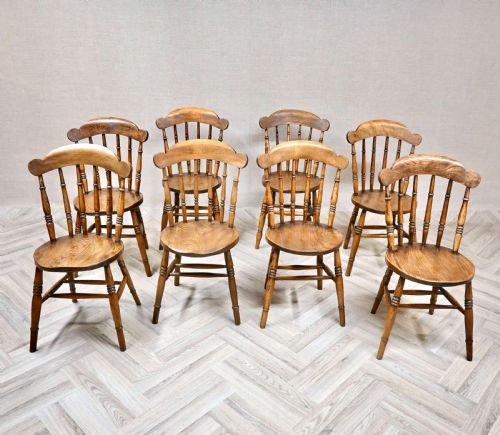
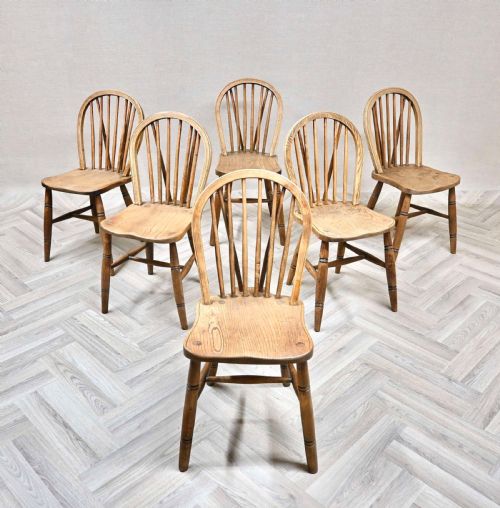
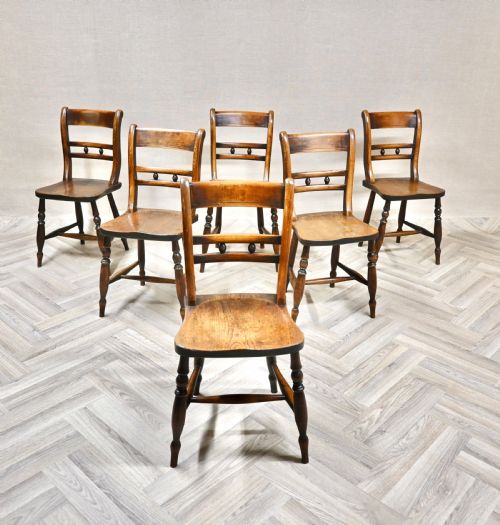
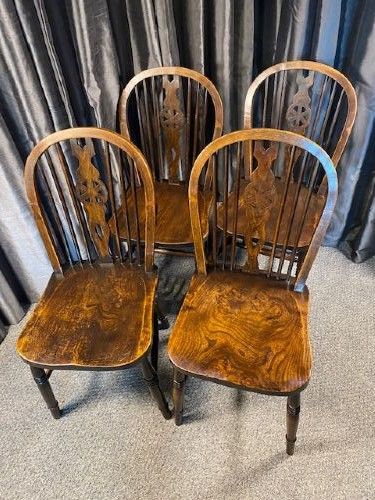

Country Windsor Dining Chairs
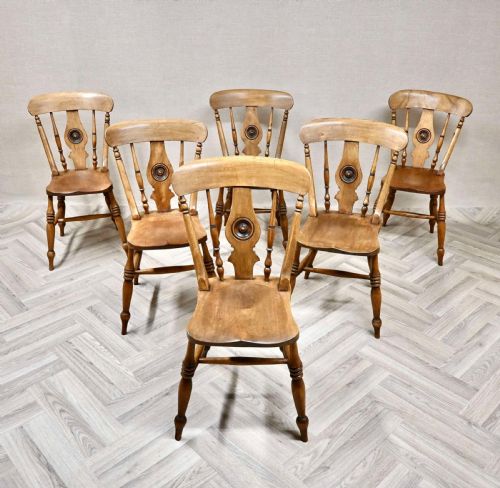
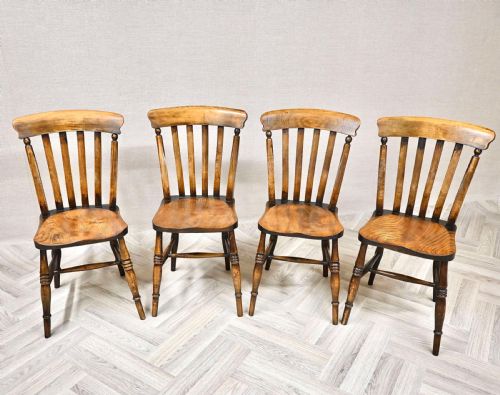
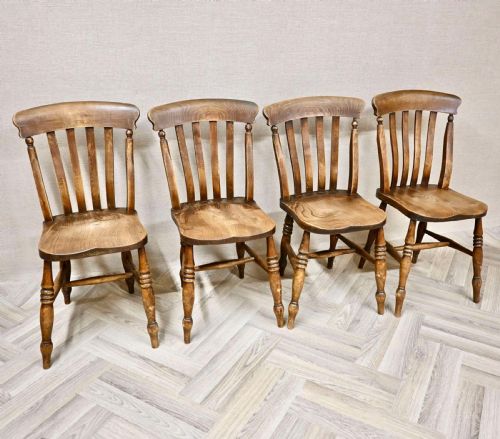
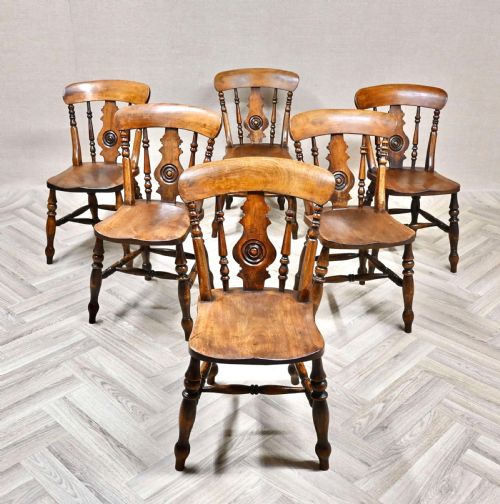
Country windsor dining chairs bring vernacular regional seating into domestic spaces, offering traditional timber construction shaped for daily utility.
Country Windsor Dining Chairs
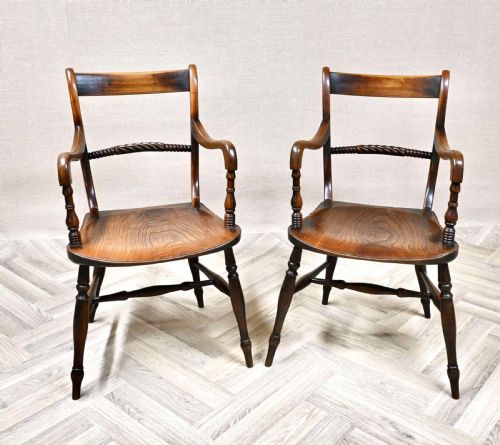
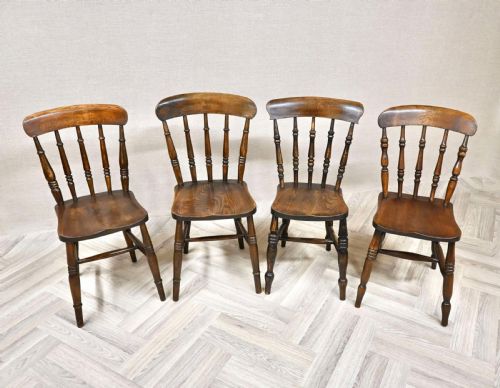
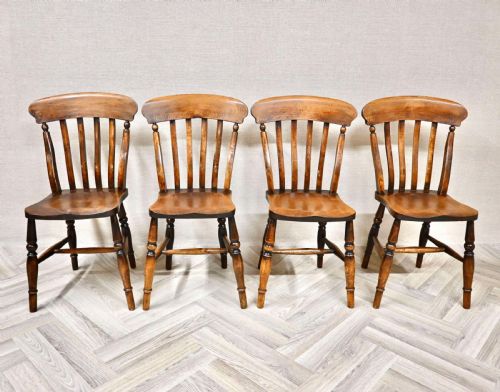
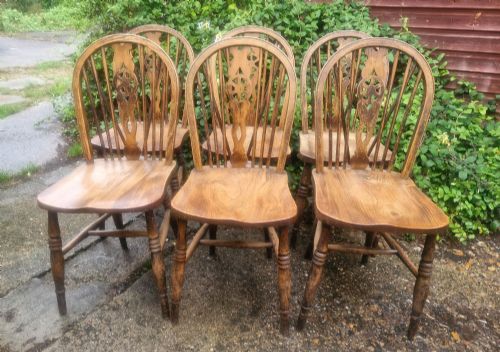
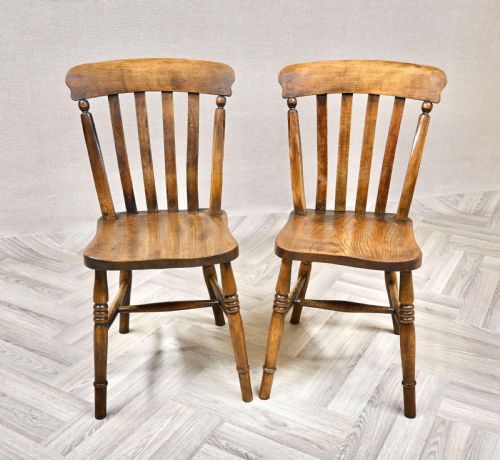
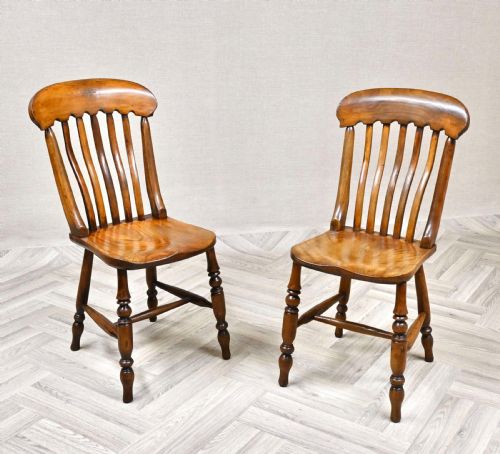
Country windsor dining chairs comprise vernacular seating forms developed across English regions, featuring distinct stick-back, hoop-back, and wheel-back variations. Surviving examples date primarily from the nineteenth and early twentieth centuries, reflecting rural workshop traditions.
Buyers commonly encounter sets and pairs designed for farmhouse kitchens and dining rooms. These pieces combine heavy plank seats with turned legs and steam-bent components to balance structural rigidity with domestic comfort.
How They Were Made
Traditional makers utilised a combination of native timbers, pairing sculpted solid elm seats with ash or beech spindles and legs. Yew wood appears in select high-grade regional pieces, valued for distinctive grain patterns and tensile strength.
Construction relied on bodging techniques where turned components and steam-bent backbows fitted directly into bored holes in the thick wooden seat. This pegged post-and-rail assembly provided durable flexibility under regular use.
Rural bodgers often shaped chair legs directly in woodland clearings using pole lathes before assembling the final seating.
What Varies In Quality
Quality rests upon the crispness of the turning on spindles and legs, alongside the sculptural depth of the saddle seat. Superior pieces exhibit well-balanced proportions and comfortable rake angles in the back assembly.
The integrity of matching sets influences value, as harlequin groupings differ from uniform workshop productions. Timber selection also dictates distinction, with highly figured yew or substantial elm planks marking out finer regional output.
The Country Windsor Dining Chairs Glossary
- Hoop back
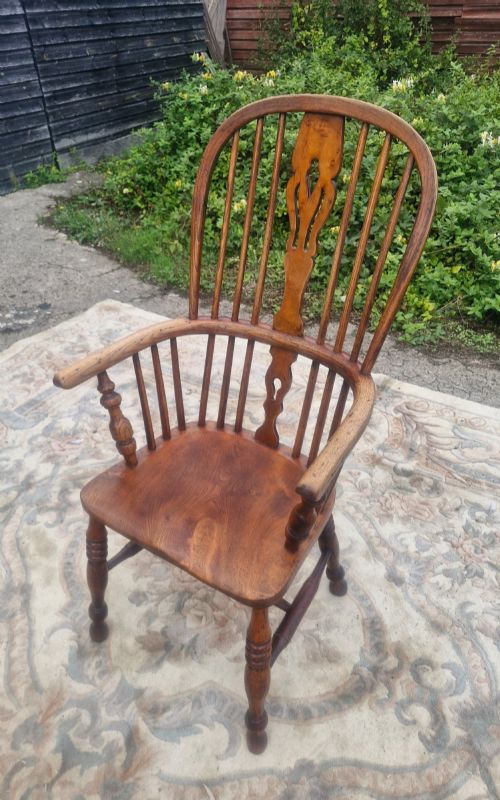
- A continuous bentwood bow forming the top rail and arms of an armchair. This resilient arch distributes weight evenly across the supporting vertical spindles.
- Wheel back
- A central splat pierced and carved in the silhouette of a spoked carriage wheel. This decorative motif gained popularity during the Victorian period.
- Crinoline stretcher
- An arched underframe connecting the legs of a chair to provide rigidity. The curved metal or wooden brace often resembles a hooped petticoat.
- Saddle seat
- A solid timber seat base scooped and carved into a comfortable ergonomic contour. Elm was the preferred wood for this shaping due to its interlocking grain.
- Smokers bow
- A low-backed Windsor armchair designed for domestic or tavern seating. The rounded crest rail accommodates relaxed posture during prolonged sitting.
Country Windsor Dining Chairs: Frequently Asked Questions
What woods were used for these chairs?
Makers relied on native British hardwoods chosen for specific structural properties. Elm provided a resilient, splitting-resistant base for carved seats.
Ash and beech supplied strong, flexible material for turned legs and steam-bent spindles. Yew was reserved for high-status regional armchairs.
How do I identify different back types?
Back styles reflect regional variations and chronological development across the nineteenth century. Stick backs and comb backs represent earlier vernacular traditions.
Wheel backs, lath backs, and bar backs emerged later to satisfy Victorian domestic dining preferences.
Were these chairs made in sets?
Workshop production often supplied matching sets of four, six, or more for farmhouse dining tables. Larger sets frequently comprise assembled harlequin groups gathered over time.
Armchairs were typically produced individually or as pairs to accompany side chair sets.
How should I care for antique timber?
Maintain stable indoor humidity levels to prevent timber shrinkage and subsequent joint loosening. Avoid placing chairs near direct heat sources or strong sunlight.
Apply traditional wax polish sparingly to nourish the dry hardwood surface without building heavy residues.