


Country Style Oak Stool
Country style oak stool choices combine solid timber construction with traditional seating surfaces, offering sturdy utility for everyday seating.
Country Style Oak Stool
A country style oak stool provides practical seating through various historical periods, ranging from early examples to later revival pieces. Buyers exploring this category encounter sturdy forms designed for functional utility in domestic spaces.
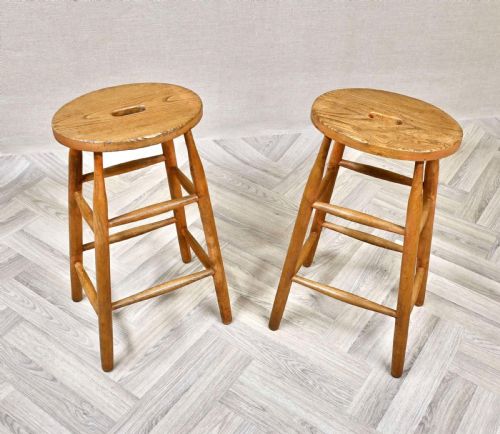
The selection includes low footstools, joint stools, long window seats, and tall bar stools. Common seating variations feature woven rush, woven cane, solid timber, and fabric pads.
Origins span across the seventeenth century, the Georgian era, the nineteenth century, and early twentieth-century decades including 1910, 1920, and 1930. Rustic farmhouse, Gothic revival, and Jacobean styles dominate the construction aesthetics.
Materials and construction methods
Makers utilised solid oak for frames, legs, and stretchers, occasionally incorporating solid pine in structural elements. Timber surfaces display the natural grain and age-related characteristics of hardwood construction.
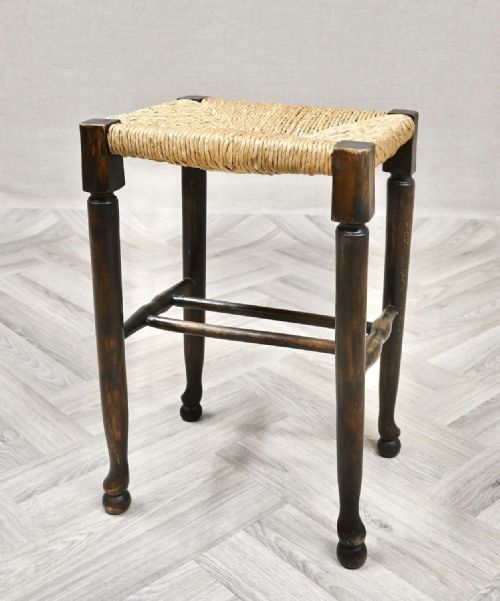
Seating areas incorporate natural materials such as rush and canework woven into wooden frameworks. Fabric upholstery and solid boarded timber tops appear across different period examples.
Some stools arrived in groups of three, suggesting dining tables once required matching company for every member.
Factors that distinguish quality
Quality differences depend upon the integrity of the wooden joins and the tightness of woven rush or cane surfaces. Original period construction methods display greater stability than later revival interpretations.
The depth of patination on the oak timber and the precision of carpentry details differentiate standard utility pieces from finer examples. Structural preservation of stretcher frames and leg assemblies dictates overall longevity.
The Country Style Oak Stool Glossary
- Joint stool
- A traditional wooden stool constructed with mortise and tenon joints rather than turned legs. These sturdy seats date back to early centuries and provide solid domestic utility.
- Rush seat
- A seating surface woven from dried marshland plants over a wooden frame. This traditional technique creates a textured, supportive pad.
- Cane work
- A seating technique utilising woven rattan strips to form a light, patterned mesh panel. It appears on footstools and decorative seats.
- Gothic revival
- An architectural and decorative style drawing inspiration from medieval forms. Pieces display pointed arches, tracery, and formal structural lines.
- Jacobean
- A seventeenth-century design style characterised by heavy turned supports and rectilinear framing. Later revival pieces emulate these early structural characteristics.
Country Style Oak Stool: Frequently Asked Questions
What is a joint stool?
A joint stool is a sturdy wooden seat built with joined framing timbers rather than turned legs. These pieces were historically used around the home for various domestic tasks.
They appear across seventeenth-century and revival periods, offering heavy timber construction and practical proportions.
How do rush and cane seats differ?
Rush seats utilise twisted marsh plants woven into a thick, textured pad designed for regular seating use. Cane seats employ thin woven rattan strips to create a patterned, lighter mesh panel.
Both materials represent traditional methods for finishing wooden stool tops.
Are tall bar stools period antiques?
Tall bar stools in this category include twentieth-century examples alongside traditional lower forms. Construction dates span from earlier centuries up to 1930.
Buyers find both high seating variations and standard height window seats or footstools.
How do I identify a Gothic style stool?
Gothic style stools incorporate architectural details such as boarded construction, trestle forms, and medieval-inspired woodwork. These elements appear on nineteenth-century pieces and earlier items.
The aesthetic emphasises solid wooden panels and formal structural lines.