



Country Regency Side Chairs
Country regency side chairs unite formal Regency elegance with regional vernacular utility, offering robust domestic seating that anchors a traditional interior.
Country Regency Side Chairs
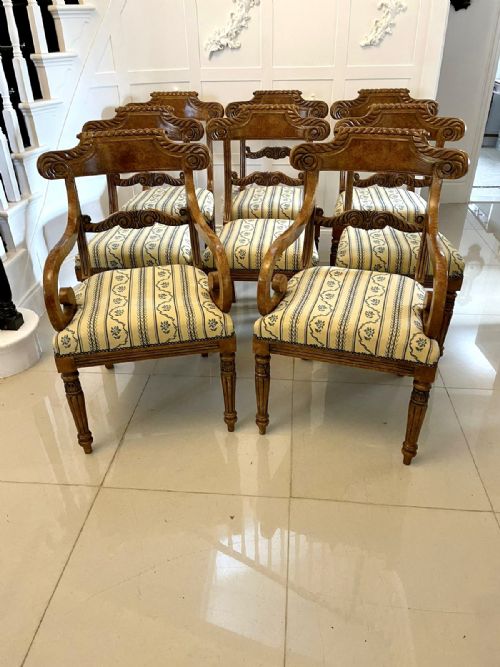
Country regency side chairs blend urban neoclassical design with rural cabinetmaking traditions, emerging from the period around eighteen hundred through to the nineteenth century. These pieces function primarily as dining chairs, kitchen chairs, or occasional hall seating within domestic interiors.
The inventory on this page contains items spanning the Regency period, eighteen hundred, the nineteenth century, eighteen ninety, and nineteen twenty. Styles vary across English Country, Grand Regency, English Country Georgian, Georgian Country, Country Vernacular, and Regency Country.
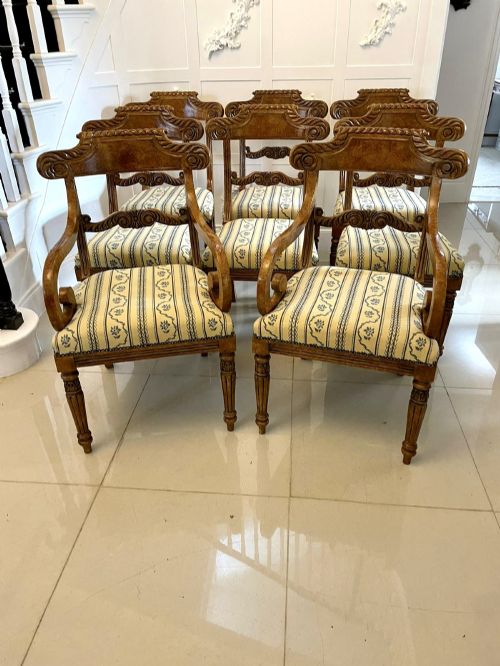
Buyers will most frequently encounter side chairs, dining chairs, occasional chairs, and hall chairs. Forms include matched sets, pairs, and individual pieces intended for practical daily use around a table or along a wall.
Materials and construction
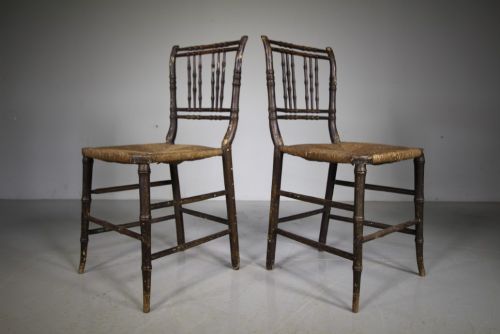
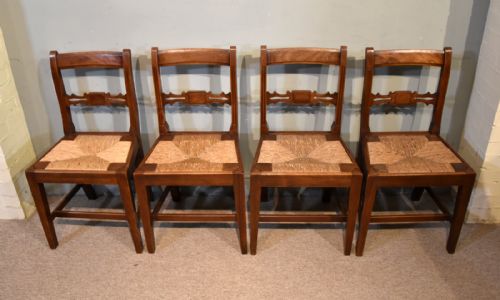
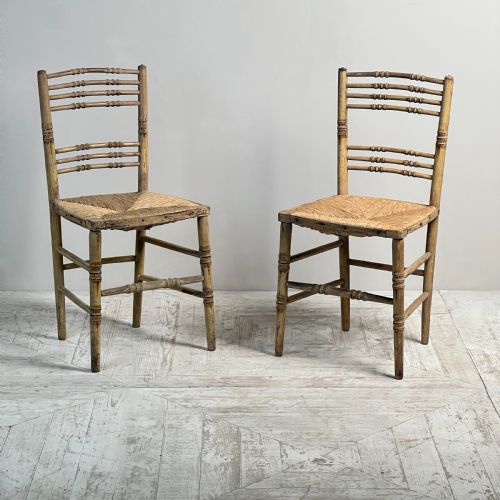
Cabinetmakers utilised a diverse palette of timbers including oak, mahogany, elm, beech, fruitwood, and pine alongside hardwoods. Seats are formed from solid wood planks or woven rush, while select examples incorporate upholstered pads covered in fabric.
Surface treatments range from plain polished wood to painted finishes and faux bird's-eye maple decoration. Construction relies on traditional joinery methods suited to the demands of kitchen and dining environments.
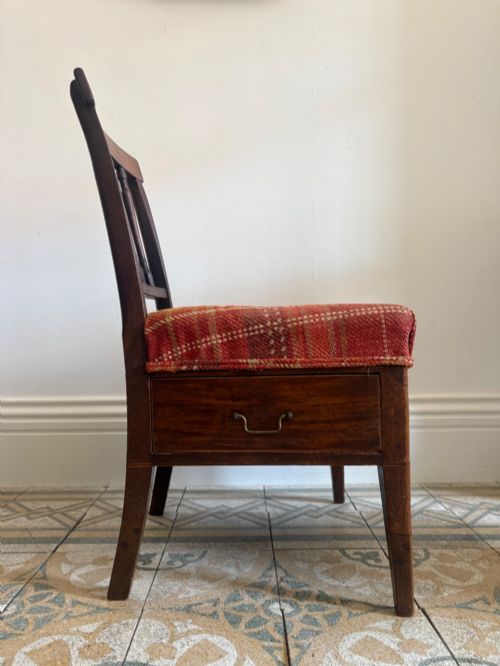
One exceptional chair includes a built-in drawer, proving that country cabinetmakers loved hiding things just as much as city makers.
Judging quality in country chairs
Quality separates through the selection of timber and the ambition of the surface finish, moving from utilitarian fruitwood and elm up to figured mahogany or decorative painted schemes. The crispness of turning on legs and spindles indicates the skill of the rural maker.
The Country Regency Side Chairs Glossary
- Regency
- A British design period spanning the early nineteenth century, characterised by classical revival motifs and refined proportions. It draws inspiration from ancient Greek, Roman, and Egyptian forms.
- Vernacular
- Architecture and furniture built by local craftsmen using traditional regional methods and materials, rather than high-style metropolitan designs. These pieces reflect the practical needs of rural communities.
- Rush seat
- A seating surface woven from dried marsh grasses twisted into cords, providing a flexible and durable platform. This technique appears frequently in traditional country seating.
- Fruitwood
- Timber harvested from fruit-bearing trees such as pear, apple, or cherry, known for a fine grain and warm tone. Country cabinetmakers utilised it as an accessible alternative to mahogany.
Country Regency Side Chairs: Frequently Asked Questions
How do I date these chairs?
Dating relies on examining the timber species, construction techniques, and stylistic markers such as leg turning and backrest shape. Pieces from the early nineteenth century show hand-tool marks and timber shrinkage consistent with age.
Later nineteenth-century and early twentieth-century examples often display standardised machine joinery and different finishing methods that distinguish them from period originals.
Can I use them for daily dining?
Most of these chairs were built for active domestic service in kitchens and dining rooms, making them structurally suited for everyday use. Elm, oak, and hardwood frames provide the necessary strength for modern seating.
Regular checks on joints ensure stability, particularly for older frames that have experienced centuries of movement and changes in central heating.
Are painted finishes original?
Painted surfaces and faux finishes like bird's-eye maple appear on select Regency and later pieces to imitate more expensive exotic woods or to suit fashionable interiors. Pigments and application methods help determine whether a paint layer dates to the period of manufacture.
Subsequent decorative layers are common on vernacular furniture, reflecting changing domestic tastes across generations of use.
What is a matched set?
A matched set comprises chairs that share a similar style, period, and material but were gathered together after initial production rather than born as a single workshop commission. Minor variations in dimensions or turning often reveal this composite history.
Such sets offer a practical solution for furnishing a dining table while retaining a unified historical appearance.