





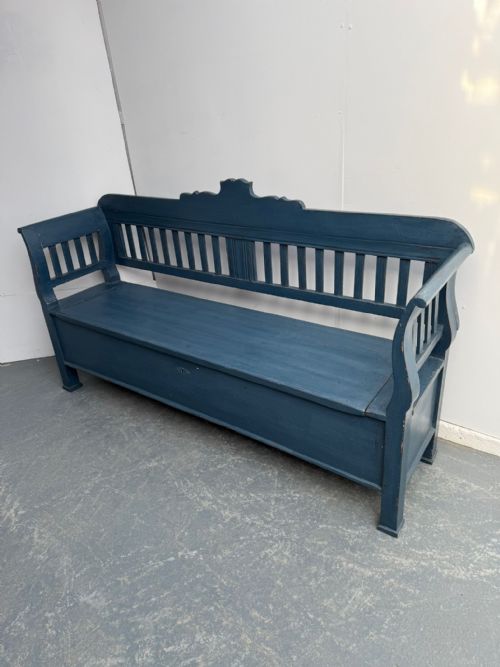

Country Pine Storage Bench
Country pine storage bench seating delivers sturdy utility and rustic charm, uniting practical compartments with regional character.
Country Pine Storage Bench
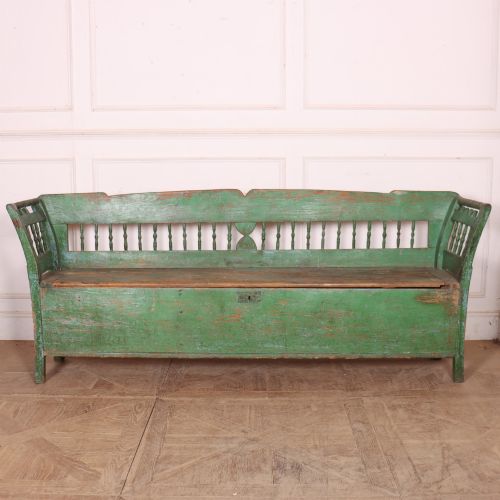
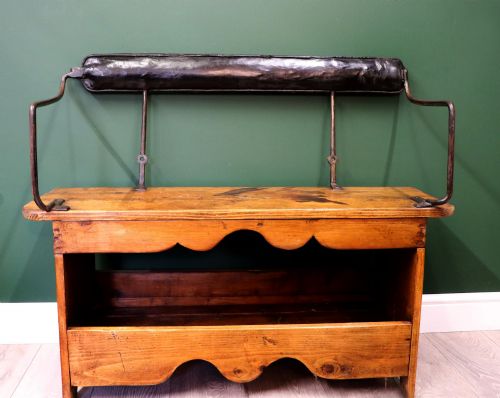
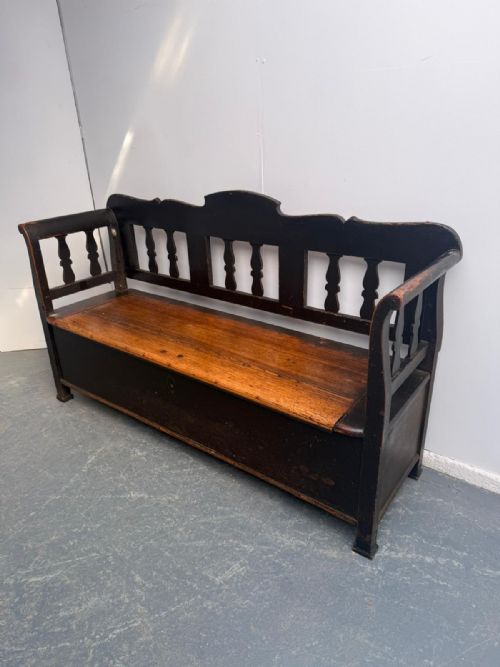
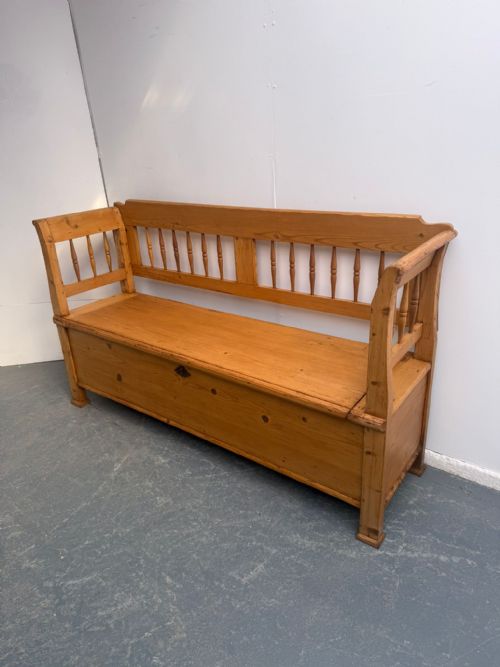
A country pine storage bench serves as a dual-purpose seat and receptacle, originating in domestic and tavern interiors across Europe and Britain. These pieces provide concealed cavity space beneath the hinged or lifting seat while accommodating two to four occupants.
The selections available here predominantly span the Georgian, Victorian, and nineteenth-century periods, alongside specific regional interpretations. Settles and hall benches feature high backs to block draughts, while box forms prioritise internal volume.
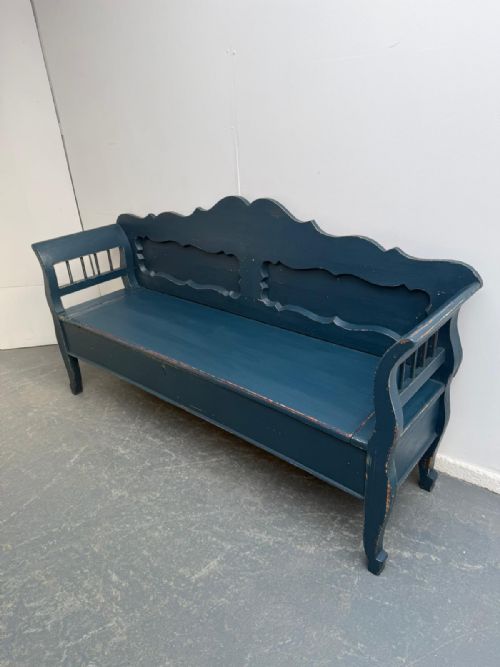
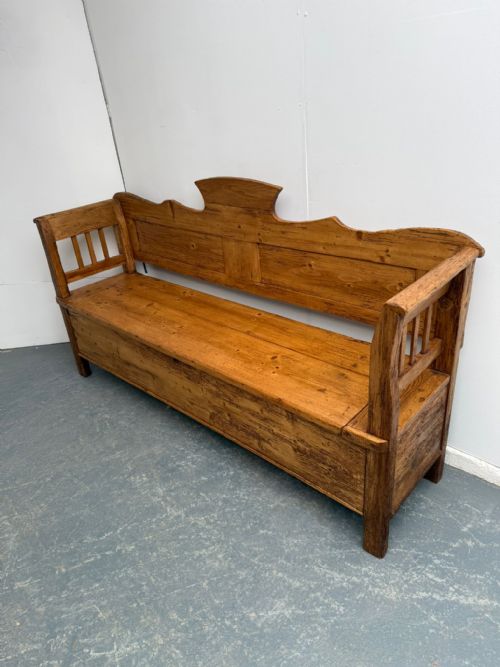
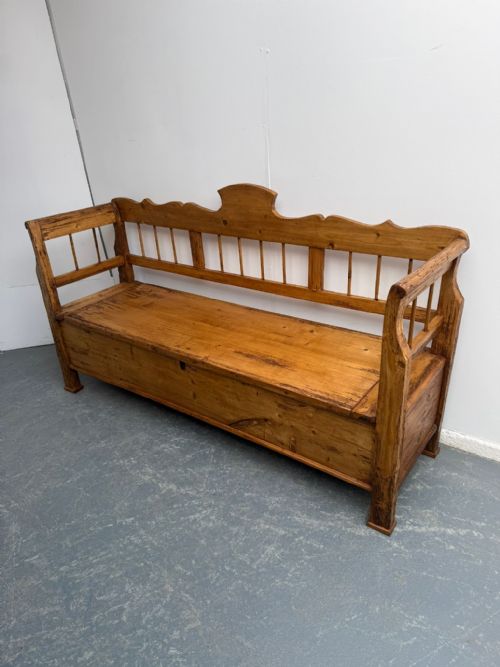
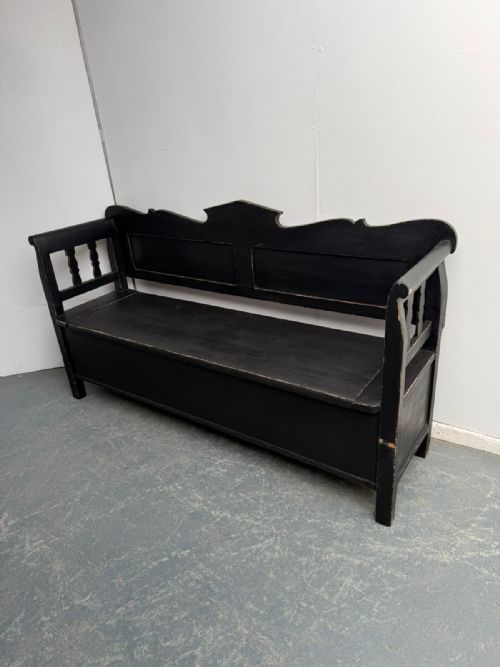
Hungarian and Swedish examples dominate the inventory, accompanied by English regional pieces. Buyers frequently encounter painted surfaces in blue, grey, or black, alongside traditional waxed finishes highlighting the softwood grain.
Factors determining quality
Quality rests in the survival of original surfaces and structural integrity rather than pristine condition. Pieces retaining their initial blue, grey, or black paint layers command greater interest than those stripped down to bare timber.
Proportion and joinery differentiate standard workshop output from finer vernacular pieces. Panel construction, integrated armrests, and untouched hardware contribute to the authenticity and visual presence of the seating.
Several Hungarian settles arrived with hidden compartments originally meant to keep family valuables safe from wandering livestock.
The Country Pine Storage Bench Glossary
- Settle
- A wooden bench with a high panelled back and solid arms, designed to shield sitters from cold draughts in domestic halls.
- Box settle
- A bench featuring an enclosed compartment beneath the seat for storing blankets, household provisions, or clothing.
- Vernacular
- Artefacts made by regional craftsmen using local materials to meet domestic needs, ignoring academic design canons.
- Spindled
- Featuring turned vertical wooden rods supporting the backrest or arm assemblies for decorative effect.
- Waxed finish
- A protective coating rubbed into the bare timber to nourish the pine and produce a soft sheen.
Country Pine Storage Bench: Frequently Asked Questions
How are these benches used today?
These pieces serve effectively in hallways, boot rooms, and kitchens for seating and concealing footwear or linens. Their deep storage capacity keeps household clutter out of sight.
Positioning a settle against a dining table or along a narrow passage creates a strong focal point while maintaining daily practicality.
What periods do these benches date from?
The inventory spans the eighteenth century through to the Edwardian era, with nineteenth-century pieces appearing most frequently. Georgian and Victorian examples form the backbone of the selection.
Dates are determined by construction techniques, moulding profiles, and regional stylistic traits rather than explicit makers' marks.
Are the paint finishes original?
Many listings preserve their early or original painted surfaces in blue, grey, or black pigments. Over time, these coatings acquire natural patination through handling.
Some pieces have been stripped or rewaxed in past decades, which changes the visual texture but preserves the underlying pine structure.
Where do these pieces originate?
Origin points span several European regions, including Hungary, Sweden, Austria, and England. Each area imparted distinct structural quirks and decorative painted palettes to the furniture.
Swedish and Hungarian examples often feature distinctive colour schemes and folk art detailing distinct from English tavern furniture.