

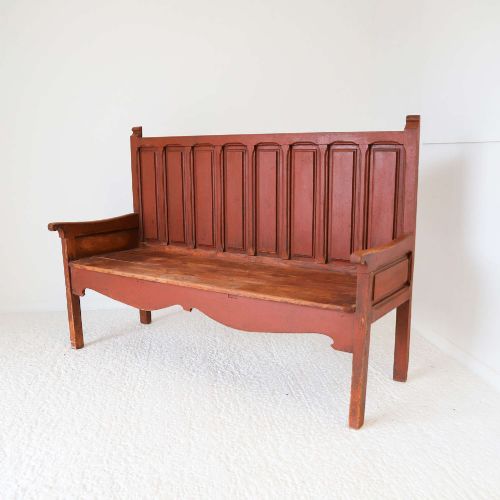
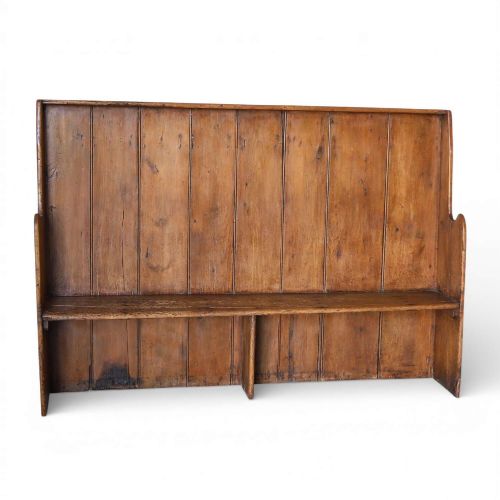
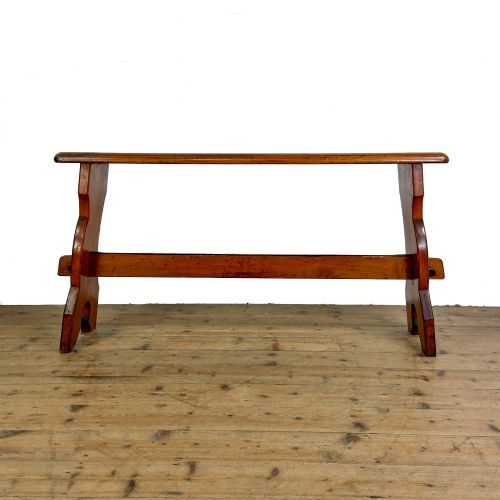
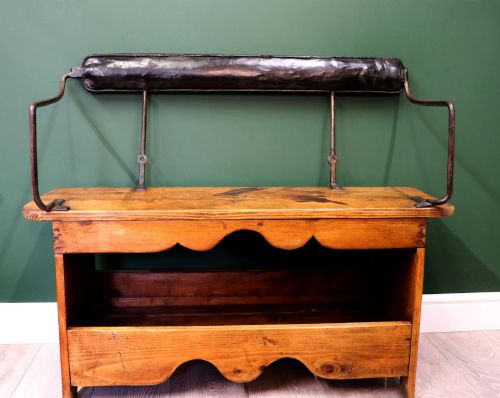

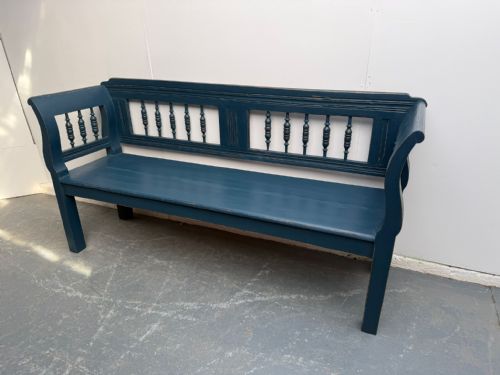


Country Pine Pew
A country pine pew offers solid timber seating rooted in domestic, tavern and ecclesiastical history, built to endure generations of daily use.
Country Pine Pew
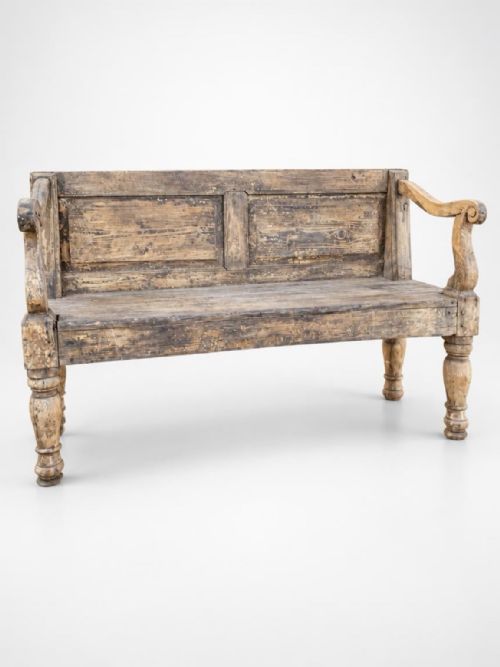
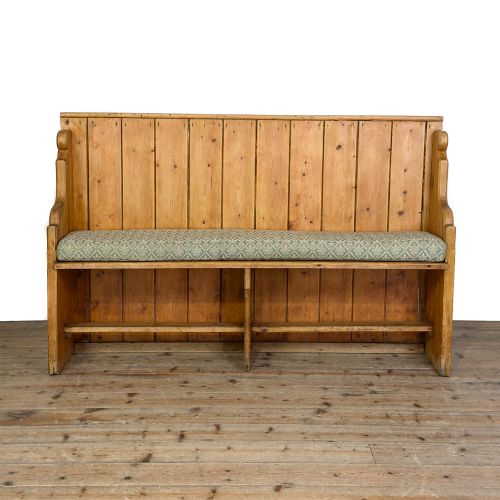
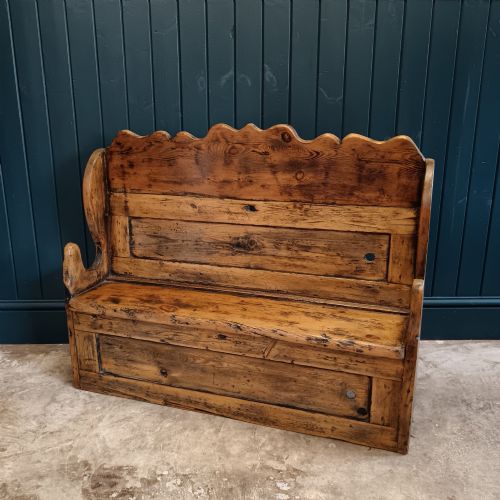
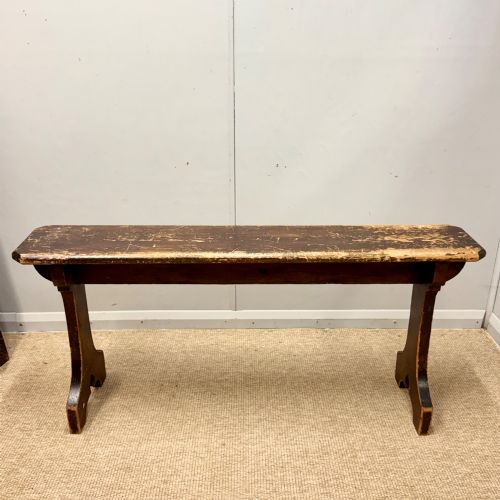
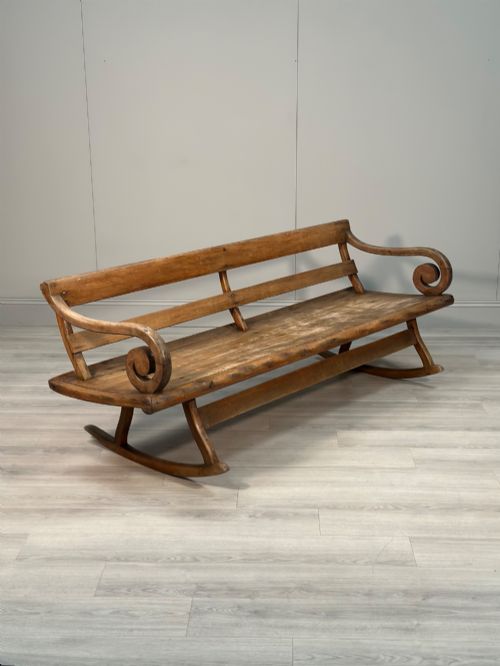
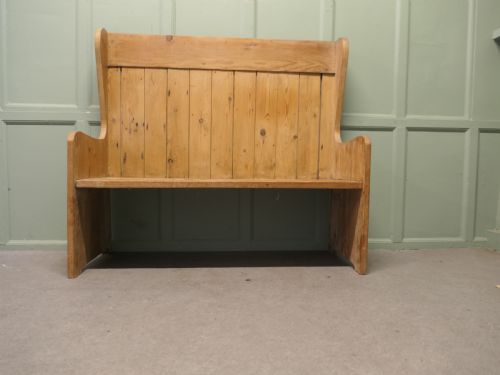
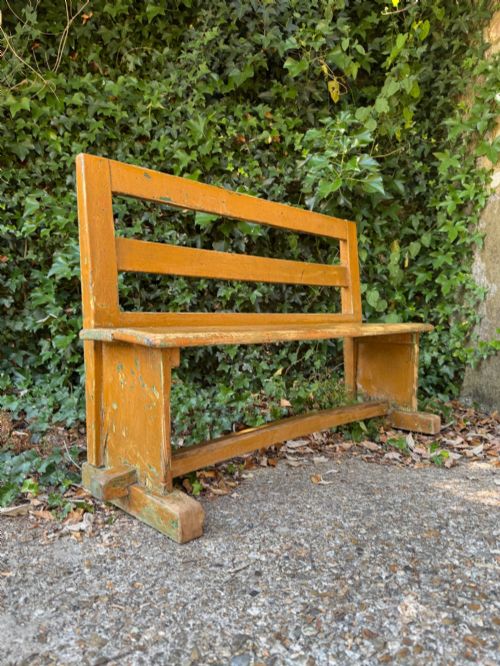
A country pine pew is a functional bench designed for communal seating in churches, pubs, and farmhouses. These pieces range from simple open benches to high-backed settles fitted with protective side panels.
The selections available here lean heavily towards nineteenth-century examples alongside eighteenth-century forms and early twentieth-century variants. Regional origins extend across England, Spain, France, Scandinavia, and Eastern Europe.
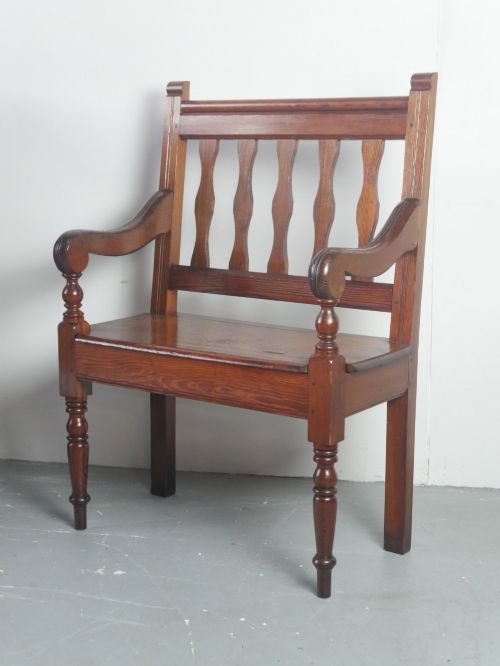
Forms include church pews, tavern benches, hallway seats, and large settles with canopies or barrel backs. Buyers find both natural waxed finishes and original painted surfaces in colours like blue.
How they were made
Construction relies primarily on solid pine and pitch pine, occasionally paired with elm for seats or iron bracing for structural support. Carpenters utilised sturdy joinery such as mortise and tenon joints to withstand heavy weight and constant movement.
Surfaces were finished with natural wax to nourish the timber, or coated in traditional paint that has worn down over decades of use. Timber selection often dictated whether a piece received a clear finish to highlight the grain or a painted coat.
Country Pine Pew Retail Price Guide 2026
Typical asking prices for country pine pew among the pieces listed under this phrase on Sellingantiques today, from the lower quarter to the upper quarter. They describe what is for sale here now, not the wider market.
Listings span the eighteenth, nineteenth, and early twentieth centuries, featuring pine, pitch pine, elm, and iron across various European origins.
What varies in quality
Quality rests in the integrity of the original construction and the preservation of authentic surface patination, such as a deep honey brown tone or untouched early paint. Pieces retaining their full structural height and original backboards command greater appreciation.
Proportion and scale also separate standard utility benches from finer domestic settles, particularly those featuring canopies, barrel backs, or clever spatial design. Untouched regional characteristics maintain the historical character of each bench.
The Country Pine Pew Glossary
- Settle
- A wooden bench with a high back, solid arms, and often a storage compartment beneath the seat. This form protected sitters from draughts in older homes and taverns.
- Patina
- The surface sheen and colour developed over decades through handling, waxing, and ageing. A desirable patina shows genuine history rather than artificial ageing.
- Pitch pine
- A dense, resinous variety of pine known for its durability and strong grain pattern. Makers frequently utilised this timber for items requiring extra structural strength.
- Canopy
- A wooden hood or projecting top fitted above the back of a settle. This architectural feature trapped heat from fires and sheltered occupants from cold air.
Country Pine Pew: Frequently Asked Questions
Where were country pine pews used?
These benches served multiple environments, appearing in village churches, country pubs, farmhouse kitchens, and grand hallways. Their robust build suited spaces requiring communal seating that could withstand heavy, daily wear.
Domestic versions often sat beside hearths where high backs blocked cold draughts, while tavern variants furnished taprooms for patrons.
How do I care for a pine bench?
Maintain the timber by applying a traditional beeswax polish occasionally to nourish the wood and protect the surface. Avoid placing pine seating near direct heat sources or in damp areas to prevent splitting.
Keep painted surfaces clean with a dry or lightly damp cloth without harsh chemical cleaners that might strip the historic finish.
How can I tell the age of a pine pew?
Dating relies on examining construction methods, tool marks, timber density, and the nature of the surface wear. Hand-cut joints and authentic patination point towards earlier centuries, while twentieth-century examples show different manufacturing traces.
Regional styles and hardware like old iron fixings also provide clues to the period of origin.