





Country Oak Wardrobe
A country oak wardrobe brings deep grain and honest storage to a room, offering centuries of utilitarian craft.
Country Oak Wardrobe
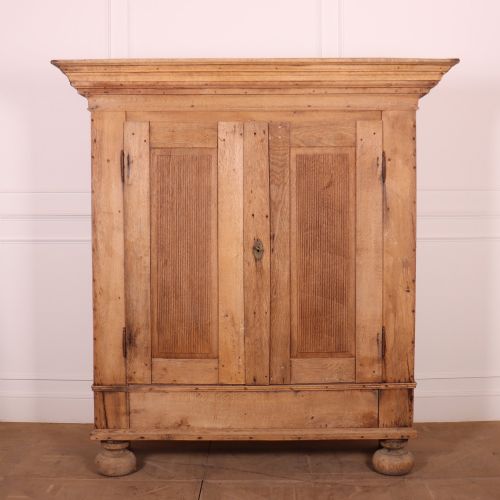
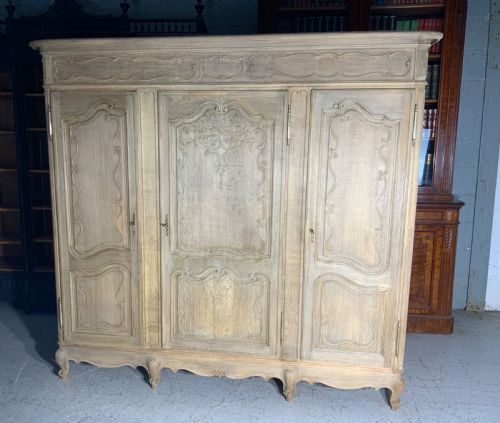
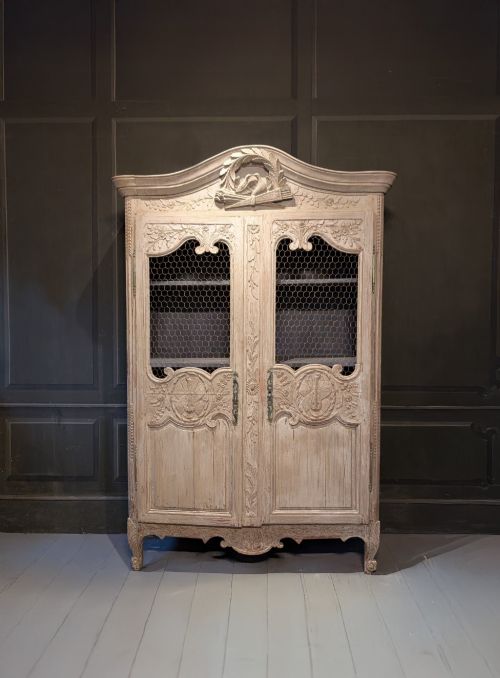
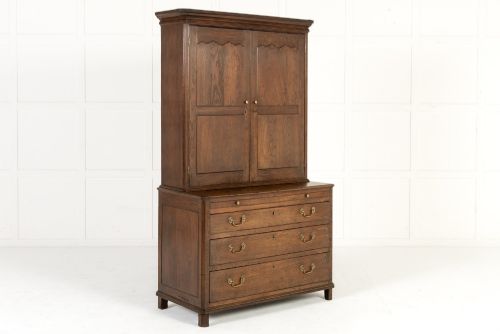
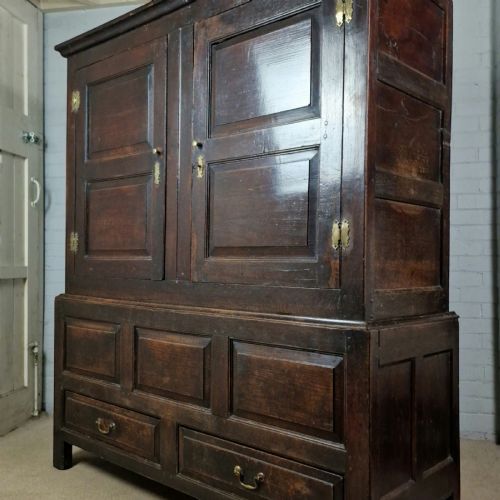
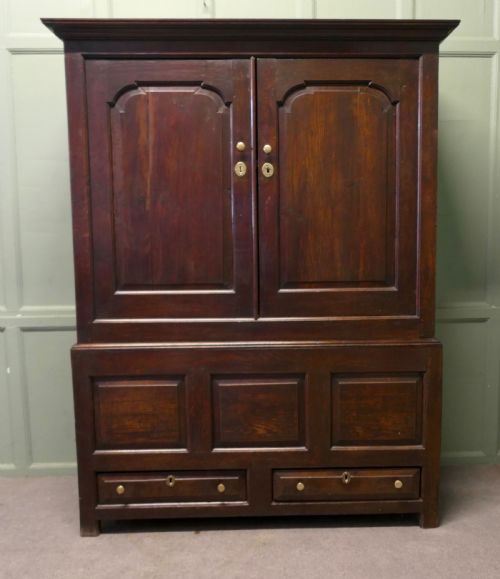
A country oak wardrobe encompasses a variety of substantial storage furniture, ranging from early press cupboards and livery cupboards to tall French armoires and housekeeper's cupboards. These pieces originate from regional workshops in England, Wales, and France, reflecting local domestic needs rather than metropolitan fashions.
The versions most commonly met on this page date from the seventeenth, eighteenth, and nineteenth centuries, with Georgian examples and Welsh vernacular pieces appearing frequently. Buyers encounter single, double, and triple configurations, sometimes built in two distinct stages to ease transport through low cottage doorways.
Internal layouts vary considerably, reflecting original domestic functions such as hanging garments, storing household linens, or housing tack and harnesses. Many examples retain functional hooks, shelves, or linen slides behind solid panelled doors.
Materials and Construction
Solid oak serves as the primary structural material, often complemented by secondary timbers for internal shelving and backboards, while finishes range from natural waxed grain to historic painted surfaces and bleached treatments. Cabinetmakers utilised sturdy frame-and-panel construction to accommodate the natural expansion and contraction of timber over decades of fluctuating humidity.
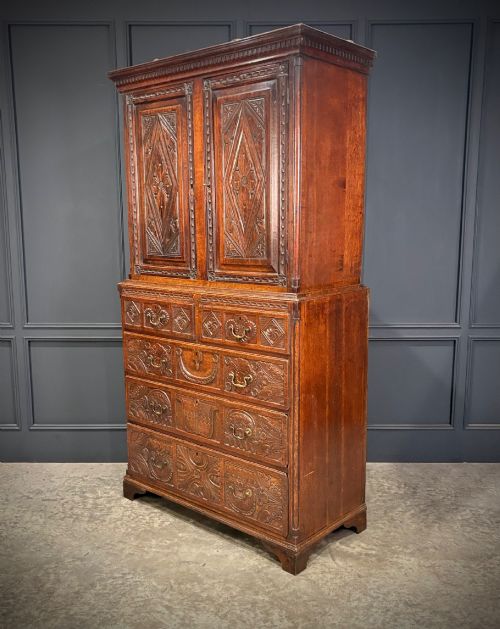
Joinery relies on traditional pegged joints, dovetails, and hand-cut mouldings rather than modern mechanical fastenings. Iron, brass, and steel hinges, latches, and escutcheons secure heavy doors, while decorative touches include carved panels, marquetry inlay, and simple turned feet.
Country Oak Wardrobe Retail Price Guide 2026
Typical asking prices for country oak wardrobe among the pieces listed under this phrase on Sellingantiques today, from the lower quarter to the upper quarter. They describe what is for sale here now, not the wider market.
Listings feature country oak wardrobe variants spanning the seventeenth to the twentieth centuries, incorporating both English vernacular pieces and French provincial armoires.
Evaluating Quality
Quality rests in the integrity of the timber selection, the crispness of hand-carved details, and the survival of original patination. Pieces that retain their original brass or iron hardware and unblemished internal configurations command greater respect from collectors.
Proportion and scale distinguish finer vernacular pieces from heavier, utilitarian boxes. The harmony between the cornice, panelled doors, and base plinth reveals the competence of the regional cabinetmaker who built the piece.
Gillows of Lancaster
The Country Oak Wardrobe Glossary
- Livery cupboard
- A traditional storage piece originally used for provisions or clothing, pre-dating the modern dedicated wardrobe. These often feature panelled doors and internal shelving.
- Press cupboard
- A two-stage storage item with enclosed shelving or linen slides in the upper section and drawers below. They were essential for keeping household textiles flat and organised.
- Armoire
- A large freestanding cupboard of continental European origin, typically fitted with internal hanging space or shelves. French provincial examples often display softer lines and lighter carved decoration than English equivalents.
- Peg joined
- A method of assembly where tenoned joints are secured with wooden pegs rather than metal nails. This traditional technique allows the timber to move naturally without weakening the structure.
- Housekeeper's cupboard
- A large utility piece designed for storing household linens, blankets, and dry goods. They often feature multiple doors and internal compartments reflecting busy domestic service.
Country Oak Wardrobe: Frequently Asked Questions
How do I date an old oak wardrobe?
Dating relies on examining construction methods, tool marks left by hand planes, and the style of mouldings or panels. Earlier pieces from the seventeenth and eighteenth centuries often utilise pegged frames and hand-carved details, whereas nineteenth-century iterations incorporate machine-sawn timber and standard dovetails.
Hardware provides another reliable indicator, as hand-forged iron hinges and early brasses differ markedly from later Victorian fastenings. Comparing the timber patination across interior and exterior surfaces also helps establish age.
Will a country oak wardrobe fit in a modern bedroom?
These wardrobes vary significantly in scale, with many regional English and Welsh pieces designed for lower cottage ceilings. Some larger armoires and press cupboards dismantle into sections, making transit through stairwells and doorways manageable.
Measuring the clearance required for opening panelled doors is essential before placement. Consulting the listed dimensions ensures the piece suits the designated wall space without overwhelming the room.
What is the difference between a press cupboard and a wardrobe?
A traditional wardrobe is designed primarily for hanging garments vertically on rails or hooks. A press cupboard incorporates internal shelving or sliding trays intended for folded linens and textiles.
Many antique examples bridge these categories, having been adapted internally over time to accommodate modern clothing storage needs. Checking the interior layout in the listing confirms whether hanging space or shelving predominates.
How should I care for antique oak furniture?
Maintaining antique oak involves keeping the timber nourished with quality beeswax and avoiding synthetic polishes that build up over time. Natural beeswax preserves the historic patination and protects the grain from drying out.
Placement away from direct heat sources, such as radiators and fireplaces, prevents the timber from splitting or warping. Stable room humidity ensures the frame-and-panel construction remains sound for decades to come.