


Country Oak Hanging Cabinet
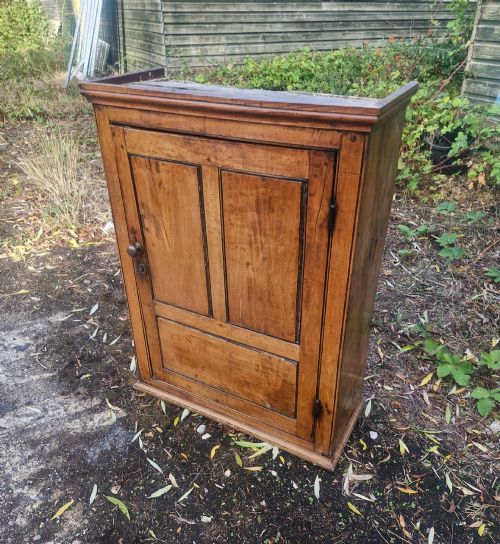
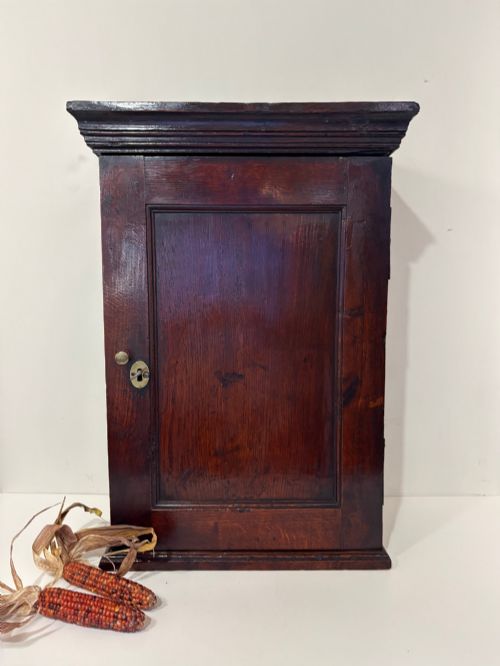
A country oak hanging cabinet brings practical storage and honest rural character directly to your wall.
Country Oak Hanging Cabinet
A country oak hanging cabinet provides wall-mounted storage through practical forms designed for everyday domestic use. When searching for a country oak hanging cabinet, buyers encounter various configurations built to save floor space in domestic interiors.
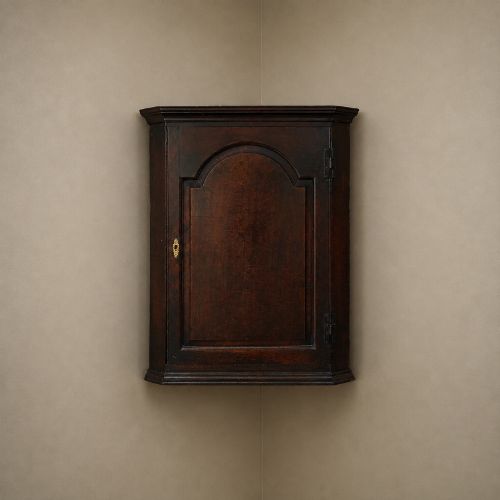
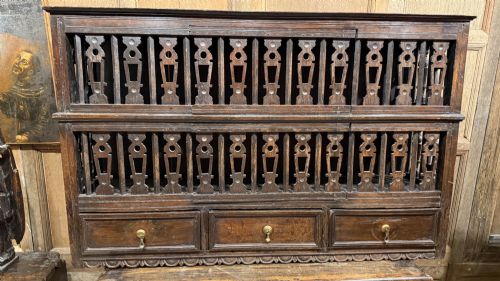
The selection ranges widely from corner cupboards and flat wall cabinets to spice boxes, food cupboards, and kitchen knife hanging boxes. Pieces originate primarily from Georgian and 18th-century periods, alongside 17th-century and 19th-century examples.
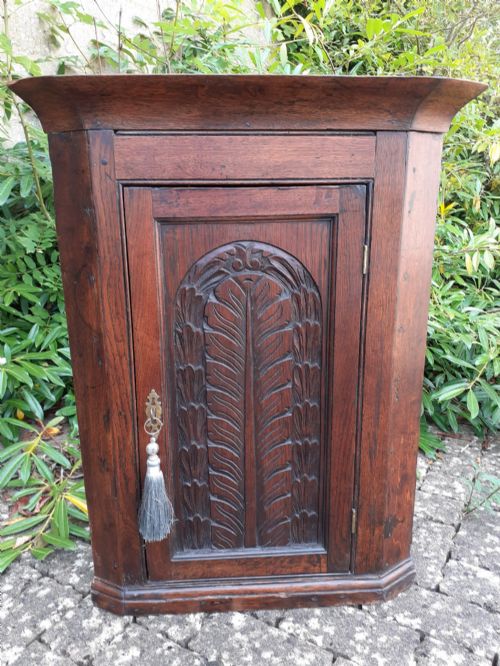
Regional variations appear frequently, including English country workshops and Welsh pieces from origins like Montgomeryshire, alongside French provincial examples. Corner cupboards dominate the forms, shaped specifically to fit snugly into room angles.
How they were made
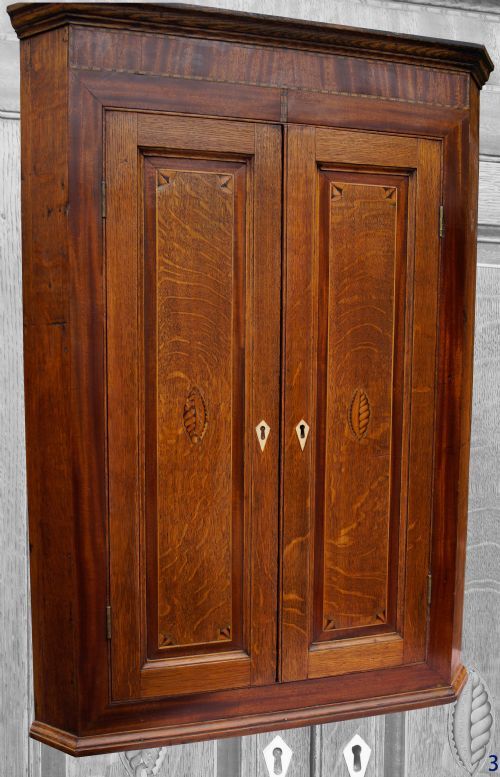
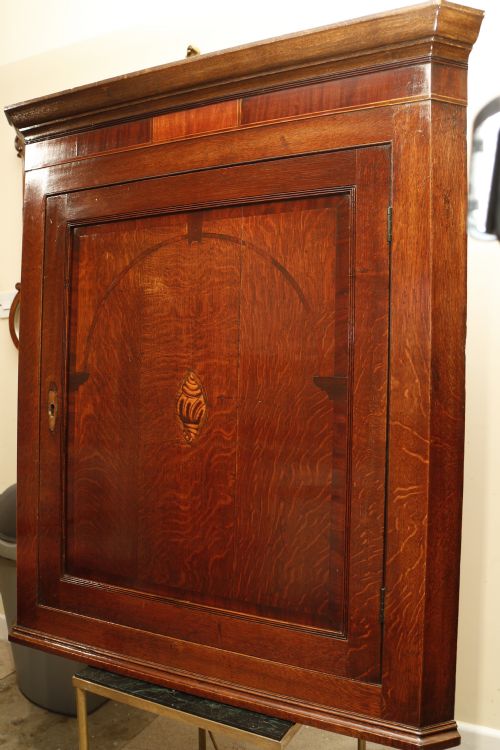
Makers built these pieces primarily using solid oak timbers, often supplemented with secondary woods such as pine for internal elements or backboards. Certain examples incorporate fruitwood or feature mahogany crossbanding and marquetry inlay.
Construction techniques relied on traditional joinery methods suited for wall-hung furniture that needed to bear weight securely. Iron hinges and brass hardware provided operational stability, while glass panels appeared in glazed doors on select early pieces.
Some narrow estate-made cupboards were built just deep enough to keep the kitchen knives safe from wandering fingers.
What varies in quality
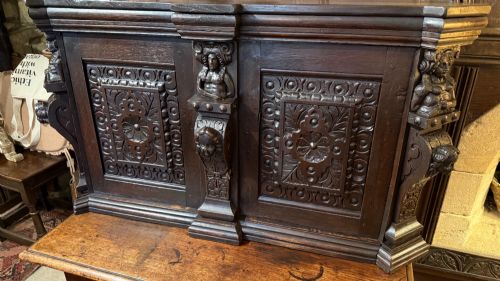
The degree of detail in carved ornamentation separates simpler utility pieces from finer vernacular examples. Carvings on panels and cornices reflect the skill of the regional maker and the intended status of the domestic interior.
Timber selection and secondary wood usage influence overall construction depth. The integration of decorative elements like mahogany crossbanding or marquetry inlay elevates the visual refinement of the cabinet.
The Country Oak Hanging Cabinet Glossary
- Corner Cupboard
- A cabinet constructed with an angled back to fit neatly into the corner of a room. These save valuable floor space while providing accessible storage.
- Crossbanded
- A decorative border technique where veneer strips run perpendicular to the grain of the central panel. This frames the primary wood surface.
- Livery Cupboard
- A traditional term for a small storage cabinet originally used to keep food and provisions ventilated. These wall-mounted versions kept perishables away from pests.
- Spice Box
- A compact wall-hanging cabinet featuring internal drawers or compartments. These held valuable seasonings and culinary ingredients securely.
Country Oak Hanging Cabinet: Frequently Asked Questions
How were these cabinets mounted on walls?
These cabinets utilised robust internal fixing points and integrated brackets designed to bear the weight of solid oak timbers.
Historic pieces often feature original hanging loops or sturdy backboards drilled for secure wall attachment.
How do I care for antique oak furniture?
Maintain the timber by avoiding direct sunlight and extreme temperature fluctuations that cause wood to split.
Apply a traditional wax polish sparingly to nourish the surface and preserve the natural grain.
Where were these cabinets typically used in the home?
Kitchens and pantries housed food cupboards, spice boxes, and knife boxes for immediate culinary access.
Living spaces and parlours displayed corner cupboards to store tableware and decorative household items.