
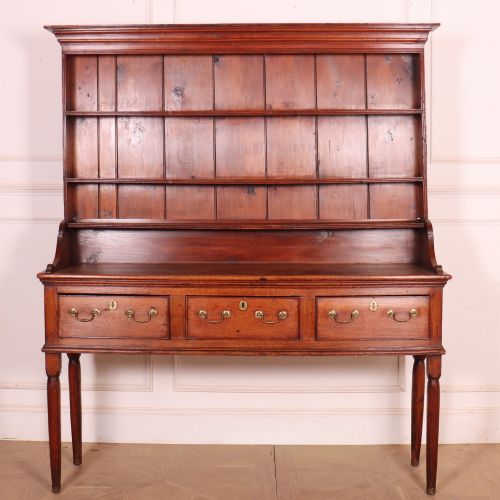
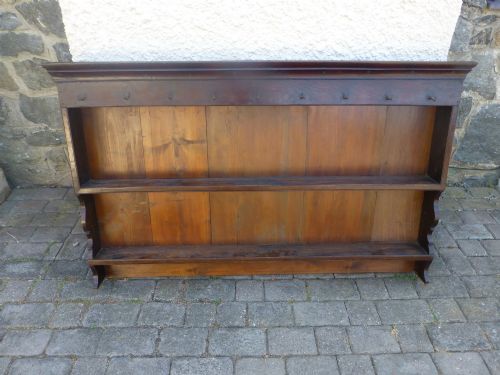
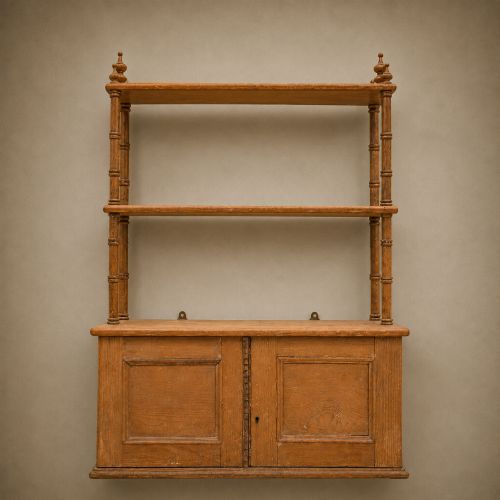
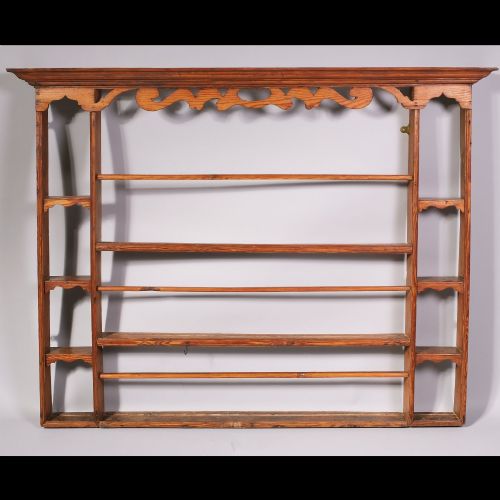
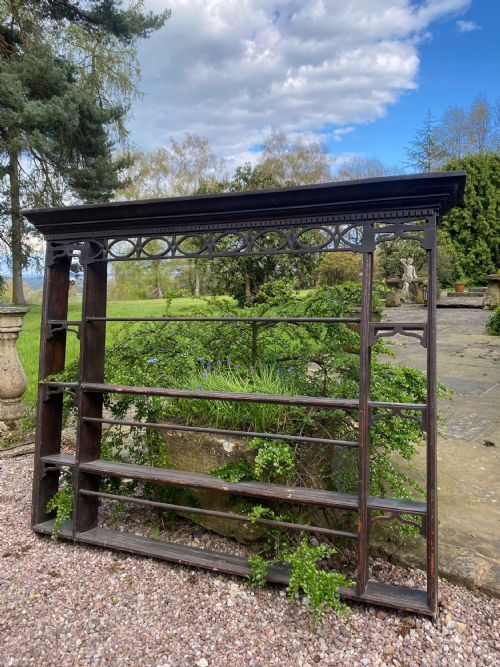
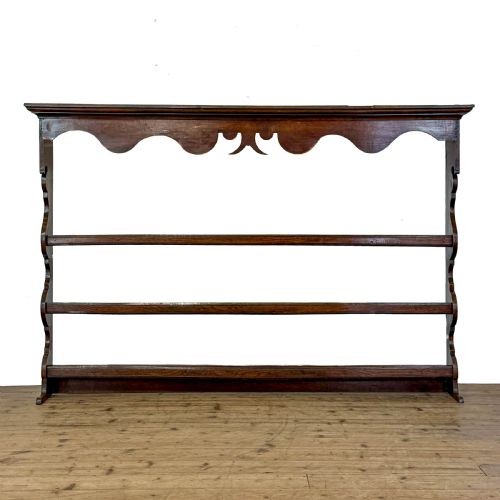


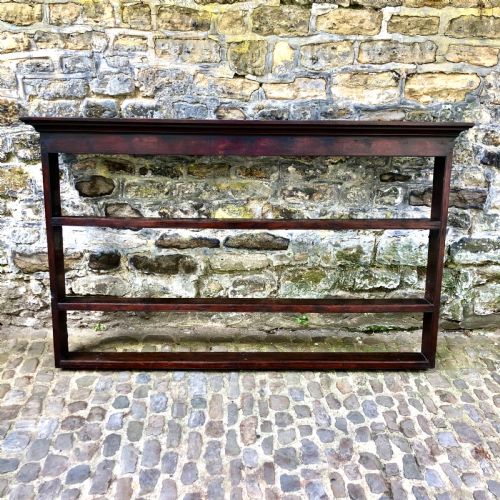
Country Kitchen Wall Shelf
These country kitchen wall shelf pieces bring honest utility to the home, offering sturdy tiers for plates and culinary wares.
Country Kitchen Wall Shelf
When you search for a country kitchen wall shelf, you encounter practical oak and pine display fixtures designed to hold plates and domestic utensils. These hanging pieces originate across the eighteenth century, the Georgian era, and the Victorian period, reflecting long traditions of rural joinery.
Examples range from early eighteenth-century oak delft racks to painted pine units and Georgian country variants. Each piece provides wall-mounted storage that preserves floor space while keeping everyday items within arm's reach.
How they were made
Joiners built these country kitchen wall shelf items using solid local timbers such as oak and pine, frequently selecting sturdy planks to bear heavy earthenware plates. Construction relied on traditional pegged joints and simple housing joints designed for durability rather than show.
Iron and brass fittings appear as original hanging brackets and cup hooks, while later interpretations feature painted wood surfaces finished in specific heritage colours. The resulting structures prioritize straightforward utility and robust wall attachment.
Some pine shelves arrive bearing faint traces of historic kitchen paint in shades like Pompeian Ash, whispering of generations of repainting.
What varies in quality
The distinction between ordinary and superior pieces rests on the choice of timber and the proportion of the proportions. Dense, figured oak with good thickness commands attention, whereas thinner pine boards represent more utilitarian domestic production.
Original surface patination and untouched hanging rails separate well-preserved examples from heavily restored or altered units. The presence of period brass or iron hardware further enhances the integrity of an individual rack.
The Country Kitchen Wall Shelf Glossary
- Delft rack
- A specialised wall shelf designed with narrow timber grooves to display tin-glazed earthenware plates upright. These fixtures kept fragile crockery secure while allowing visitors to admire the painted decoration.
- George III
- A British stylistic period spanning the mid-to-late eighteenth century, known in country furniture for strong proportions and unpretentious oak construction. Pieces from this era often feature simple bracket supports and clean backboards.
- Pine
- A softwood utilised extensively for regional furniture because it was cheap and easy to work. Painted finishes frequently protected the softer grain from kitchen grease and moisture.
- Plate rack
- An open shelving unit featuring vertical slats or retaining ledges to keep plates from sliding forward. They formed an essential part of the working kitchen before fitted cupboards became standard.
Country Kitchen Wall Shelf: Frequently Asked Questions
How were these wall shelves mounted?
These racks typically attached directly to timber studwork or masonry walls using iron brackets or pierced hanging rails integrated into the backboards. The weight of heavy ceramic plates necessitated secure fixing points to prevent structural failure.
Many surviving pieces retain their original mounting holes or iron rings, confirming how previous generations anchored them safely above kitchen counters or dining tables.
What is a delft rack?
A delft rack is a specific form of wall shelf created to display tin-glazed earthenware plates upright against a wall. The narrow ledges and retaining rails kept fragile ceramics from slipping onto the floor.
These racks served both a practical drying purpose and an aesthetic function in historic kitchens, showing off decorative tableware to family and guests.
How do I date an oak plate rack?
Dating relies on observing construction marks, timber characteristics, and hardware types used in the assembly. Eighteenth-century examples generally display hand-sawn board marks, pegged joinery, and dense oak patination developed through decades of kitchen use.
Later Victorian and twentieth-century pieces often reveal machine-cut timber dimensions and standardised iron fixings that distinguish them from earlier rural craftsmanship.
Can I use these shelves for modern dishware?
These robust timber shelves easily accommodate modern ceramic plates, mugs, and kitchen wares. The deep ledges and sturdy backing boards are built to support substantial weight.
Buyers should ensure the wall fixings are strong enough to bear both the weight of the timber rack and the heavy plates placed upon it.