


Country Kitchen Board
A country kitchen board brings utilitarian warmth to a room, offering sturdy work surfaces and open storage rooted in centuries of domestic service.
Country Kitchen Board
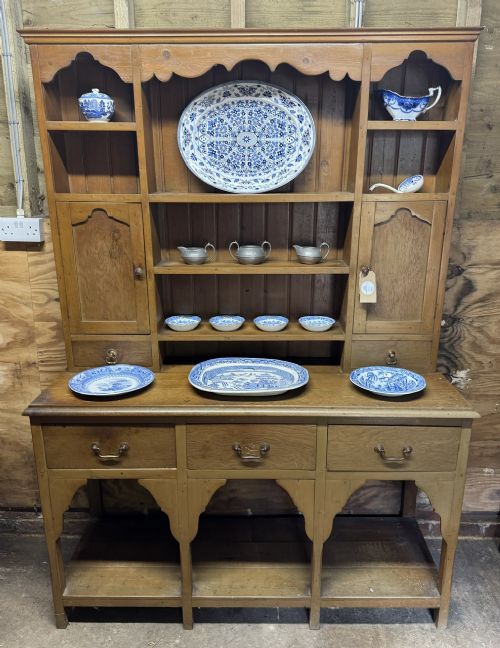
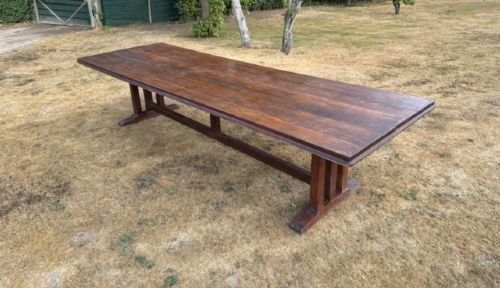
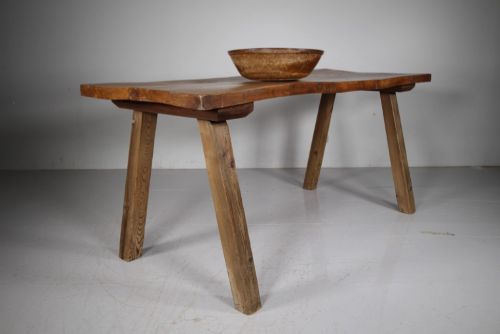
When searching for a country kitchen board, a buyer encounters a diverse group of practical domestic furnishings spanning the eighteenth, nineteenth, and early twentieth centuries. These pieces encompass sturdy dressers with pot boards, serving tables, and refectory or farmhouse tables designed for daily food preparation and storage.
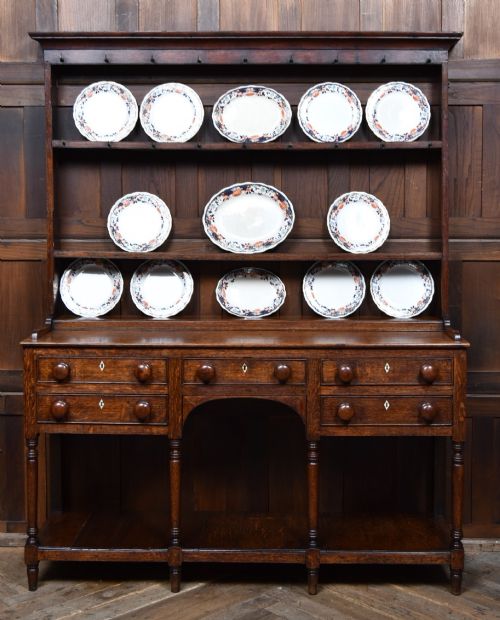
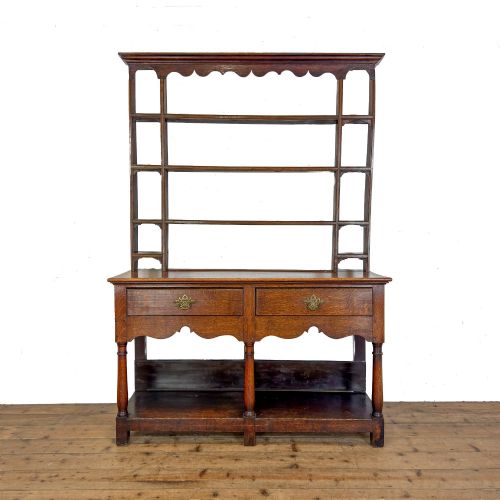
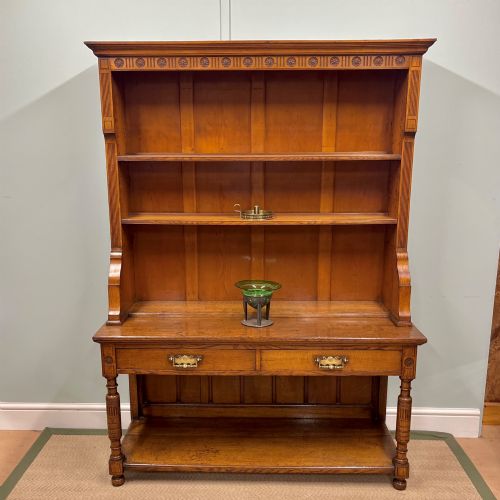
The version most commonly met on this page is the oak or pine Welsh dresser, often complete with an upper plate rack, alongside French and English farmhouse tables featuring multi-board timber construction. Regional vernacular pieces from Wales and provincial France dominate the selection, reflecting local traditions of domestic joinery.
These items range from compact cottage sideboards to large kitchen cupboards and larder units built to serve active households. Their forms prioritize function, combining deep drawers, lower pot shelves, and generous tabletops intended for heavy domestic use.
How they were made
Makers relied on durable regional hardwoods and softwoods, predominantly utilising solid oak, elm, walnut, and pine. Surfaces were frequently left untreated to develop a natural patina or finished with traditional paint applications.
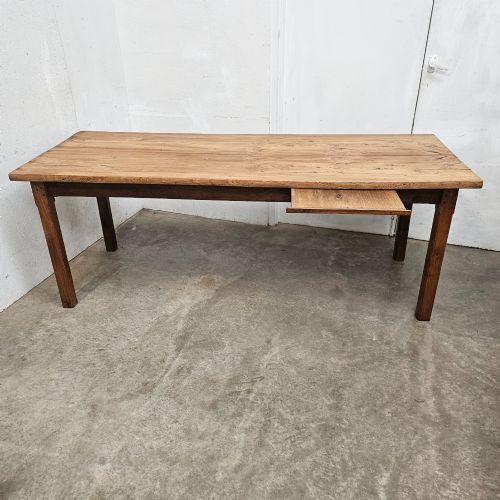
Construction techniques focused on straightforward utility, employing pegged mortise and tenon joints for frames alongside solid timber planks for tabletops and pot boards. Many tables incorporated functional additions such as pull-out bread boards or sliding prep surfaces directly into the apron.
Many tables retain subtle knife-scratch marks on their tabletops, left by generations of cooks slicing bread and cheese without a cutting board.
What varies in quality
The distinction between ordinary and exceptional pieces lies in the integrity of the timber and the preservation of original surfaces. Pieces retaining their early paintwork, untouched patination, and original hardware command greater appreciation among collectors.
Structural proportion and regional character further divide the range, with smaller scaled vernacular examples and unusual configurations demonstrating superior craftsmanship by local joiners.
The Country Kitchen Board Glossary
- Pot Board
- A low open shelf fitted between the lower legs of a dresser or sideboard, historically used for storing heavy pots and pans. This lower platform provides structural stability to the base frame.
- Refectory Table
- A long dining table traditionally used for communal meals in large halls, adapted into domestic country kitchens for daily food preparation and dining. These tables typically feature thick timber tops supported by sturdy stretcher bases.
- Drapers Table
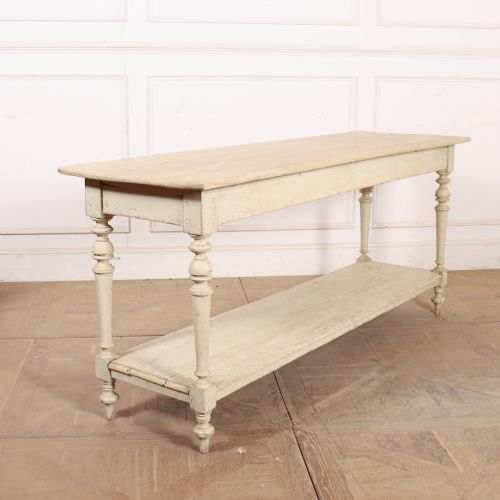
- A wide, long table originally utilised in textile shops for folding cloth, later repurposed as a kitchen prep table. They frequently incorporate multiple drawers and a generous lower shelf.
- Vernacular Furniture
- Domestic items built by local craftsmen using regional materials and traditional styles rather than adhering to formal architectural pattern books. These pieces reflect the specific geographic origins of their creation.
- Bread Board
- A pull-out sliding shelf integrated into the woodwork of a kitchen table or dresser for food preparation. It allowed bakers to work directly above the surface and push crumbs away easily.
Country Kitchen Board: Frequently Asked Questions
What is a pot board dresser?
A pot board dresser is a traditional storage unit featuring an open lower shelf positioned between the legs beneath the main counter space. This design element allowed households to store heavy earthenware and metal cookware off the floor.
In modern settings, this lower shelf provides an ideal display area for baskets, ceramics, or large kitchen implements, maintaining the utilitarian aesthetic of the piece.
How do I care for antique pine?
Antique pine requires gentle maintenance to preserve its historic finish and soft timber grain. Regular dusting with a dry cloth and occasional application of natural beeswax keeps the wood nourished without building up artificial gloss.
Avoid placing these pieces in direct sunlight or near sudden heat sources, as extreme temperature fluctuations can cause the old boards to split or warp.
Are these tables suitable for daily use?
These tables were originally constructed for heavy domestic service, making them exceptionally durable for contemporary kitchen environments. Solid timber construction ensures they handle daily meal preparation and gathering with ease.
Using simple coasters and placemats helps protect historic surfaces from moisture rings while allowing the natural patina to continue developing gracefully.
How do I identify regional styles?
Regional styles are identified through characteristic timber choices, moulding details, and local construction quirks passed down through generations of provincial joiners. Welsh vernacular pieces often display distinct proportions and specific drawer arrangements compared to French provincial or English country equivalents.
Studding the specific characteristics of the wood and the joinery methods helps narrow down the geographic origins of an unmarked antique.