





Country House Wall Hanging
These country house wall hanging pieces bring period character directly to domestic interiors through textiles, carved wood, and mounted brass.
Country House Wall Hanging
When you search for country house wall hanging, you encounter a diverse group of domestic furnishings designed to decorate interior walls. These objects range from practical storage items like corner cupboards and spice boxes to decorative textiles and gongs.
The pieces listed here span multiple periods, most frequently the eighteenth and nineteenth centuries. You are most likely to meet oak hanging shelves, corner cupboards, and textile bell pulls among these listings.
Styles reflect both English and French country traditions alongside Victorian tastes. Artisans produced these items in materials such as oak, pine, mahogany, and wool to serve both utilitarian and decorative roles in historic homes.
Materials and construction
Makers utilised solid timbers including oak, pine, mahogany, and fruitwood to construct sturdy wall cabinets, shelves, and mirrors. Joinery techniques varied from simple pegging on early oak pieces to finer cabinetmaking on Georgian mahogany items.
Textiles and decorative panels incorporate hand embroidery, silk, beads, and painted wood surfaces. Metal elements such as brass mounts and gongs appear frequently, often combined with carved wooden frames.
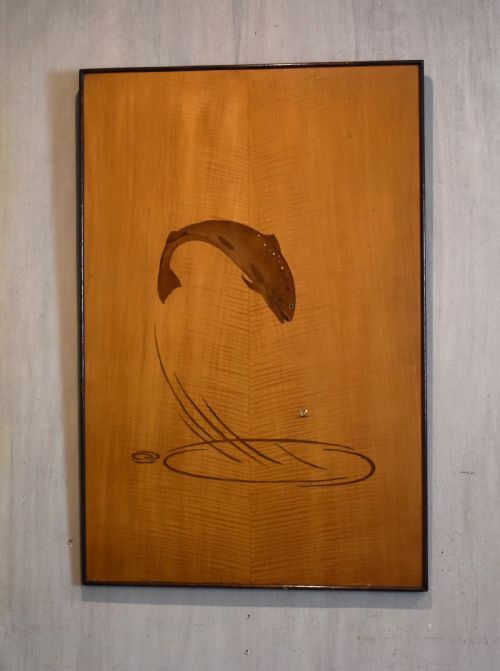
A leaping salmon frozen in marquetry wood paneling brings an unexpected splash of river life directly into the domestic parlour.
Distinguishing quality
The grade of a country house wall hanging depends on the crispness of its carving and the integrity of its timber. Pieces featuring detailed hand embroidery or well-preserved original painted surfaces command greater attention from collectors.
Proportion and material selection also set examples apart, with superior items displaying balanced design and high-grade woods like figured mahogany or mature oak. Original brass mounts and untouched period surfaces further elevate the standing of a piece.
The Country House Wall Hanging Glossary
- Bell pull
- A decorative hanging strap connected to a mechanical bell system used in large houses to summon servants. They are frequently worked in silk, wool, and beadwork.
- Hanging corner cupboard
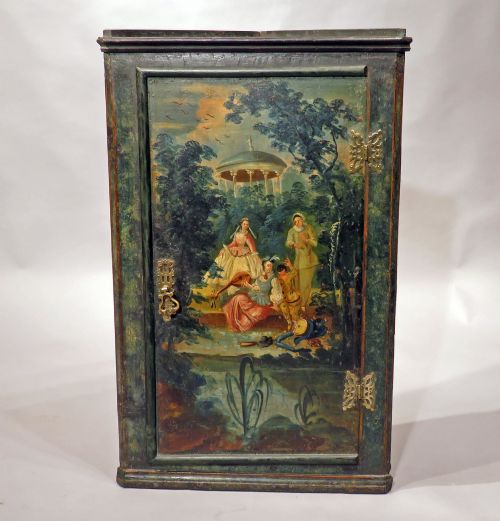
- A small wall-mounted cabinet designed specifically to fit into the angle of a room. These pieces saved floor space and displayed prized household items.
- Spice box
- A small wooden wall cabinet fitted with internal drawers for storing costly kitchen spices. They often feature carved or panelled doors.
- Dinner gong
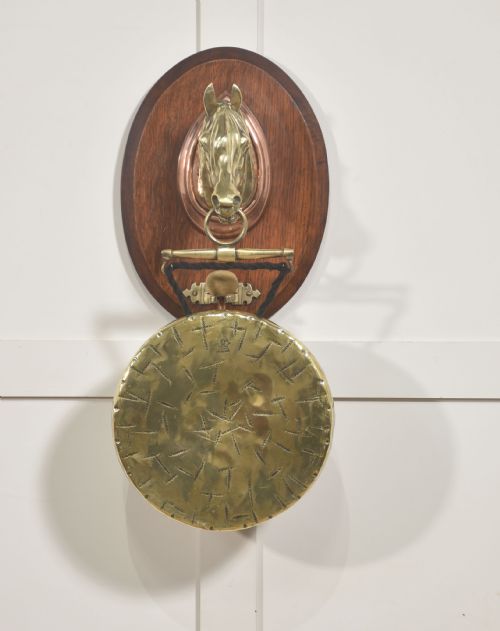
- A metal disc struck with a mallet to announce meals in large residences. They frequently feature brass or bronze mounts attached to wooden wall brackets.
- Aubusson
- A style of tapestry woven in the French town of the same name. These wall hangings depict pastoral scenes or floral motifs.
Country House Wall Hanging: Frequently Asked Questions
How were wall gongs used?
A wall-hanging dinner gong was mounted in a hallway or landing to announce meals throughout the house. A member of the household or staff struck the suspended metal disc with a mallet.
The deep resonant tone carried through the rooms to gather residents and guests for dining.
What is a bell pull?
Bell pulls functioned as interior communication devices in large period properties. A hanging strap connected to wires running behind walls to ring a service bell elsewhere.
Today these textiles serve purely decorative roles as wall hangings, displaying intricate needlework and bead patterns.
Where should I hang a corner cupboard?
Hanging corner cupboards suit empty wall junctions in dining rooms, kitchens, or hallways. They utilise overlooked angles to provide display space without blocking floor areas.
Ensure the wall construction supports the weight of solid timber cabinets before mounting.
How do I date oak wall shelves?
Dating oak shelves involves examining the joinery, tool marks, and timber shrinkage. Early pieces from the seventeenth century often show pegged joints and hand-riven boards.
Later nineteenth-century examples display more uniform machining and standardised construction methods.