


Country House Club Chair
A country house club chair offers deep comfort and traditional upholstery, shaped through decades of fireside use in English drawing rooms and libraries.
Country House Club Chair
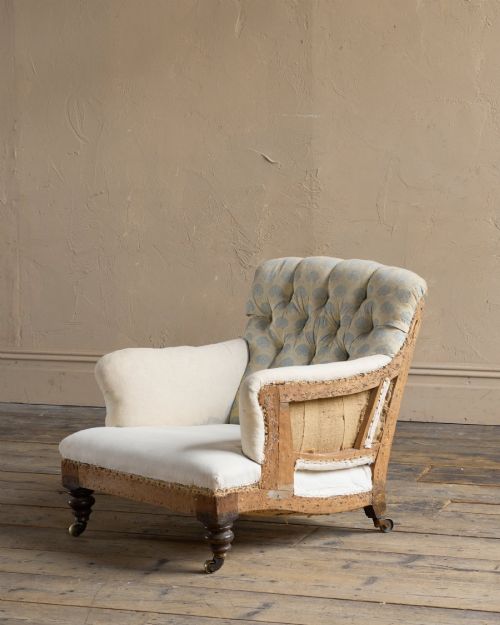
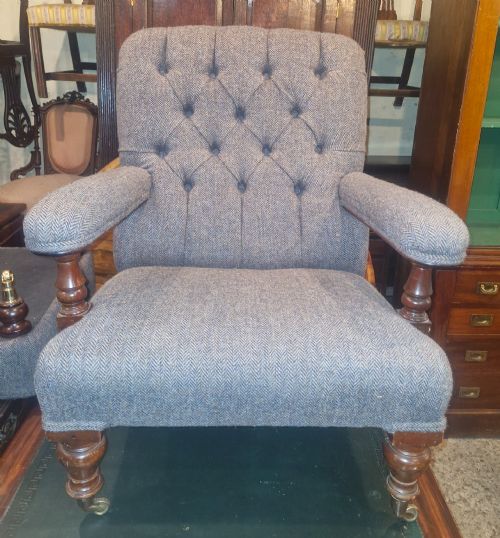
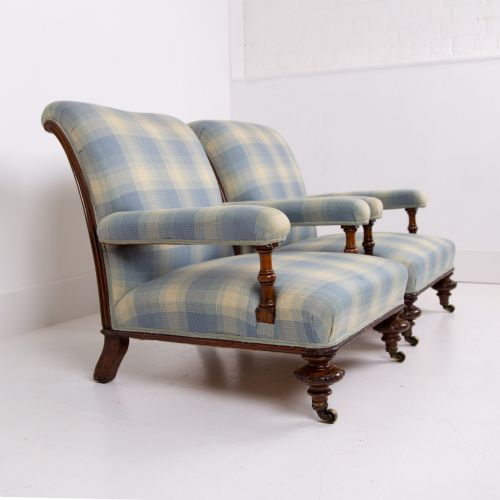
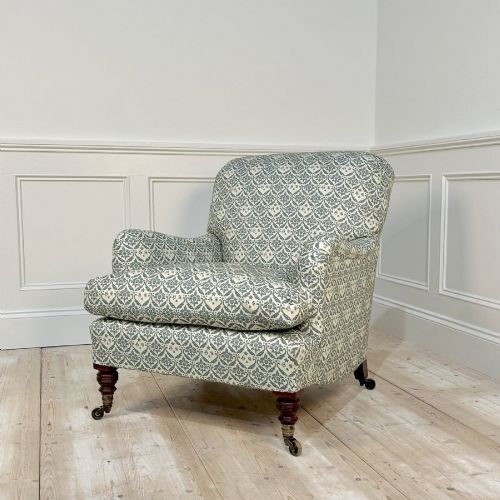
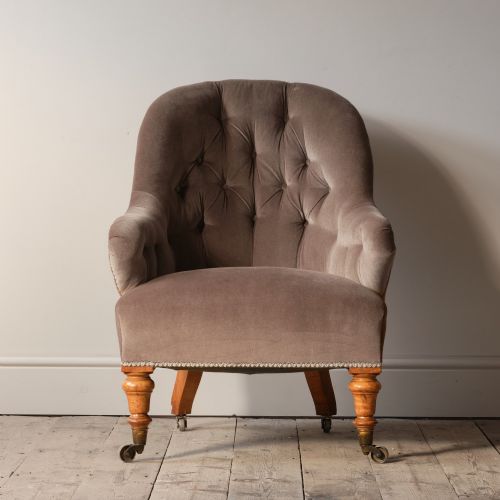
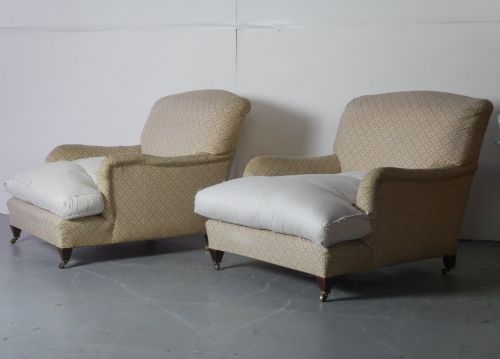
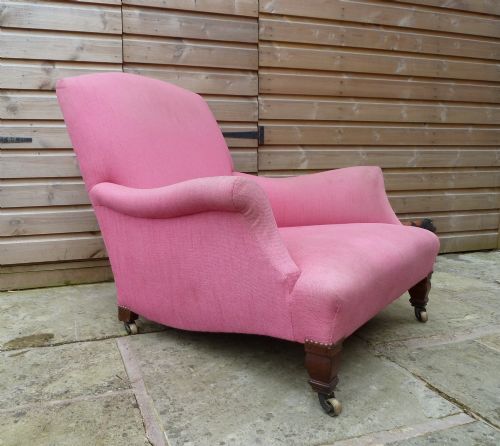
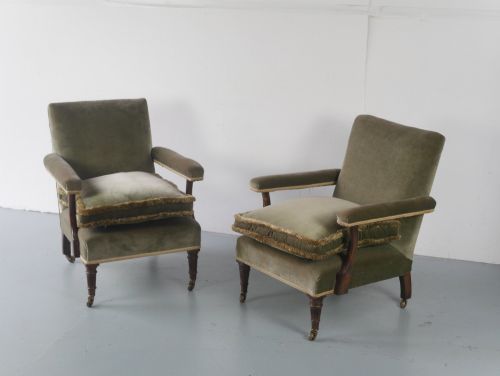
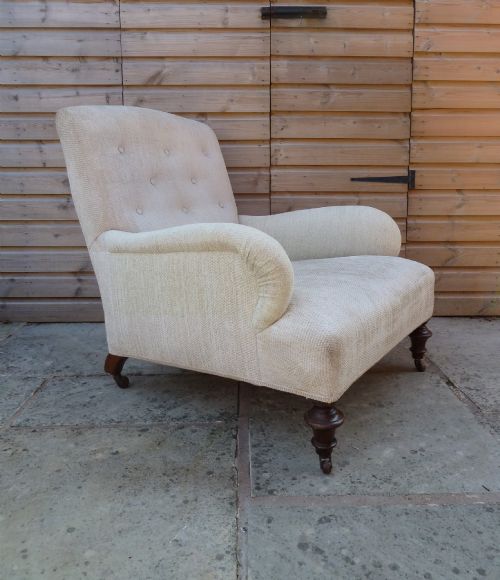
A country house club chair is a large, low armchair designed for comfort, emerging in various forms across the nineteenth and early twentieth centuries. When searching for a country house club chair, you encounter deep seats, scroll backs, and generous proportions built for relaxed lounging.
The selections span the Victorian, Edwardian, and later periods, capturing the relaxed elegance of English country houses. Many pieces showcase specific maker influences or traditional forms such as the Bridgewater and Grafton styles.
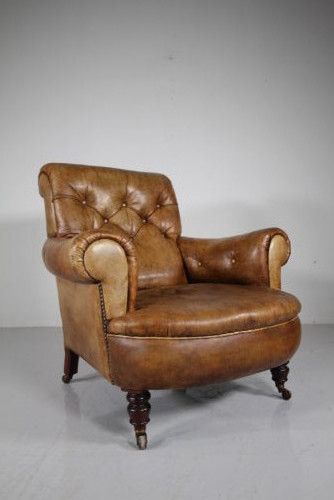
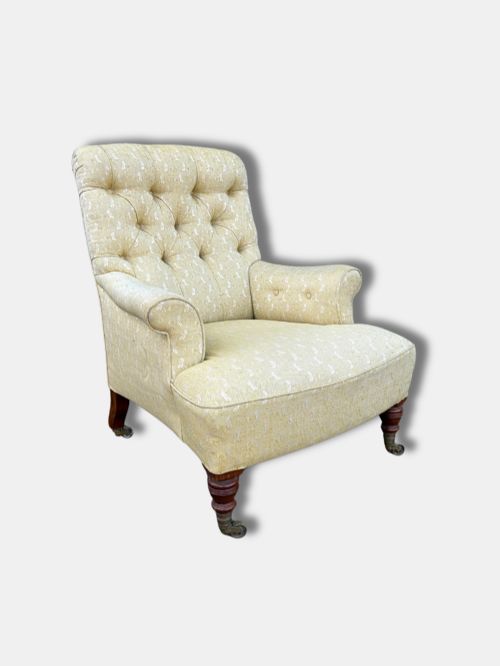
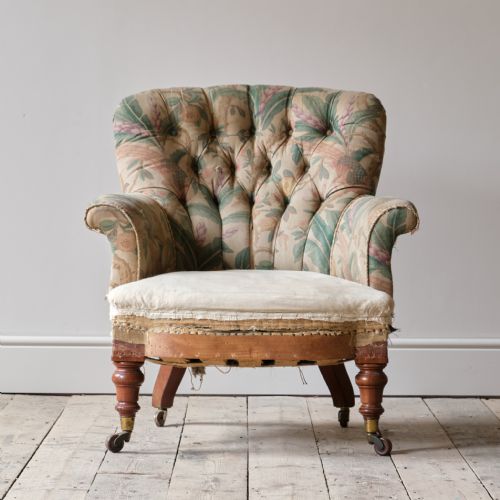
These armchairs range from low-slung leather library chairs to upholstered frames covered in ticking or patterned fabric. The overall construction prioritises a deep seat and supportive armrests suited to domestic studies and sitting rooms.
How They Were Made
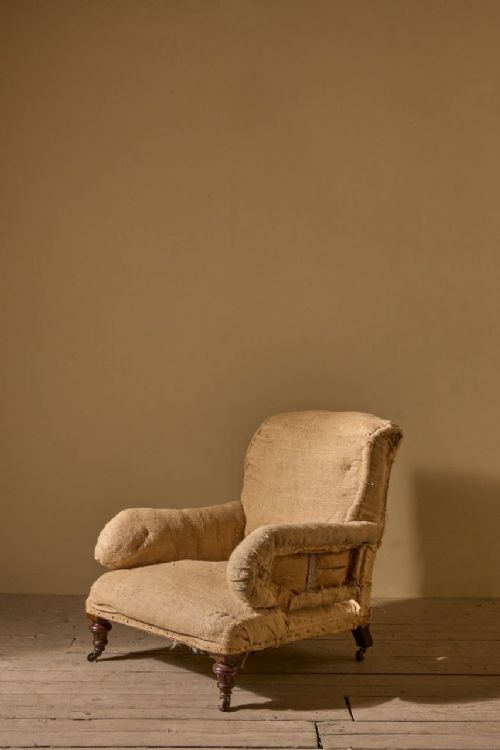
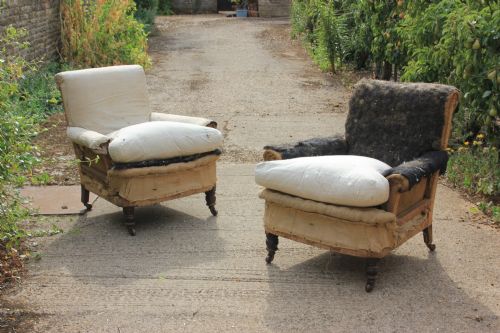
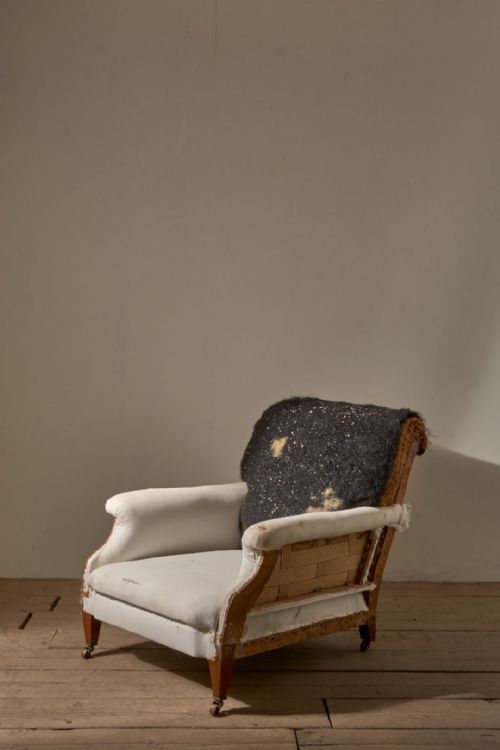
Traditional makers built these armchairs using sturdy internal frames of mahogany, walnut, or mixed hardwood and timber. These robust wooden skeletons provide the structural integrity needed to support deep, sprung seating.
Upholstery techniques combined coil springs with horsehair and traditional stuffing, enclosed in durable leather or heavy fabric such as ticking. Brass tacks often secure the edges of leather upholstery, while wooden legs occasionally feature castors for mobility.
Country House Club Chair Retail Price Guide 2026
Typical asking prices for country house club chair among the pieces listed under this phrase on Sellingantiques today, from the lower quarter to the upper quarter. They describe what is for sale here now, not the wider market.
One Edwardian armchair arrived upholstered in a lively horse racing theme fabric, ready for the winner's enclosure.
What Varies in Quality
Quality rests in the integrity of the internal frame and the resilience of the traditional springing system. Chairs retaining their original webbing, stuffing, and maker stamps command greater attention from collectors.
The choice of covering materials also dictates the character and endurance of the piece, from supple patinated leather to tightly woven vintage fabric. Proportions vary from standard armchairs to exceptionally large, deep-seated formats designed for lounging.
Whytock and Reid·Howard and Sons·SF Cullen·Holland and Sons
The Country House Club Chair Glossary
- Howard Style
- A classic upholstered armchair design known for low arms, deep seating, and exceptional comfort, originating from the nineteenth-century firm Howard and Sons.
- Bridgewater Armchair
- An upholstered chair type featuring low arms rolled slightly outward, associated with traditional English comfort.
- Scroll Back
- A chair back curving backward in a scroll shape, frequently seen in nineteenth-century seating.
- Ticking
- A heavy, tightly woven cotton or linen fabric traditionally used as a durable upholstery cover.
- Castor
- A small wheel fitted to the base of furniture legs, allowing heavy armchairs to move easily across floors.
Country House Club Chair: Frequently Asked Questions
What defines a country house club chair?
A country house club chair is characterised by generous proportions, deep seating, and traditional upholstered comfort designed for long periods of sitting.
These pieces typically date from the nineteenth or early twentieth centuries and appear in leather or heavy fabric coverings.
How do I identify a Howard style armchair?
Howard style chairs feature low rolled arms, deeply sprung seats, and low wooden legs often fitted with brass castors.
Many bear stamps or marks on the castors or webbing to confirm their maker origin.
Are these chairs suitable for modern living rooms?
Their deep seats and traditional padding make them practical for everyday lounging in contemporary or traditional interiors.
They blend well with various decorative styles due to their neutral leather and fabric finishes.
What is the difference between leather and fabric upholstered versions?
Leather versions develop a distinct surface patina over decades of use, offering durability and a traditional library aesthetic.
Fabric upholstered examples, including those in ticking or patterned cloth, provide a softer texture suited to drawing rooms.