



Country High Stools
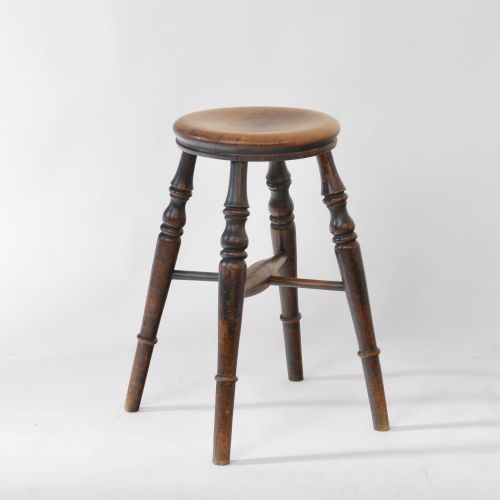
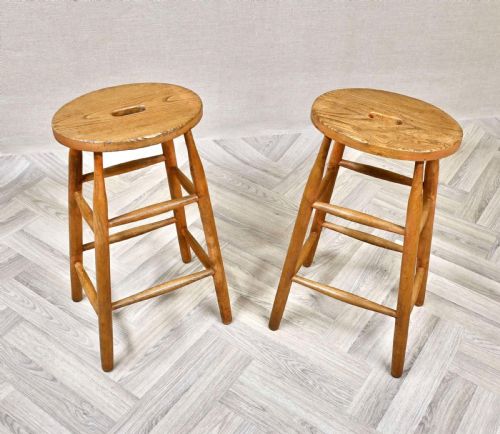
Country high stools are tall utilitarian seats built from robust timbers like elm and beech, prized for their rustic honesty and everyday utility.
Country High Stools
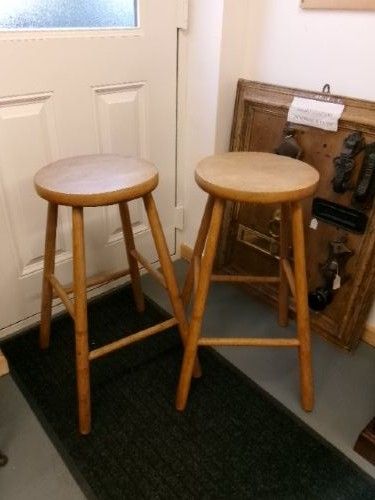
Country high stools encompass tall seating forms designed for functional settings, including pubs, taverns, and domestic kitchens. These pieces serve practical purposes at elevated counters or work surfaces rather than standard dining tables.
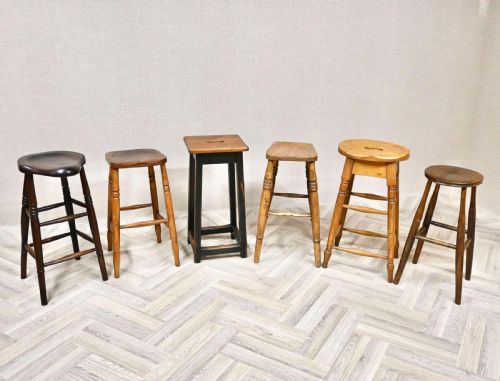
The selections encountered here span the nineteenth century into the early twentieth century, carrying labels such as Victorian Country, rustic farmhouse, and vernacular styles. Simple three-legged or four-legged timber structures dominate the selection.
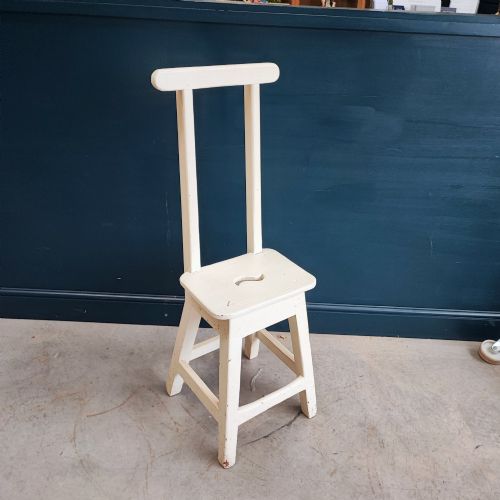
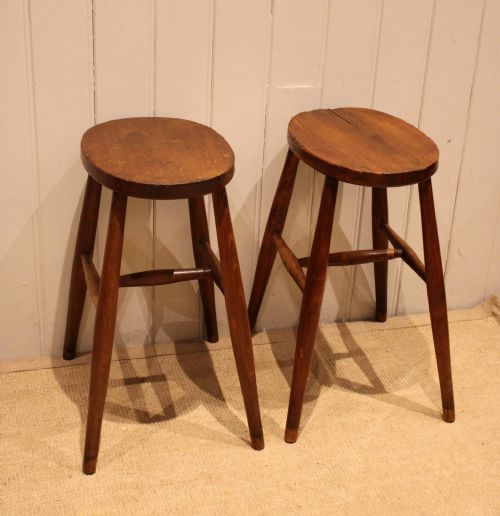
Forms range from tall pub stools with turned beech legs to elm-topped kitchen stools and occasional high chairs with rush seats. Each object reflects the utilitarian needs of rural and commercial spaces from past eras.
How they were made
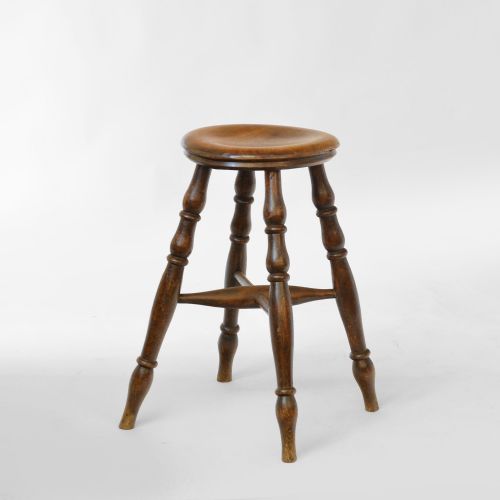
Construction relies on solid native timbers, predominantly elm, beech, sycamore, and oak, chosen for their durability under heavy daily use. Turnery is visible in the legs and stretchers, which provide essential stability to tall wooden frames.
Seats are shaped from thick slabs of solid wood or woven from natural rush materials to withstand continuous wear. Joinery techniques prioritize functional longevity over decorative flourish, utilising traditional methods suited to workshop production.
Country High Stools Retail Price Guide 2026
Typical asking prices for country high stools among the pieces listed under this phrase on Sellingantiques today, from the lower quarter to the upper quarter. They describe what is for sale here now, not the wider market.
Several stout nineteenth-century tavern stools still carry the honest scuffs of anonymous drinkers who leaned on them long ago.
What varies in quality
Quality differences lie in the choice of timber and the integrity of the original construction rather than surface decoration. Heavier native hardwoods like wild elm command attention for their substantial grain patterns and structural resilience.
Proportion and balance dictate the success of a tall stool, where slender turned supports must adequately support a heavy top without looseness. Patina accumulated from decades of use in commercial or domestic environments distinguishes superior surviving examples.
The Country High Stools Glossary
- Vernacular
- Everyday objects made by local craftsmen without high stylistic pretensions. These pieces prioritize function and local material availability over academic design rules.
- Turnery
- Wood shaped on a lathe to create cylindrical supports, legs, or stretchers. This technique provides both structural rigidity and modest visual rhythm.
- Rush
- Dried marsh grass woven into durable seating surfaces. It offers a flexible yet strong platform for sitting.
- Patina
- The surface sheen and colour developed by wood through age, handling, and wear. This quality reveals the history of use an object has experienced.
Country High Stools: Frequently Asked Questions
What woods were used for country high stools?
Makers utilised accessible domestic hardwoods suited to heavy daily wear in commercial and domestic settings.
Elm, beech, and sycamore appear frequently across surviving examples due to their strength and local availability.
How do I date a nineteenth century stool?
Dating relies on tool marks, timber characteristics, and the style of the turnery on the legs and stretchers.
Hand-turned components and natural wear patterns help separate nineteenth-century pieces from later reproductions.
Are rush seats durable for daily use?
Rush seating provides a resilient platform when tightly woven from quality marsh grasses.
Careful maintenance prevents drying out, ensuring the woven surface withstands regular sitting over decades.
Where were tall stools used originally?
These tall seats served practical functions in pubs, taverns, commercial premises, and rural kitchens.
Their elevated height accommodated standing-height counters, clerks' desks, and bar setups.