
Country Elm Seat Chair
A country elm seat chair brings rustic utility and seasoned timber into daily domestic life.
Country Elm Seat Chair
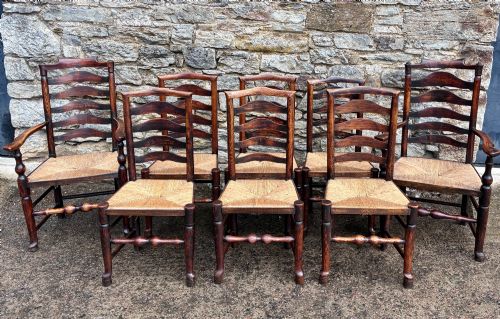
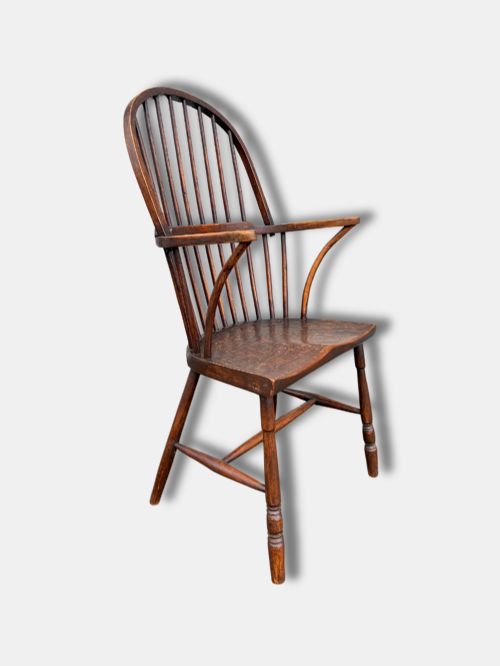
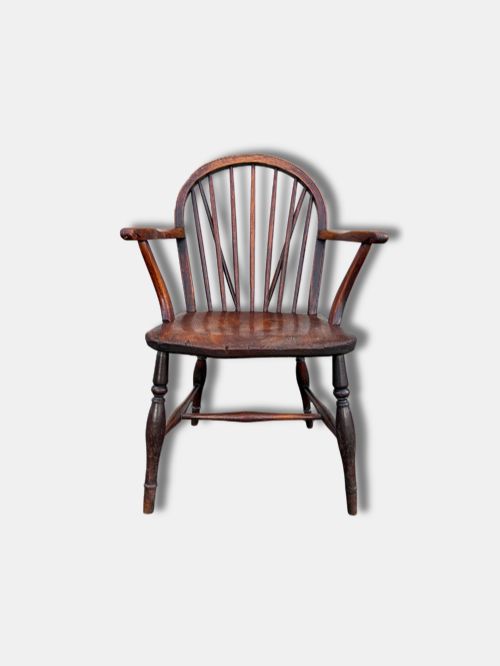
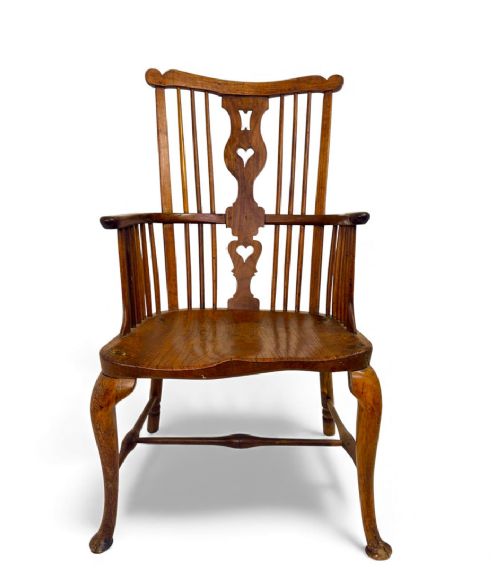
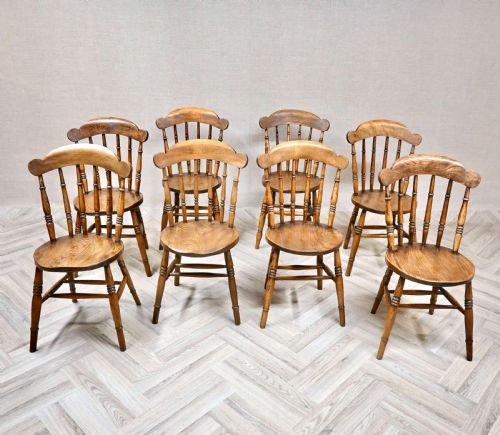
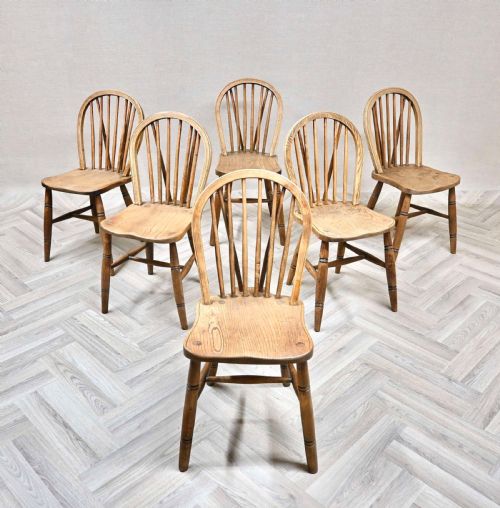
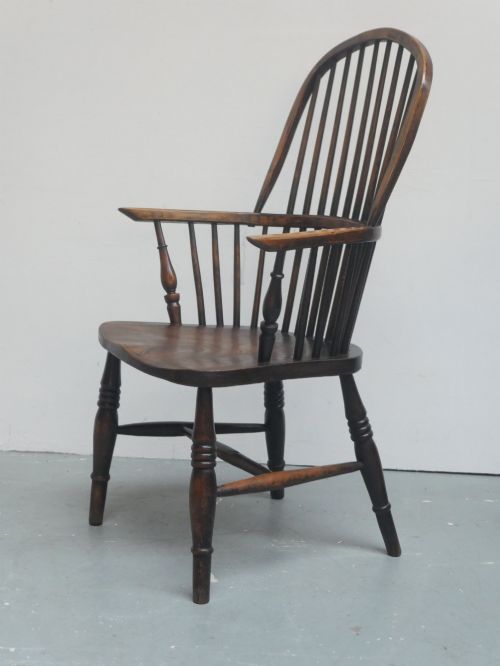
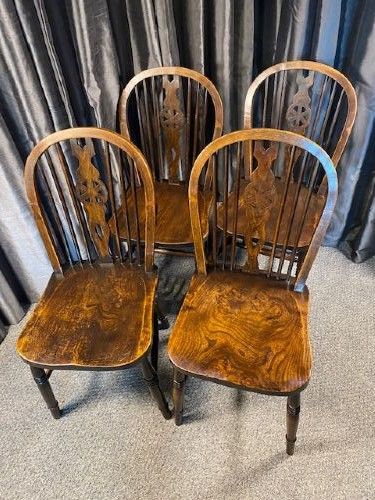
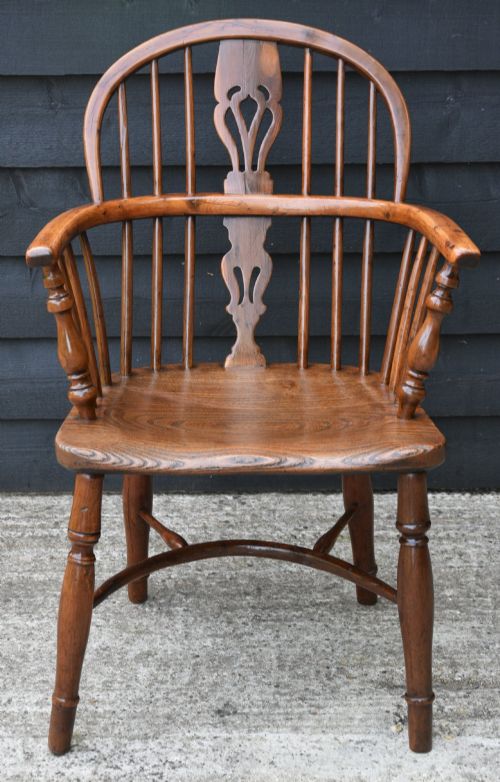
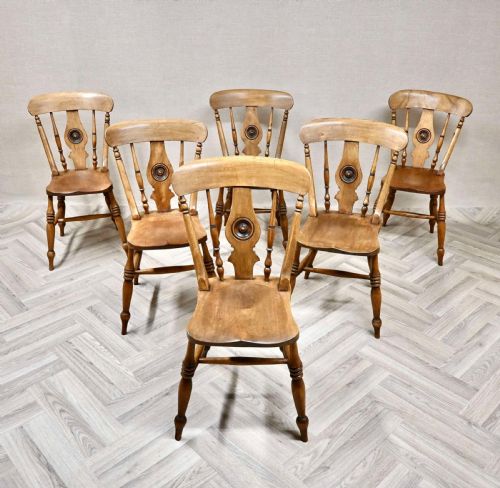
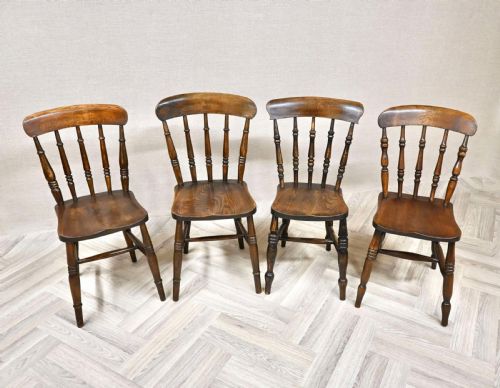
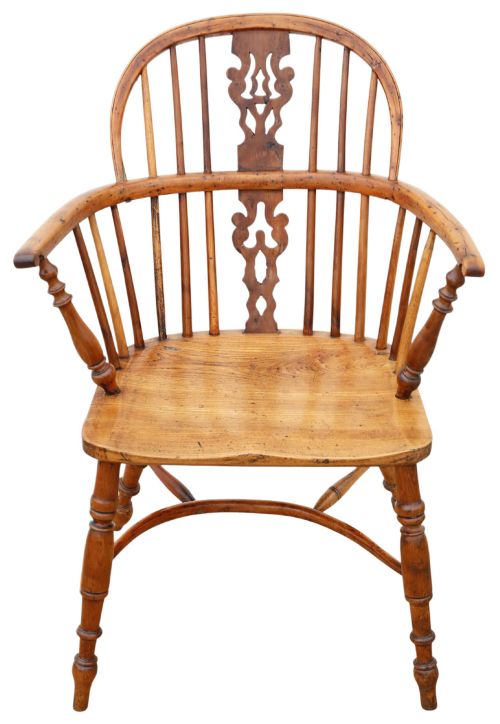
A country elm seat chair is a functional domestic seat shaped by regional vernacular traditions, spanning Windsor armchairs, spindle-backed dining sets, and child-sized variants. These pieces serve as durable seating built for everyday use in farmhouses, kitchens, and country houses.
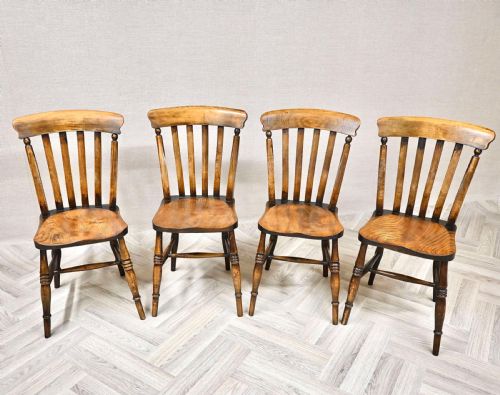
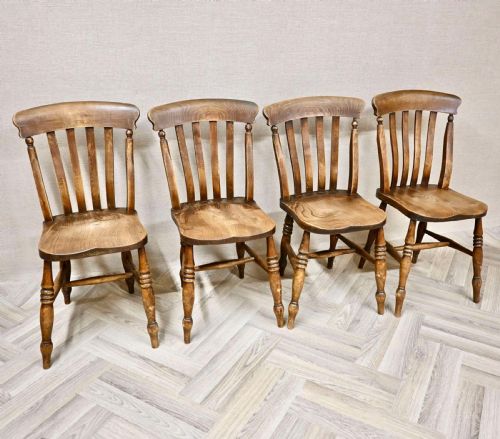
The most common examples encountered on this page belong to the nineteenth century, including kitchen Windsor chairs, lathe-backs, and wheel-backs. They pair solid elm timber seats with mixed woods like ash, beech, and yew for the spindles and legs.
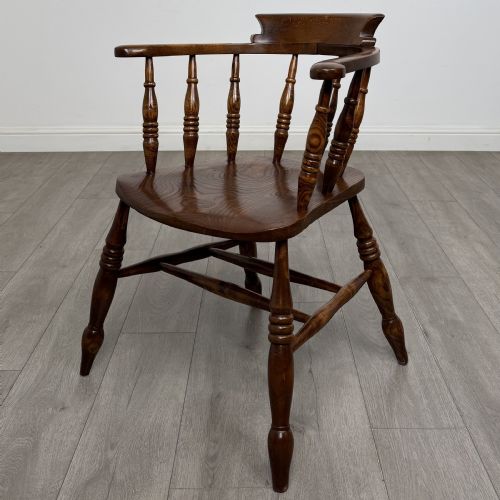
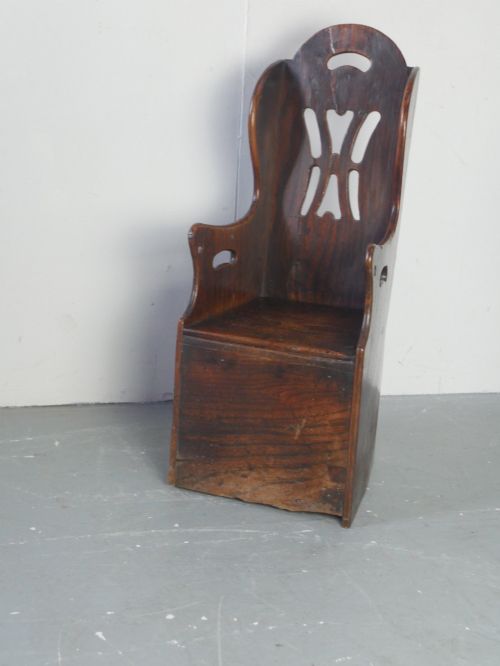
Forms extend from single carver elbow chairs to matched dining sets and box settles with storage. Their origins trace to English regional workshops, particularly the Thames Valley and West Country, where local timber dictated construction.
How they were made
Makers built country elm seat chairs by shaping thick planks of elm to form comfortable, dished saddle seats that accommodated the body. Elm timber was chosen for the seat because its interlocking grain resisted splitting when legs and spindles were wedged into drilled sockets.
Uprights, bows, and spindles utilised contrasting timbers such as ash, beech, and yew, steam-bent into curved hoops or turned on bodgers' poles. This combination of tough elm for the base and resilient ash or yew for the superstructure provided structural strength under constant loading.
Many an eighteenth-century elm seat bears the deep hollows of generations past, shaped as much by the sitters as by the maker's adze.
What varies in quality
Quality rests in the proportional harmony of the turning, the depth of the saddle shaping in the solid timber seat, and the integrity of the joined joints. Superior examples display slender, well-balanced spindles and refined steam-bent hoops that retain their structural tension over centuries.
The choice of secondary woods also marks distinction, with yew wood accents and rich surface patination elevating simpler utility forms into finer examples of vernacular craftsmanship.
The Country Elm Seat Chair Glossary
- Windsor
- A chair built with a solid wooden seat into which the legs, back spindles, and arms are separately inserted. This construction method provides robust stability without relying on a bulky underframe.
- Carver
- An armchair, often larger than standard dining variants, designed with elbow rests for use at the head of a table. These pieces frequently feature shaped arm supports and comb or hoop backs.
- Lathe back
- A chair back featuring flat, vertical wooden slats turned or shaped on a lathe rather than rounded cylindrical spindles. They provide sturdy back support in nineteenth-century kitchen seating.
- Saddle seat
- A wooden seat base carved with hollows and contours to fit the human body. This shaping makes unpadded elm seats comfortable for extended sitting.
- Patina
- The deep, lustrous surface sheen developed on timber over decades of handling, polishing, and natural ageing. It indicates genuine age and consistent care.
Country Elm Seat Chair: Frequently Asked Questions
What is an elm seat chair?
An elm seat chair is a traditional wooden seat featuring a solid elm base combined with turned or steam-bent wooden spindles and legs. These pieces were built for practical durability in kitchens, farmhouses, and country homes.
They reflect regional woodworking methods, particularly through Windsor and ladderback styles produced across English counties during the Georgian and Victorian eras.
How were these chairs used?
These chairs served as everyday seating around farmhouse dining tables, in kitchens, and beside hearths. Armchairs and carvers offered comfort for heads of households or working spaces.
Smaller variants, including child-sized chairs, accommodated younger family members, while box settles incorporated storage beneath the seating plank.
How do I live with country chairs?
Living with these chairs involves placing them in stable interior environments away from direct heat sources that can dry and split older timber. Regular dusting and occasional wax care preserve the natural surface finish.
Their sturdy construction suits daily dining and general household use, blending functional utility with historic character.
How do I tell periods apart?
Periods are identified by structural proportions, turning styles, and assembly methods, moving from eighteenth-century comb backs to nineteenth-century wheelback and lathe-back variations. Earlier pieces often display simpler, hand-turned components and deeper patination.
Later Victorian and Edwardian examples incorporate factory-assisted turning while retaining traditional Windsor framing techniques.