
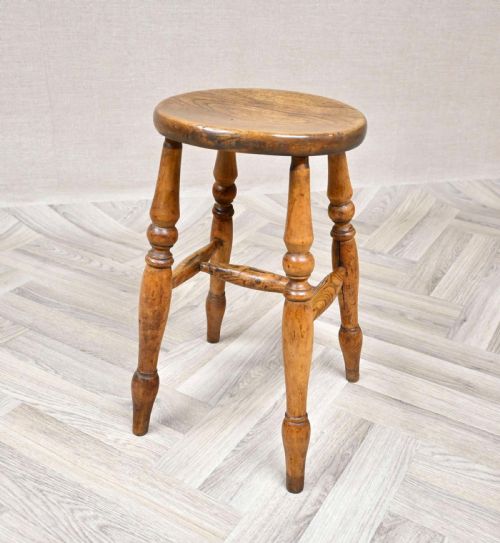


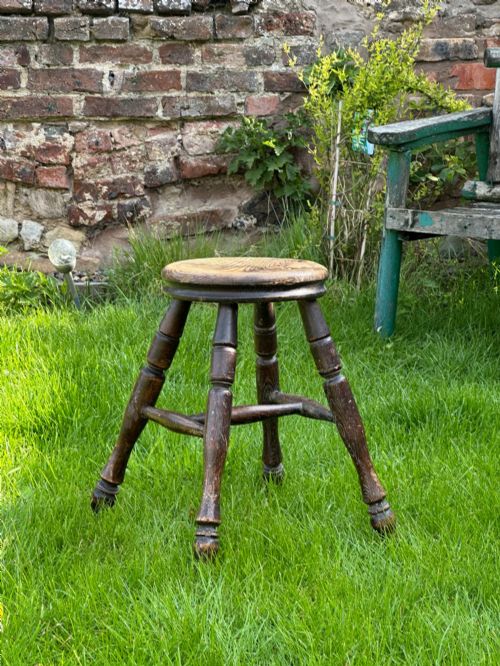


Country Elm Footstool
A country elm footstool brings honest utility and rustic warmth to a room, offering low seating or a resting place for tired feet.
Country Elm Footstool
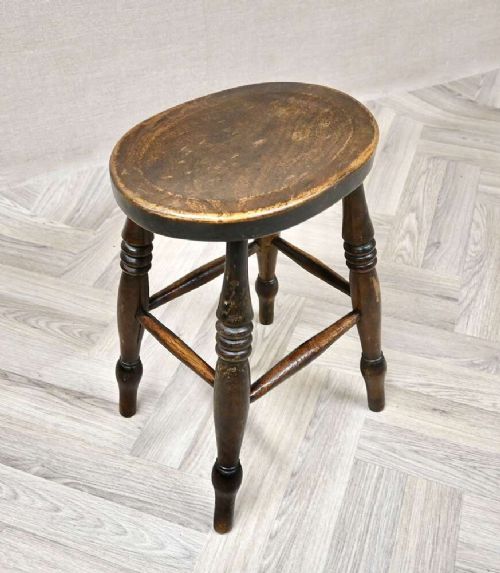
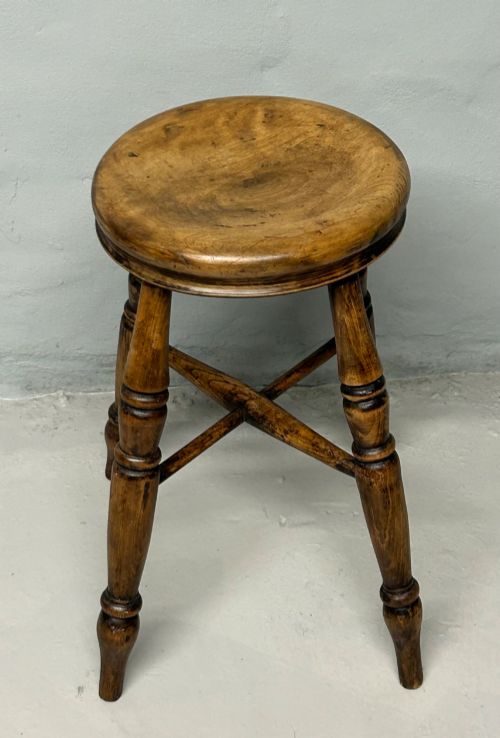
When you search for a country elm footstool, you are looking at utilitarian seating built for everyday rural life rather than formal drawing rooms. These pieces appear in forms such as low stools, hearth stools, Windsor stools, and milking stools, spanning eras from the early eighteenth century through the Victorian period and into the early twentieth century. Most examples you will encounter on this page date from the nineteenth century, often reflecting regional styles like traditional vernacular or rustic country.
Makers shaped these small seats from accessible local woods, combining elm with oak, beech, ash, or pine for legs and stretchers. You find simple oval or square tops supported by robust turned or splayed legs, sometimes featuring ball feet or cord details. Their unpretentious character suits modern interiors just as well as historic cottages, providing practical function alongside tactile historic charm.
Materials and construction
The primary material combination relies on sturdy elm for the seat top, valued for its interlocking grain that resists splitting when pegged. Cabinetmakers and village joiners paired these elm tops with turned legs of beech, ash, or oak, secured through traditional mortise and tenon joints or wedged through-tenons. This mixed-timber construction utilised whatever strong local wood was readily available in the workshop.
Surfaces were finished simply with natural wax or left bare to age through decades of use, highlighting the natural figuring of the timber. Some vernacular examples incorporate simple hand-shaped edges or subtle dishing to the seat surface for comfort, constructed without elaborate machinery or decorative veneers.
Listings span periods from seventeen hundred through the nineteenth century, showcasing materials like elm, oak, beech, ash, and cord across traditional vernacular forms.
Assessing quality and character
Quality in these vernacular pieces rests upon the balance of the proportions and the character of the timber grain rather than fine cabinet polish. A well-made stool displays harmonious leg splay and tight, honest jointing that keeps the frame rigid over centuries of movement.
The choice of timber figure significantly elevates a piece, particularly when an elm top exhibits rich burr or striking grain patterns. Superior examples retain their original surface patination, showing genuine wear and colour achieved through age rather than artificial distressing.
The Country Elm Footstool Glossary
- Elm
- A durable hardwood with a twisted, interlocking grain that makes it resistant to splitting. It was the traditional choice for stool seats and Windsor chair bottoms.
- Vernacular
- Architecture and objects made by local craftsmen using traditional methods and local materials, without academic design influence. These pieces reflect regional building habits.
- Hearth stool
- A low seat designed to sit comfortably beside a domestic fireplace for warmth. They often feature robust legs and low profiles.
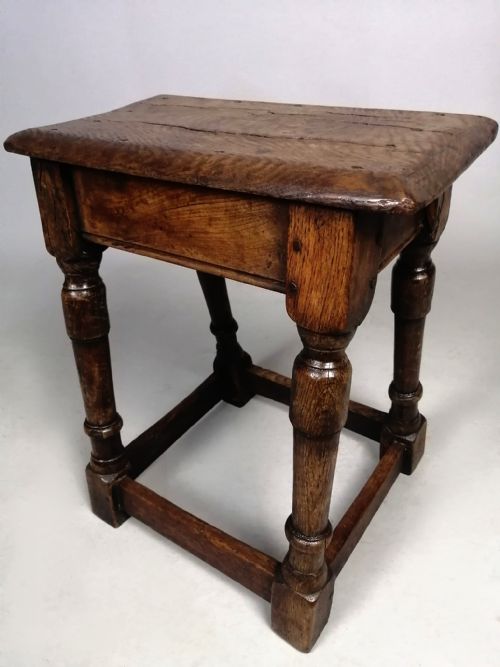
- Joint stool
- A sturdy wooden seat constructed with mortise and tenon joints pegged together. This form predates glued upholstery frames and relies on tight carpentry.
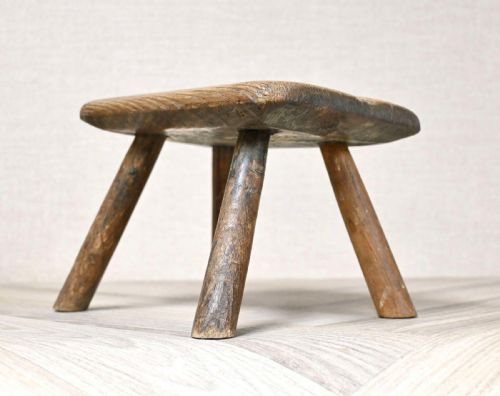
- Milking stool
- A simple three-legged or four-legged seat traditionally used by agricultural workers. Their design kept the stool stable on uneven earthen floors.
Country Elm Footstool: Frequently Asked Questions
What is a country elm footstool used for?
These low wooden seats served practical domestic purposes in rural homes, from sitting near the hearth to reaching high shelves or milking animals. Today they function primarily as decorative accent pieces, low occasional tables, or actual footrests.
Their compact size allows them to tuck easily beneath tables or beside armchairs, adding organic texture and history to a corner without dominating the floor plan.
How old are most country elm footstools?
The majority of surviving examples date from the nineteenth century, reflecting Victorian and Georgian country vernacular traditions. Earlier pieces from around seventeen hundred do exist but are considerably scarcer.
Because these were utilitarian working objects, precise dates are often estimated from the turning style of the legs, construction methods, and the depth of the timber patination.
How do I care for an antique elm stool?
Keep wooden stools away from direct heat sources such as radiators and fireplaces, which can dry out the historic timber and cause shrinking or splitting. Apply a neutral beeswax polish occasionally to nourish the wood and maintain its natural lustre.
Avoid modern liquid cleaners or silicone sprays, as these can penetrate the porous grain and damage the historic surface patination accumulated over generations.
Are these stools comfortable to sit on?
While unpadded wooden seats were designed for utility rather than lounging, many feature subtly dished or contoured tops shaped to fit the body. They work well for short periods of sitting or as stable resting surfaces.
If you plan to use one continuously as a seat, adding a small loose wool or linen cushion provides extra comfort while keeping the historic timber visible.