

Country Cottage Art
Country cottage art captures rural dwellings and pastoral scenes through watercolours, oils, and folk pieces from the nineteenth and twentieth centuries.
Country Cottage Art
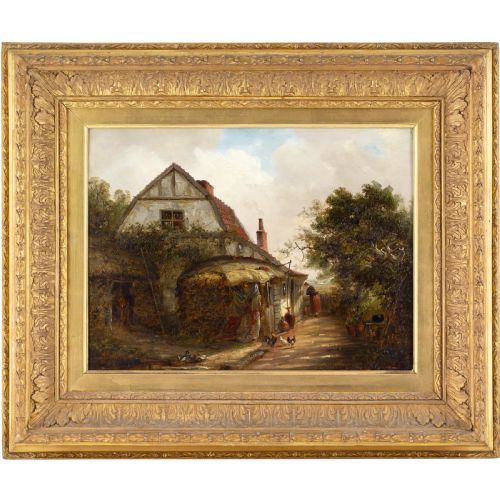
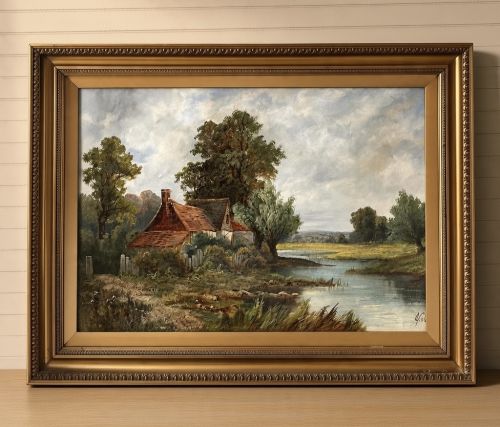
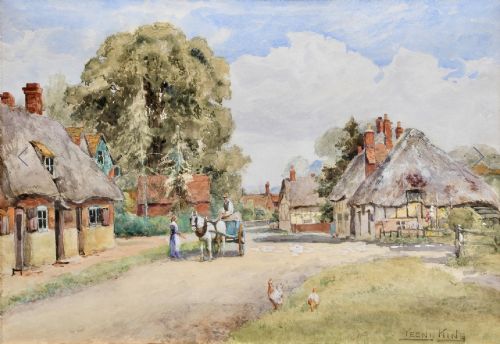
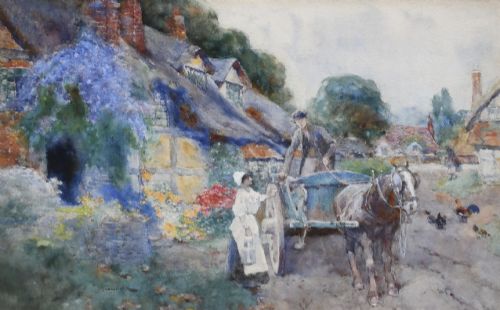
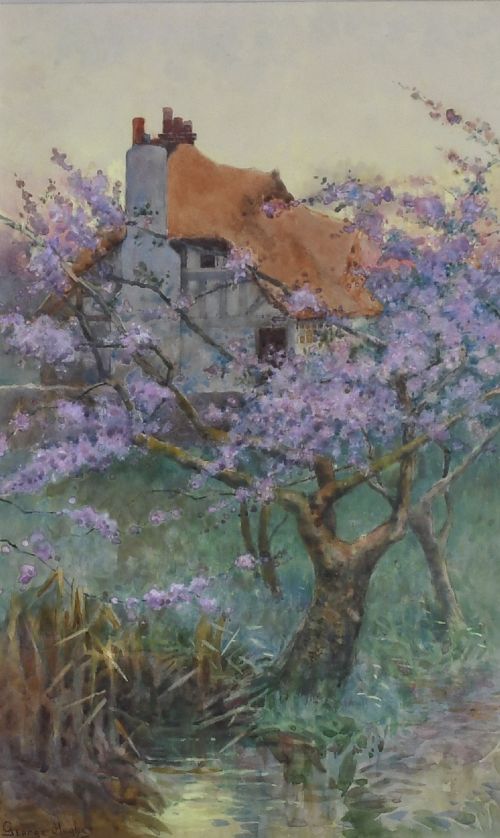
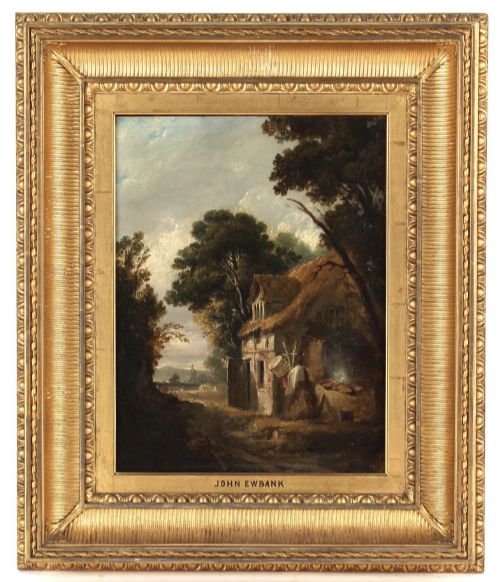
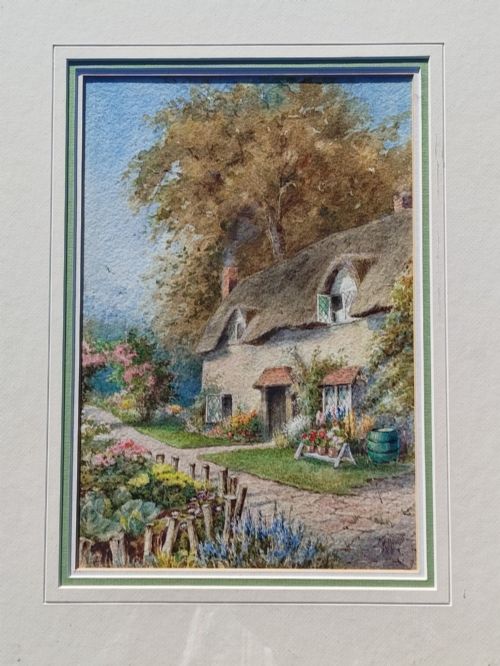
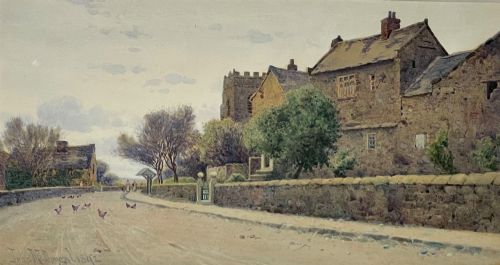
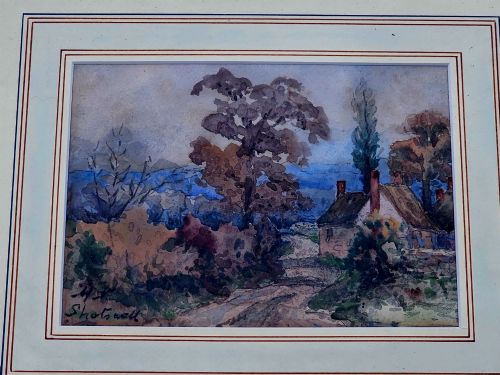
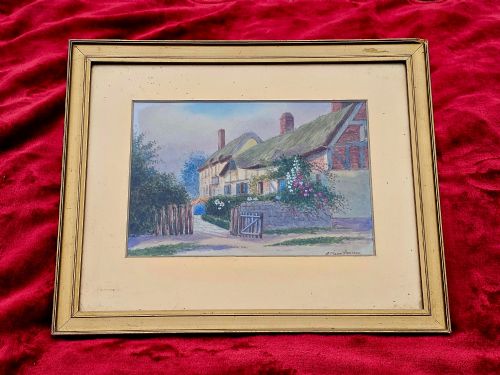
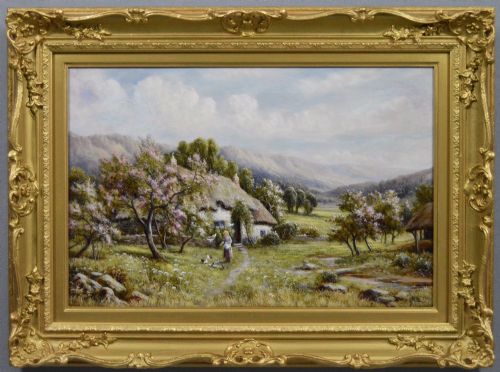
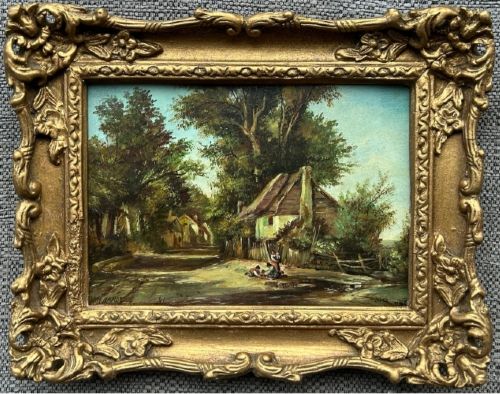
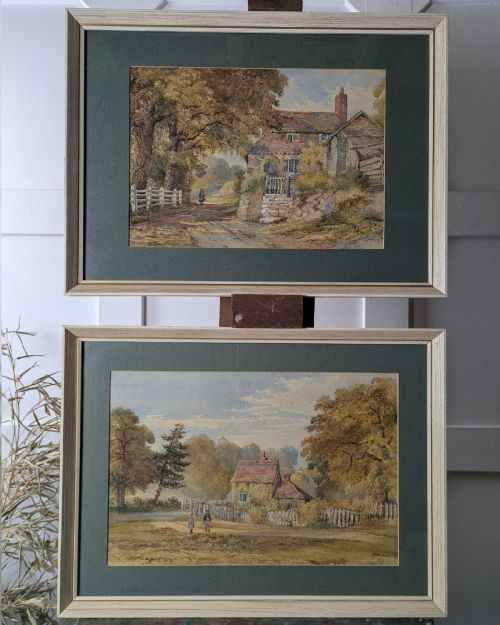
When you search for country cottage art, you encounter a selection of paintings and decorative items depicting rural dwellings, gardens, and pastoral landscapes. These works span from the Victorian period through the mid-twentieth century, recording a nostalgic view of British country life.
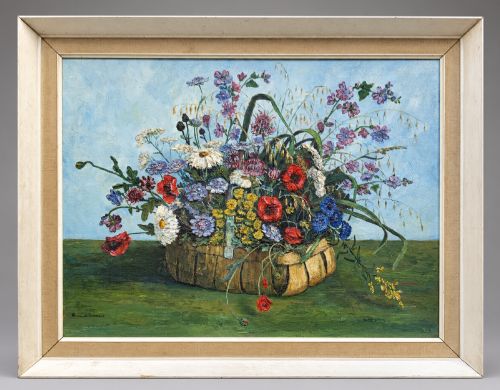
Watercolours and oil paintings on canvas, panel, or card dominate the selection. You also find folk art samplers, painted furniture, and wooden accessories that share the same rural aesthetic.
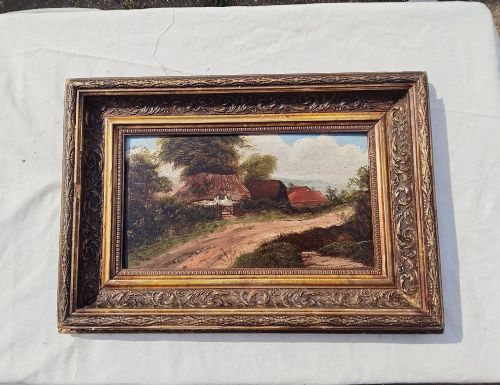
The majority of pieces date from the late nineteenth century to the 1930s, reflecting a period when artists frequently painted village scenes, thatched cottages, and agricultural landscapes.
Materials and Technique
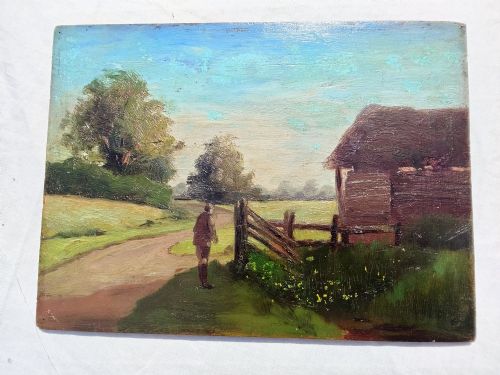
Artists painted these scenes using watercolour pigments on paper or oil paint applied to canvas, wooden board, card, or panel. Watercolour works rely on transparent washes to capture light on cottage walls and gardens, while oil paintings utilise heavier textures to build up landscapes and figures.
Support materials range from traditional canvas and heavy watercolour paper to wooden boards and cards typical of early twentieth-century sketching. Frames often consist of period moulded wood, occasionally retaining original gilding.
Folk pieces incorporate mixed media, stitched textiles on samplers, and hand-painted decoration on wooden items such as wall shelves and spinning chairs.
Country Cottage Art Retail Price Guide 2026
Typical asking prices for country cottage art among the pieces listed under this phrase on Sellingantiques today, from the lower quarter to the upper quarter. They describe what is for sale here now, not the wider market.
Listings incorporate works from the Victorian, Edwardian, and mid-century periods, utilising paper, canvas, wood, and watercolour pigment.
Distinctions in Quality
The distinction between ordinary and superior works lies in the sureness of the brushwork and the artist's command of light and atmosphere. Stronger watercolours display transparent washes and precise detail without appearing stiff, while finer oil paintings show confident handling of pigment and depth.
Composition and regional specificity also separate works. Paintings that record named locations with distinct architectural details and convincing human or animal figures hold greater visual interest than generic cottage scenes.
The integrity of the original support and frame contributes to a piece's standing. Works that retain their period mounts and unaltered surfaces offer a more complete historical record.
K Howitt·William Howard Hardy·A Marie Parsons·John McDougal·Robert A Nottingham·Robert John Hammond·Howard Helmick·Percy Lancaster·George Morland·Charles Edward Wilson·J S Ainley·James Hardy Junior·Frederick James Knowles·William Greaves·William Henry Knight·Theresa Stannard·Helena Maguire·Owen Bowen·Ernest Higgins Rigg·Harry Sylvester Stannard·Henry Charles Fox·Will Anderson·Robert Hollands Walker·John Falconar Slater·Thomas James Lloyd
The Country Cottage Art Glossary
- Watercolour pigment
- A colourant ground with a water-soluble binder, applied in washes on paper to create luminous effects.
- Oil on panel
- A painting executed on a wooden board or flat panel rather than flexible canvas, common in nineteenth-century studies.
- Folk art
- Utilitarian or decorative objects created by self-taught or traditional makers, often displaying naive charm and regional character.
- Gilded frame
- A wooden picture surround coated with a thin layer of gold leaf or metallic gilt paint, typical of Victorian presentation.
- Mixed media
- An artwork combining two or more artistic materials, such as watercolour and bodycolour on paper.
Country Cottage Art: Frequently Asked Questions
What periods do these pieces represent?
The selections span from the Georgian and Victorian eras through the Edwardian period into the mid-twentieth century up to the 1960s.
Most works cluster around the late nineteenth century and the early decades of the twentieth century.
How were these artworks displayed?
Paintings were typically framed in wood, sometimes with gilt ornamentation, designed to hang on domestic walls in parlours and sitting rooms.
Smaller watercolours and oils on card were often kept behind glass to protect the paper and pigments from atmospheric moisture.
Are all these items paintings?
While watercolours and oil paintings form the largest group, the category includes related rural items such as stitched samplers, hand-painted wall shelves, and wooden chairs.
These decorative objects reflect the same rustic aesthetic found in the framed artwork.
How do I identify a regional scene?
Many listings name specific locations, such as Welsh villages, Scottish crofts, or named cottages in counties like West Sussex and Nottinghamshire.
Artists often inscribed titles or locations on the reverse of the canvas or panel, or within the margin of the watercolour paper.