




Cottage Landscape Watercolours
These cottage landscape watercolours capture rural life through delicate pigment on paper, offering a quiet piece of historical countryside for a domestic wall.
Cottage Landscape Watercolours
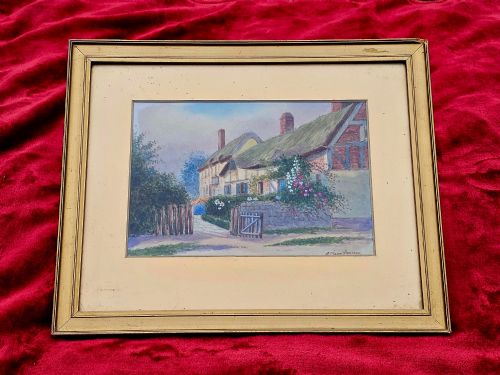
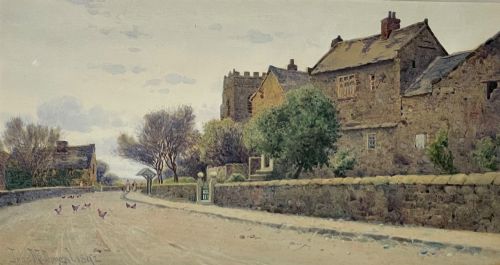
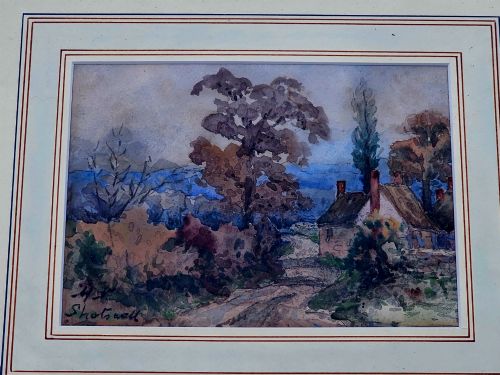
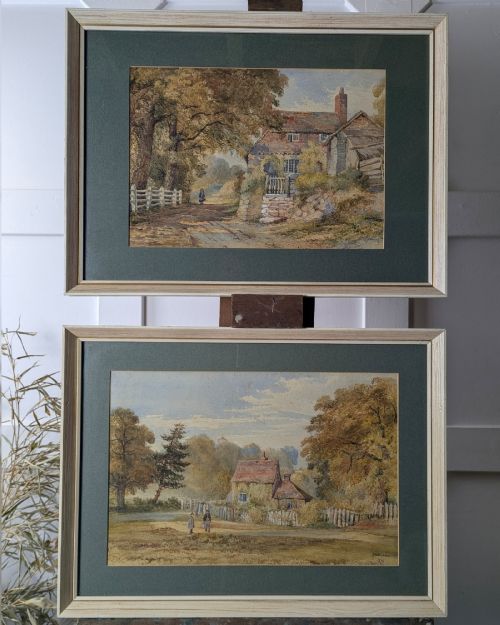
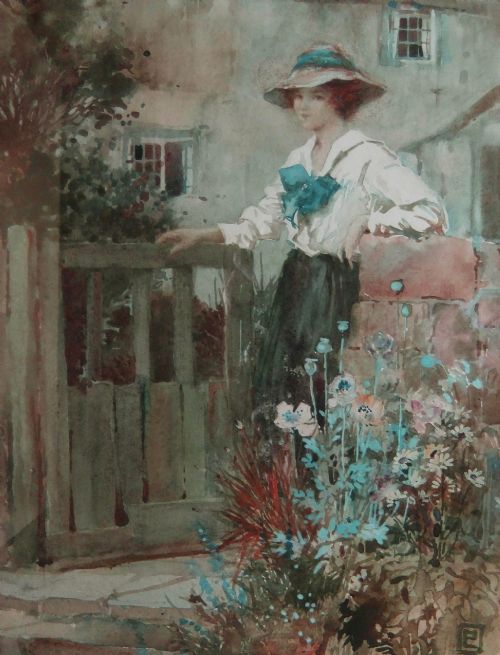
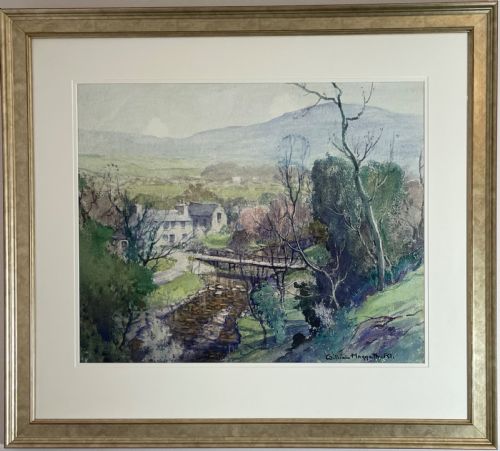
When someone searches for cottage landscape watercolours, they seek traditional British views executed on paper, spanning the nineteenth century through the mid-twentieth century. The selection contains rural scenes, thatched dwellings, gardens, and village paths recorded by regional artists.
Victorian and Edwardian examples dominate the selection, often grouped within styles such as British Impressionism and pastoral genre painting. These works frequently measure within domestic proportions, housed behind glass in wooden or gilt frames.
Materials and technique
The primary medium involves watercolour pigment applied to paper sheets, sometimes utilising gum arabic to enrich the depth and luminosity of tones. Artists built these compositions through transparent washes overlaid with fine brushwork to define architectural details and foliage.
Framing typically incorporates timber mouldings, with several pieces preserved beneath glass in gilt wood surrounds that protect the delicate paper surface from atmospheric moisture and handling.
The inventory spans the nineteenth century through the mid-twentieth century, utilising paper, watercolour pigment, wood, and glass.
Evaluating quality
Quality rests upon the handling of light, atmospheric perspective, and the preservation of pigment vibrancy across the paper surface. Stronger examples display confident brushwork and stable colour retention without excessive fading from past exposure to sunlight.
The sophistication of the composition and the artist's ability to render natural textures - such as stone walls, thatch, and garden flora - distinguish accomplished works from standard topographical illustrations.
A. Marie Parsons·John McDougal·Robert A. Nottingham·Percy Lancaster·Fred Lawson·Arthur Tucker·J S Ainley·William Hoggatt·James Hardy Junior·Theresa Stannard·Helena Maguire·Linnie Watt·Owen Bowen·Lilian Stannard·Harry Sylvester Stannard·Henry Charles Fox·Will Anderson·Robert Hollands Walker·Thomas James Lloyd·B. Kaufmann·David Woodlock·Joseph Kirkpatrick·J.V.R.Parsons·Arthur Claude Strachan·John Abernethy Lynas-Gray
The Cottage Landscape Watercolours Glossary
- Watercolour pigment
- The finely ground colour substance mixed with a water-soluble binder, applied in translucent layers to paper.
- Gilt wood
- Timber framing coated with a thin layer of gold leaf or metallic gilt paint, common in Victorian presentation.
- Wash
- A fluid application of diluted watercolour pigment used to create smooth expanses of sky or background tone.
- Pastoral genre
- An artistic subject matter focusing on idealized rural life, agricultural scenes, and cottage gardens.
Cottage Landscape Watercolours: Frequently Asked Questions
How should I hang these watercolours?
Keep these works away from direct sunlight to prevent the watercolour pigments from fading over time. Position them on interior walls with stable humidity levels.
Ensure they hang securely using appropriate fixings suited to the weight of the timber and glass frames.
Are these paintings original?
Each listed item is an original painted work on paper rather than a modern reproduction print. Hand-applied brushstrokes and the texture of the paper distinguish these unique creations.
Individual artists created these compositions directly from observation during the nineteenth and twentieth centuries.
What framing is normally used?
Many examples retain their period wooden or gilt wood frames behind protective glass. These surrounds often reflect the aesthetic preferences of the Victorian or Edwardian eras.
Original framing helps maintain the historical context and integrity of the artwork.
How do I identify the period?
Dating relies upon stylistic markers, artist active dates, and framing characteristics typical of nineteenth-century or twentieth-century British art. Victorian examples often show tighter academic control, while later pieces lean towards impressionistic washes.
Signatures and inscriptions on the mounts or reverse provide further chronological context.