




Cottage Garden Landscape Art
Cottage garden landscape art captures rural idylls through impressionistic brushwork and delicate pigments.
Cottage Garden Landscape Art
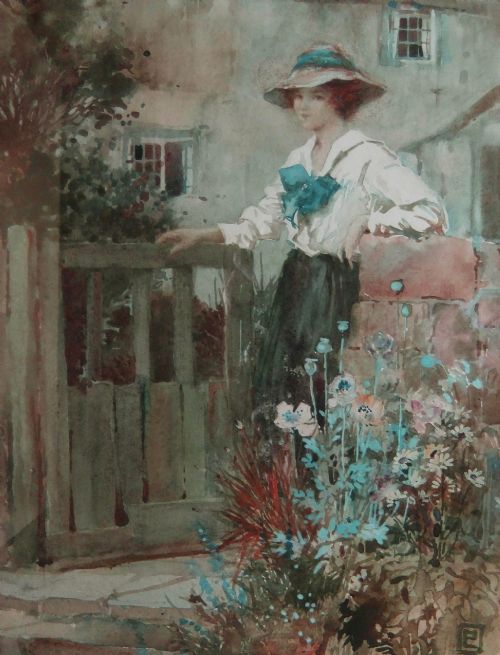
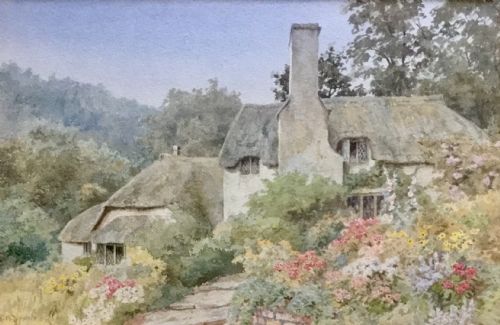
When buyers search for cottage garden landscape art, they encounter pastoral scenes depicting rustic dwellings, flowering borders, and domestic rural life. These works capture a romanticized vision of the English countryside, balancing architectural elements with abundant flora.
The pieces on this page lean heavily towards watercolours on paper and oil paintings on canvas, frequently framed behind glass. They span from the Victorian era through the Edwardian period and into the early twentieth century.
Most examples present calm rural vignettes featuring figures engaged in quiet daily tasks or children and animals beside traditional cottages. The aesthetic aligns closely with British impressionism and Edwardian pastoral styles of painting.
Materials and Technique
Artists relied primarily upon oil paint on canvas or watercolour pigment applied to paper, occasionally incorporating mixed media elements. These traditional mediums allowed painters to render soft natural light and the intricate textures of floral gardens.
Watercolour works make significant use of translucent washes to build luminosity in skies and pathways, whilst oil paintings utilise thicker impasto to give weight to foliage and cottage walls. Wood frames, often glazed for works on paper, protect the painted surface.
Listings combine delicate paper watercolours with robust canvas oil paintings from the Victorian and Edwardian periods.
Judging Quality
The distinction between standard works and exceptional pieces rests upon the confidence of the brushwork and the management of natural light. Superior examples convey atmosphere and depth with economy of line, whereas lesser works rely on rigid outlines.
Compositional balance also dictates merit, where master hands integrate figures and architecture naturally into the surrounding botanical landscape. The preservation of the pigment and the original framing context further separate standard decorative items from fine examples.
Percy Lancaster·Theresa Stannard·Owen Bowen·Ernest Higgins Rigg·Kershaw Schofield·Lilian Stannard·David Woodlock·Herbert Royle·Arthur Claude Strachan·John Abernethy Lynas-Gray·Thomas Nicholson Tyndale·Jane Utley·Henry John Sylvester Stannard·Benjamin D. Sigmund·Theresa Sylvester Stannard·George Frederick Nicholls·Minnie Smythe
The Cottage Garden Landscape Art Glossary
- Watercolour pigment
- A colourant suspended in a water-soluble binder, traditionally applied in translucent washes to paper to create luminous effects.
- British Impressionism
- A late nineteenth and early twentieth century painting style focusing on everyday subjects, natural light, and loose brushwork.
- Impasto
- Paint applied thickly to a canvas or panel, leaving visible brush or palette knife marks that stand out from the surface.
- Provenance
- The documented history of ownership surrounding a work of art, establishing its authenticity and chain of custody.
Cottage Garden Landscape Art: Frequently Asked Questions
What periods do these paintings come from?
The works originate largely from the Victorian era, the Edwardian period, and the early twentieth century up to the nineteen-thirties.
Artists working during these decades frequently returned to pastoral themes and traditional rural architecture for inspiration.
How should I hang watercolour paintings?
Watercolours require protection from direct sunlight to prevent the pigments from fading over time. Hanging them on interior walls away from direct windows preserves the delicate tones.
Ensuring the framing is sealed properly also protects the paper from ambient moisture and dust.
What subjects appear in these scenes?
The artwork typically depicts thatched or half-timbered cottages surrounded by dense floral gardens, climbing roses, and vegetable patches. Figures are often shown engaged in simple daily pursuits like feeding hens or knitting outside.
These depictions reflect a nostalgic view of rural domestic life during the late nineteenth and early twentieth centuries.
How do oil paintings differ from watercolours?
Oil paintings utilise slow-drying paint on canvas or wood panels, allowing for rich textures and deep colour layering. Watercolours employ pigment on paper under glass, offering a lighter and more translucent quality.
Both mediums captured the natural light of the English countryside in distinct ways.