




Cornish Watercolour
These cornish watercolour works capture coastal harbours and village scenes across the decades.
Cornish Watercolour
A cornish watercolour brings the coastal light, bustling harbours, and fishing communities of the West Country directly onto paper. The selection spans the late nineteenth century through to the nineteen-forties, capturing distinct artistic movements from the region.
Most pieces you meet here belong to the early twentieth century or the Edwardian era, reflecting the rich output of local art colonies. You will frequently encounter framed artwork depicting familiar maritime scenes from St Ives, Newlyn, and Mousehole.
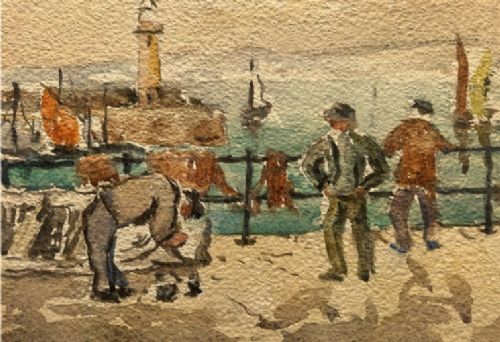
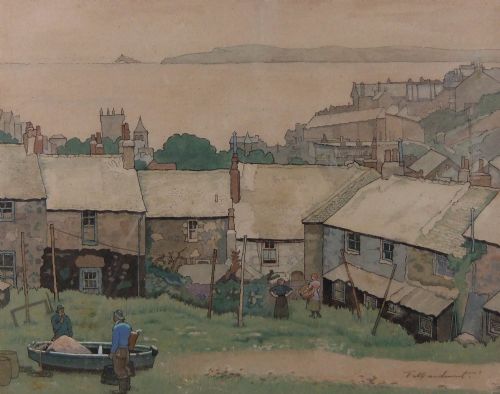
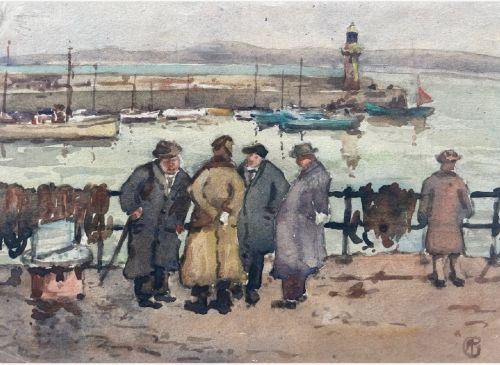
Subjects range from traditional marine art and trawling luggers to quiet village lanes and fisherfolk at work. The paintings preserve a specific historical record of Cornwall's coastal life through the eyes of established regional artists.
Materials and technique
These works are executed using watercolour pigment applied directly to paper, occasionally accompanied by ink line work. The delicate water-based mediums allow artists to capture the shifting atmospheric conditions of the Cornish coast with immediacy.
Framing typically involves wood and glass to protect the fragile paper surface from moisture and light damage. Some examples incorporate gilt wood frames that complement the traditional character of the artwork.
Cornish Watercolour Retail Price Guide 2026
Typical asking prices for cornish watercolour among the pieces listed under this phrase on Sellingantiques today, from the lower quarter to the upper quarter. They describe what is for sale here now, not the wider market.
Several artists clearly preferred painting St Ives from the fields rather than getting sand in their water pots.
What separates the best from the rest
Quality rests upon the artist's ability to render the distinctive light and movement of the Cornish coast with confidence and economy. Stronger works display a assured handling of watercolour pigment that brings atmosphere and depth to the harbour or village scene.
The significance of the named maker and the specific coastal location heavily influence the standing of each painting. Pieces associated with notable art colonies like Newlyn or St Ives command particular interest for their direct connection to regional traditions.
William Banks Fortescue·Thomas Maidment·George F Pennington·Richard Harry Carter·Ernest F Hill·Frederick Stuart Richardson·Ralph Todd·William Lee Hankey·Walter Sweet·S J Lamorna Birch·Cuthbert Crossley·John Baragwanath King
The Cornish Watercolour Glossary
- Watercolour
- A paint consisting of pigment suspended in a water-based solution. It is traditionally applied to paper surfaces to create luminous, translucent washes of colour.
- Newlyn School
- An art colony based in West Cornwall during the late nineteenth and early twentieth centuries. Artists associated with this group focused on plein-air painting of local fisherfolk and coastal life.
- St Ives School
- A twentieth-century designation for artists who lived and worked in the Cornish port. The grouping encompasses traditional marine painters as well as later modernists.
- Gilt wood
- Wood that has been covered with a thin layer of gold leaf or gold-coloured pigment. It is commonly found on traditional picture frames from the Victorian and Edwardian periods.
Cornish Watercolour: Frequently Asked Questions
What subjects appear most often?
Harbours, fishing boats, and coastal villages form the primary subjects across these paintings. Artists focused heavily on maritime life and local inhabitants.
Scenes from St Ives, Mousehole, and Newlyn recur frequently, documenting the historic character of these West Country locations.
How should I frame and display them?
Watercolour on paper requires protection behind glass and conservation-grade mounting to prevent fading from natural light. Keeping them away from direct sunlight preserves the original pigments.
Traditional wood or gilt frames suit the nineteenth and early twentieth-century origins of these coastal artworks.
How do I identify the period?
Dating relies on artist signatures, framing materials, and stylistic traits associated with movements like British Impressionism or the Newlyn School. Edwardian and Victorian fine art conventions offer further chronological clues.
Many works carry direct notations of locations and years within the titles recorded by their makers.
What defines West Country maritime art?
This genre captures the working life of Cornish fishermen, local luggers at sea, and rugged harbour entrances. The artists lived among these communities to record authentic daily scenes.
The resulting works combine topographical accuracy with the atmospheric light unique to the Cornish peninsula.