




Cornish Seascape Painting
These Cornish seascape painting works capture the shifting light and rugged harbours of the coastline through the brush of Victorian and twentieth-century artists.
Cornish Seascape Painting
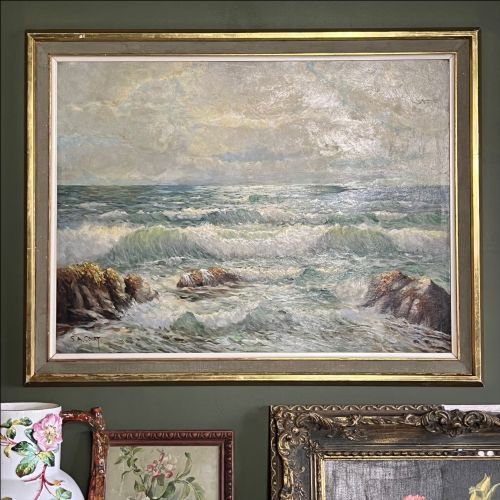
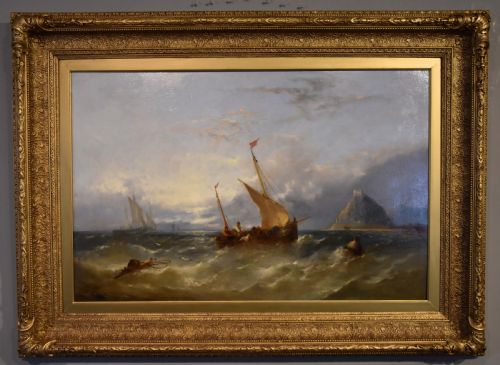
A Cornish seascape painting depicts the harbours, cliffs, and coastal life of the region, drawn largely from the nineteenth century and the early decades of the twentieth century. These works frequently centre on specific locations such as St Ives, Polperro, Mevagissey, and St Michael's Mount.
The most common formats you will encounter on this page are oil paintings on canvas and watercolours on paper, often presented in period frames of wood and gilt wood. Such pieces range from intimate harbour views to larger maritime scenes involving fishing trawlers and luggers.
Makers and painters represented span the Victorian era, Edwardian period, and twentieth-century British schools, reflecting both local residents and visiting artists drawn to the distinct West Country light.
Assessing Quality and Hand
The distinction between works rests upon the surety of the brushwork and the artist's ability to render the particular quality of light and water peculiar to the Cornish coast. Stronger examples demonstrate confident handling of atmosphere and maritime architecture.
Condition of the medium and the preservation of the original canvas or paper surface also play a role in distinguishing individual pieces, alongside the presence of period-appropriate frames that complement the painting.
Cornish Seascape Painting Retail Price Guide 2026
Typical asking prices for cornish seascape painting among the pieces listed under this phrase on Sellingantiques today, from the lower quarter to the upper quarter. They describe what is for sale here now, not the wider market.
Several canvases retain faint grains of actual Cornish sand mixed into the lower layers by painters caught in coastal gales.
Sidney A Court·William Banks Fortescue·William Henry Williamson·Edward Matthew Elliott·Charles Napier Hemy·Richard Harry Carter·Gyrth Russell·George Turland Goosey·Charles Sim Mottram·Ernest F Hill·Frederick Stuart Richardson·Hendrik Yan Wolter·S J Lamorna Birch·Herbert James·William Edward Webb
The Cornish Seascape Painting Glossary
- En plein air
- Painting outdoors to capture natural light and direct visual effects. This method was widely practiced by artists working along the Cornish coast.
- Lugger
- A traditional two-masted fishing vessel frequently seen in maritime art of the West Country. These boats appear in numerous coastal and harbour scenes.
- Watercolour
- A paint consisting of water-soluble pigments used on paper. It forms a significant portion of the maritime works produced in the region.
- Gilt wood
- Wood decorated with gold leaf or gold-coloured paint, commonly used for period picture frames. It adds a decorative border to oil paintings and watercolours.
Cornish Seascape Painting: Frequently Asked Questions
Where were these coastal scenes typically painted?
Many of these works were created on location in renowned West Country artists' colonies and fishing ports, including St Ives, Polperro, and Mevagissey.
Artists frequently set up their easels directly beside the harbours or cliff tops to record the daily activities of local fishermen and trading vessels.
How do I care for a vintage oil painting?
Keep the canvas out of direct sunlight and away from damp environments to protect both the oil paint and the wooden stretcher bars.
Dust the surface gently with a soft, dry brush and avoid using any liquid cleaners on either the paint or the frame.
What is the difference between oil and watercolour here?
Oil paintings utilise pigment bound in drying oil on canvas or wood, offering a heavier texture and deeper layers of colour.
Watercolours are applied to paper behind glass, presenting a more translucent and luminous depiction of sea and sky.
How can I tell the period of a piece?
Dating relies on stylistic evidence, signatures, artist lifespan records, and framing materials characteristic of Victorian, Edwardian, or mid-twentieth-century production.
Details such as the rig of the fishing vessels and the clothing of figures in the harbours also offer clues to the era.