





Corner Whatnot Table
These corner whatnot table pieces are tiered display furniture designed to make use of awkward rooms, offering open shelves for books and ornaments.
Corner Whatnot Table
A corner whatnot table is a tiered shelving unit or etagere designed to fit snugly into room corners, maximising floor space while displaying objects. The examples encountered span from the Georgian and Regency periods through the Victorian era up to the early twentieth century.
Forms vary from simple four-tier mahogany stands and compact George III designs to demi-lune display console tables, oak octagonal pieces, and marble-topped dumb waiters. Makers utilised various shapes, including curved demi-lune silhouettes and multi-tiered constructions suitable for corners.
Materials and construction methods
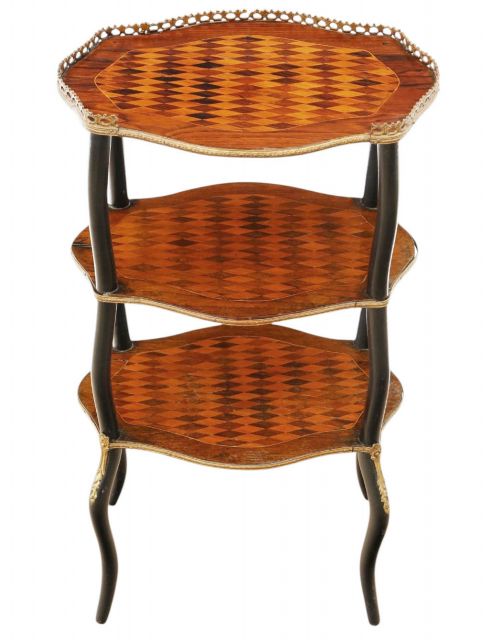
Cabinetmakers constructed these tiered pieces using solid timbers and decorative veneers, notably mahogany, burr walnut, walnut, birdseye maple, and oak. Selected pieces feature mixed timber parquetry, ebonised wood surfaces, and painted finishes reflecting French Revival and French Chateau influences.
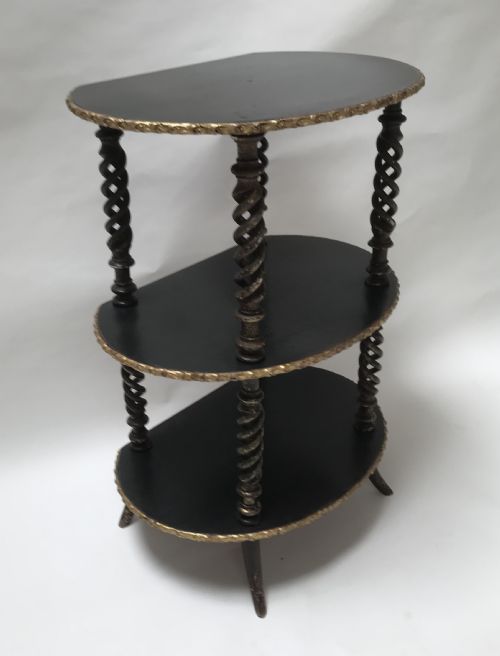
Structural elements often include turned wooden supports, barley twist uprights, and multiple graduating shelves secured by corner posts. Certain iterations incorporate contrasting materials such as inset marble tops and brass details to enhance the display surfaces.
Corner Whatnot Table Retail Price Guide 2026
Typical asking prices for corner whatnot table among the pieces listed under this phrase on Sellingantiques today, from the lower quarter to the upper quarter. They describe what is for sale here now, not the wider market.
Some nineteenth-century makers evidently decided standard square shelves were too dull and opted for barley twists instead.
Distinctions in quality and execution
The degree of refinement in timber selection and veneer matching defines the upper tier of these pieces, particularly in burr walnut and birdseye maple examples. Superior specimens display precise joinery in multi-tiered frameworks, tight parquetry patterns, and well-executed turned supports like barley twists.
Proportion and scale also separate standard utility stands from finer console pieces, with compact George III designs and demi-lune shapes demonstrating greater architectural consideration. The integration of specialty components, such as genuine marble tops or subtle inlay work, marks out more ambitious workshops.
The Corner Whatnot Table Glossary
- Whatnot
- An open piece of tiered furniture with multiple shelves designed for displaying ornaments, books, or small objects. These stands originated in the eighteenth century and remained popular throughout the Victorian period.
- Etagere
- A French term for a piece of furniture consisting of a set of open shelves for displaying small articles or ornaments. It is frequently used interchangeably with whatnot.
- Dumb waiter
- A tiered stand or side table traditionally used for holding dishes, drinks, or serving items without domestic assistance. Certain examples double as display whatnot furniture.
- Parquetry
- A geometric mosaic of wood pieces used for decorative floors and furniture surfaces. It appears in inlaid patterns on select nineteenth-century display shelves.
- Demi-lune
- A half-moon or semicircular shape utilised in furniture design. Console whatnot tables often employ this outline to sit flush against walls and corners.
Corner Whatnot Table: Frequently Asked Questions
What is a corner whatnot table used for?
These pieces function primarily as open display shelving units designed to occupy unused room corners efficiently. Historically, owners placed books, ceramics, and ornaments upon the graduating tiers for decorative effect.
Today, they serve a similar role in modern interiors, providing vertical display space without dominating the floor plan. Their open structure suits living rooms, hallways, and studies.
How do I date an antique whatnot?
Dating relies on observing timber choices, construction techniques, and stylistic markers across different eras. Georgian and Regency pieces tend to show cleaner lines in mahogany, whereas Victorian iterations often feature burr walnut, ebonised wood, or barley twist turnings.
Later pieces from around nineteen hundred may incorporate French Revival details or marble tops. Comparing the turning styles and secondary woods helps narrow the period of manufacture.
Where should I place a whatnot in my home?
As the name suggests, corner models fit naturally into empty ninety-degree room angles that standard rectangular furniture cannot occupy. Demi-lune console versions also anchor flat wall spaces effectively while maintaining a compact footprint.
Keep them away from direct heat sources and strong sunlight to protect vulnerable wood veneers and polished timber surfaces. Ensure the surrounding floor is level to maintain stability across multiple tiers.
What is the difference between a whatnot and an etagere?
The terms describe very similar tiered shelving furniture and were often used interchangeably by makers and retailers. Etagere derives from the French language and sometimes implies a lighter, more decorative French Revival or chateau aesthetic.
Whatnot is traditionally the English term for multi-tiered display stands. Both fulfill the same fundamental purpose of holding decorative objects across open shelves.