



Copper Side Table
These copper side table examples combine practical surfaces with distinct regional metalsmithing, offering characterful focal points for interiors.
Copper Side Table
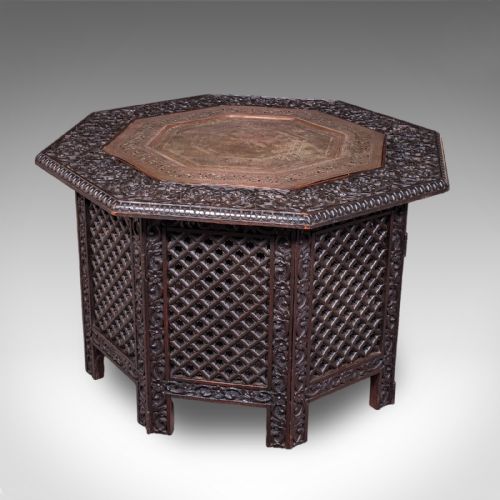
A copper side table brings together metalwork tops and timber frames, drawing on diverse stylistic traditions from the nineteenth and early twentieth centuries. When searching for a copper side table, buyers encounter varied forms ranging from tray tables to occasional and cricket tables.
The materials span oak, hardwood, and timber supporting inset or removable metal tops. Many pieces incorporate brass, white metal, or silver inlay alongside the primary copper surface.
Origins stretch across specific regional workshops and revival movements, including Arts and Crafts, Anglo-Indian, Art Nouveau, Mamluk Revival, and French Rustic traditions. These influences shape the geometric and floral motifs seen across the inventory.
Materials and construction methods
Makers constructed the structural frames using solid oak or exotic hardwoods, employing traditional joinery such as carved details or folding supports. These wooden bases provide sturdy support for the heavy metal tops they carry.
Copper Side Table Retail Price Guide 2026
Typical asking prices for copper side table among the pieces listed under this phrase on Sellingantiques today, from the lower quarter to the upper quarter. They describe what is for sale here now, not the wider market.
Some potting shed tables wear their garden history proudly with genuine verdigris, proving hard work leaves the best stains.
Assessing quality in metal and wood
Quality rests upon the depth and precision of the hand-engraving on the metal top, alongside the integrity of the inlay work. Finer examples display crisp, deliberate chiselling rather than shallow or hurried surface stamping.
The harmony between the timber base and the metal insert dictates overall refinement. Superior pieces feature well-seasoned hardwoods or quarter-sawn oak that complement the weight and patination of the copper.
The Copper Side Table Glossary
- Kursi
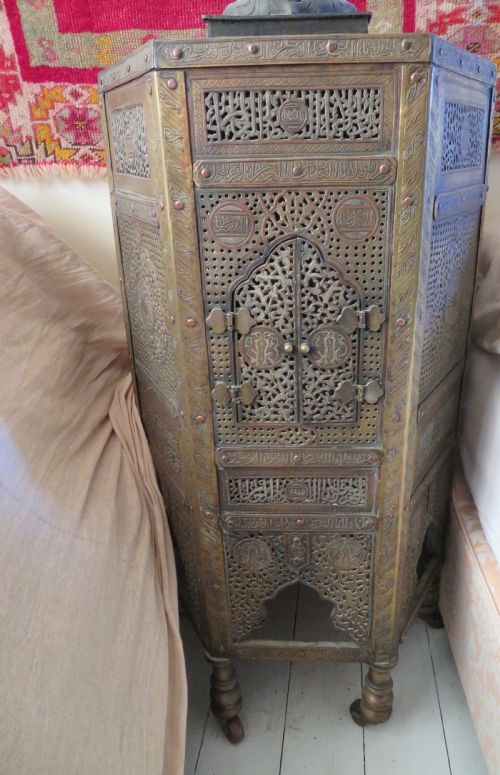
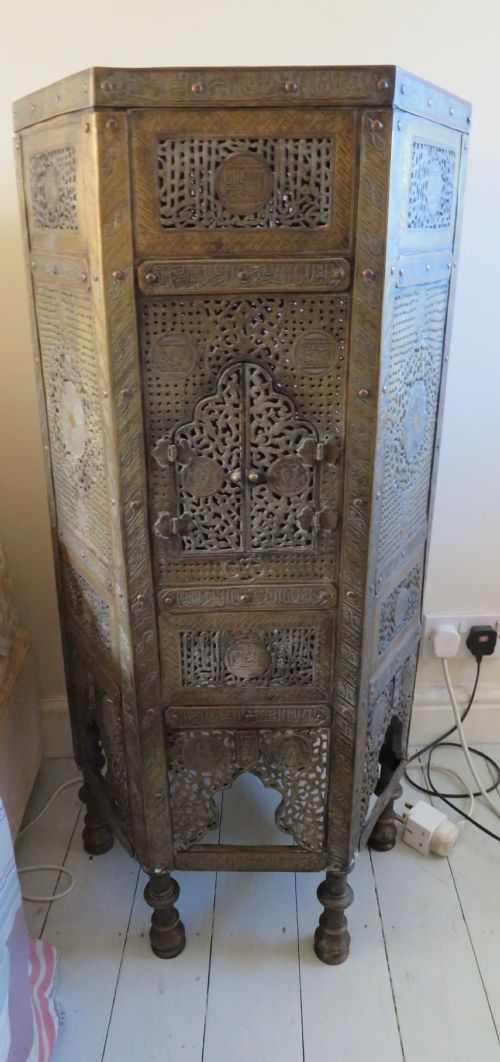
- A low hexagonal table or Quran stand originating from Middle Eastern traditions. These pieces often feature complex geometric openwork.
- Cairoware
- Metalwork produced in Cairo during the late nineteenth and early twentieth centuries, characterised by brass inlaid with silver, copper, and white metal.
- Mamluk Revival
- A design style inspired by medieval Islamic art of the Mamluk Sultanate, popular in European and Middle Eastern decorative arts.
- Cricket table
- A small, three-legged occasional table with a round wooden top, frequently adapted with metal inserts during the Arts and Crafts period.
- Verdigris
- The green patina that forms naturally on copper over time through atmospheric oxidation. This chemical change creates distinctive surface colouration.
Copper Side Table: Frequently Asked Questions
How do I clean a copper top?
Maintenance depends entirely on whether you prefer a bright polished finish or an aged appearance. Most collectors choose to preserve the natural patination by dusting with a soft cloth rather than using abrasive chemical polishes.
Applying a microcrystalline wax can protect the metal from further oxidation without stripping away historical character. Avoid harsh acidic cleaners which damage the delicate engraving and inlay work.
Are the tray tops removable?
Many examples feature separate metal trays resting upon folding or fixed wooden stands. This design originates from practical traditions where trays doubled as serving vessels.
Other configurations permanently inset the metal into a rebated wooden frame. Check the specific construction before lifting the surface.
What is Cairoware?
Cairoware describes brass items heavily inlaid with silver, copper, and white metal, manufactured in Egypt during the late nineteenth and early twentieth centuries. European travellers frequently purchased these distinctive pieces as souvenirs.
The surfaces typically display dense Islamic geometric patterns and Arabic calligraphy cartouches.
How do I date an Arts and Crafts table?
Dating relies on examining construction marks, timber selection, and the style of the metalwork. Pieces from this movement often utilise quarter-sawn oak and exposed joinery combined with hand-hammered copper.
Makers working in this tradition favored honest materials and straightforward forms over excessive ornamentation, distinguishing them from earlier revival styles.