


Copper Oil Lamp
These copper oil lamp pieces bring warm metallic lustre and period utility to a room, spanning modest Victorian table designs to ambitious Arts and Crafts standards.
Copper Oil Lamp
A copper oil lamp is a functional lighting vessel that combines metallic warmth with utilitarian design, appearing in various domestic and maritime forms across the nineteenth and twentieth centuries. Buyers seeking these items encounter a diverse selection ranging from standard floor lamps and adjustable table models to robust ship lanterns and small cigar lighters.
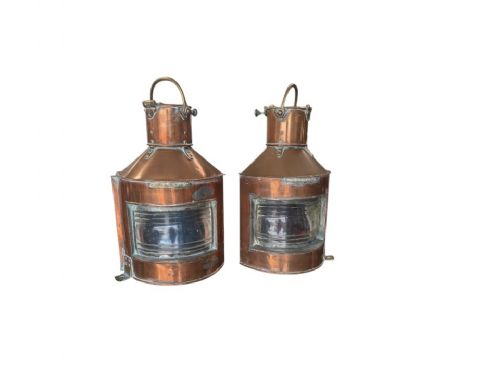
The pieces originating from the Victorian era and the late nineteenth century frequently pair a copper reservoir or column with brass fittings, whilst Edwardian and later twentieth century examples introduce specialised glass shades and telescopic stands. Maritime pieces such as railway carriage lamps and port or starboard lanterns represent a utilitarian branch of this category, built from copper and brass to withstand harsh conditions.
Materials and construction
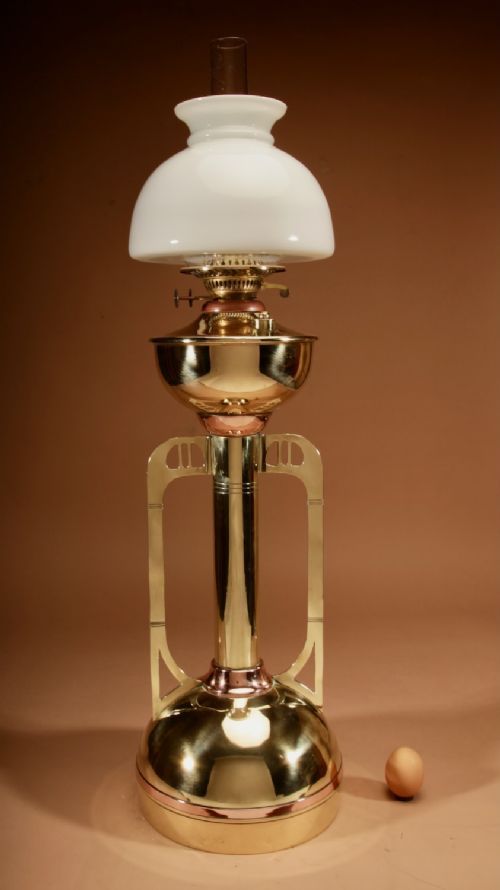
The construction relies primarily on the combination of copper and brass, utilising the contrasting tones of the red metal and yellow alloy to define structural elements like columns, reservoirs, and bases. Many items integrate glass components, notably cranberry glass and vaseline glass fonts or shades, alongside occasional applications of wrought iron, pewter, and fabric.
Makers employed adjustable and telescopic mechanisms in standard lamps to control height and light distribution, whilst maritime lanterns required watertight seals and heavy-duty riveting. The surface finishes range from polished warm metal to patinated copper surfaces shaped by Arts and Crafts, Secessionist, and Art Nouveau design principles.
Listings demonstrate a strong presence of 19th Century and Victorian items alongside early 20th Century Arts and Crafts and Art Nouveau designs.
Judging quality and design
The distinction between standard production and top tier pieces rests on design attribution and material integrity, particularly when works bear the mark of known designers like W A S Benson or Jan Eisenlöffel for WMF. Superior examples display thoughtful proportion in their telescopic standards and fine execution in decorative mounts, such as figural bases or specialised metalwork.
The integration of original components, including coloured glass shades in cranberry or vaseline glass and authentic burners, elevates the standing of an item above those altered or converted to electricity over time. Finer specimens maintain their structural rigidity in adjustable mechanisms and retain a consistent, undisturbed metal patina across both copper and brass elements.
Alderson & Gyde Ltd·Gustave Serrurier Bovy·Jan Eisenlöffel·WMF·W A S Benson
The Copper Oil Lamp Glossary
- Standard lamp
- A tall floor-standing lighting fixture designed to illuminate a room from an upright position. These pieces often feature adjustable heights and heavy weighted bases for stability.
- Cranberry glass
- A rich pinkish-red glass created by adding gold chloride to the molten batch. It frequently appears as the font or shade on Victorian lighting pieces.
- Vaseline glass
- A pale yellow-green glass containing uranium dioxide that exhibits a distinct fluorescence under ultraviolet light. It is commonly found in late nineteenth and early twentieth century shade production.
- Telescopic stand
- An extendable column mechanism that allows the user to raise or lower the burner height. This engineering feature is typical in better quality floor and table lighting.
- Port and starboard
- Nautical directional terms denoting the left and right sides of a vessel respectively. Ship lanterns from these positions utilise red and green glass panels.
Copper Oil Lamp: Frequently Asked Questions
How do I operate an oil lamp?
Operating these pieces involves filling the reservoir with lamp oil, trimming the cotton wick, and allowing the fuel to saturate the fabric before lighting.
Once lit, the glass chimney regulates airflow to ensure a steady, smokeless flame that can be adjusted via the brass thumbwheel.
Were these lamps converted to electricity?
Many surviving examples have been adapted for modern electrical use by running wiring through the original central columns while preserving the exterior metalwork.
Other specimens retain their original paraffin or oil burners, requiring no electrical fittings for display purposes.
How do I clean copper and brass?
Maintenance typically requires dusting with a soft cloth and preserving the natural metallic patina rather than aggressive polishing that strips historical surface character.
Special care must be taken around glass shades and delicate fitted mounts to avoid accidental detachment during cleaning.
What is the difference between Victorian and Arts and Crafts models?
Victorian lighting tends to incorporate ornate casting, decorative cut glass fonts, and formal symmetry designed for structured nineteenth-century interiors.
Arts and Crafts examples emphasise honest construction, hand-hammered copper surfaces, and functional utility championed by makers of that movement.