
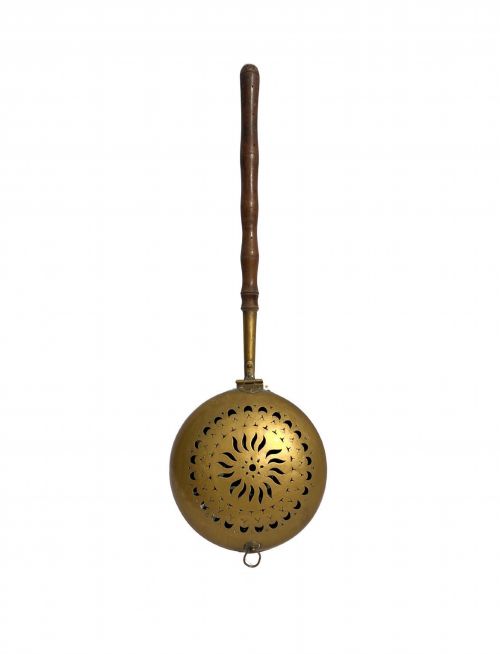


Copper Hearth Pan
These copper hearth pan pieces combine heavy metal utility with fireside warmth, serving as practical vessels for daily hearth work.
Copper Hearth Pan
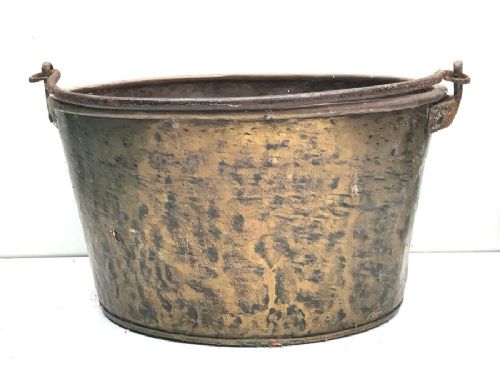
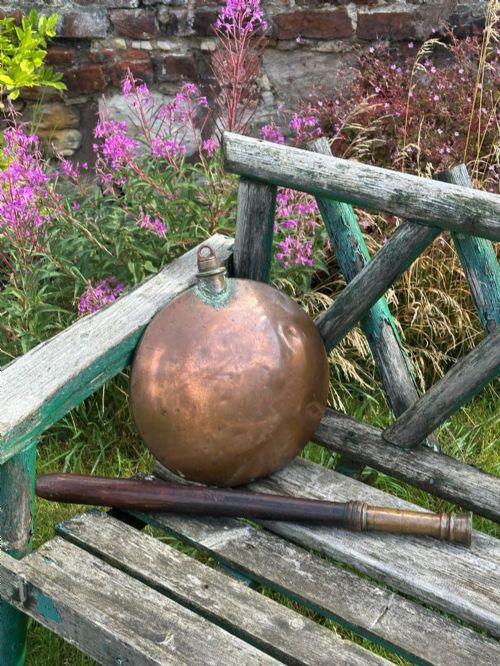
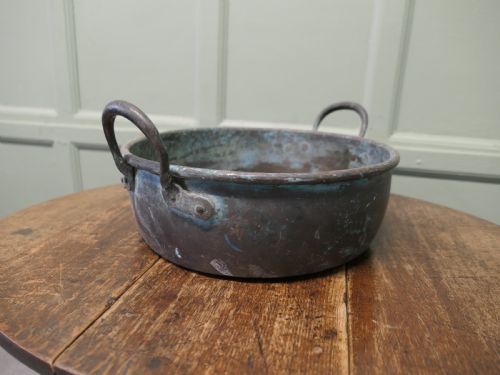
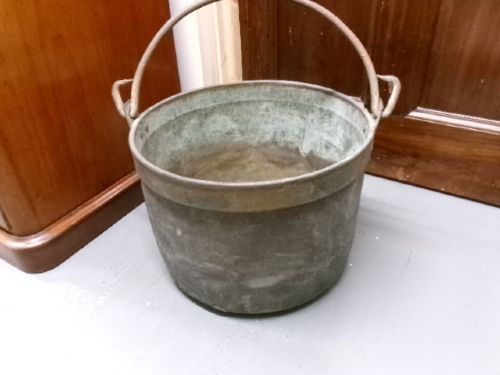
A copper hearth pan functions primarily as a heavy cooking vessel, preserving pan, or warming flask used near the fireplace during the eighteenth and nineteenth centuries. These items range from large cauldrons and cooking pots to cream setting pans and moon-shaped warming flasks.
Buyers meet sturdy nineteenth-century cooking vessels and eighteenth-century Georgian forms most often on this page. Many examples originate from English country workshops, whilst others display Spanish baroque styling.
Materials and construction
These items rely principally on heavy sheet and cast copper, combined with structural elements of brass, iron, and wrought iron. Metal components receive shaping through traditional beating and joining techniques suited to sustained heat exposure.
Handles incorporate timber elements such as oak and walnut, secured to metal bodies to permit safe handling near open fires. Original patinas develop naturally across the copper surfaces through age and use.
Listings span the eighteenth and nineteenth centuries, featuring copper, brass, iron, and wood materials across various kitchenware and fireplace accessories.
Distinctions in quality
Superior examples display heavier gauge copper construction and retain original fittings like wrought iron swing handles or timber grips. The integrity of the metal body and the presence of unpolished surface patina separate robust utilitarian vessels from later reproductions or heavily restored pieces.
Subtle differences in form, such as unusual moon shapes or specific maker markings like grain measure numbers, elevate certain items. Craftsmanship shows in the uniformity of the hand-beating and the secure attachment of handles and rims.
The Copper Hearth Pan Glossary
- Cauldron
- A large metal pot with a swing handle, designed for cooking or heating liquids over an open fire. These vessels frequently appear in heavy nineteenth-century copper.
- Warming flask
- A flat, enclosed metal container used to warm beds or rooms, often fitted with a detachable wooden handle. Georgian examples sometimes take unusual moon shapes.
- Cream setting pan
- A wide, shallow vessel utilised in dairies to allow cream to rise to the surface of milk. These pieces are typically constructed from heavy copper.
- Brasero
- A traditional Spanish container used for holding hot coals to provide warmth or heat food. They often reflect regional styles like Spanish Baroque.
- Patina
- The surface sheen and colour acquired by copper and iron through age, handling, and environmental exposure. Original patinas indicate undisturbed historic surfaces.
Copper Hearth Pan: Frequently Asked Questions
What were copper hearth pans used for?
These vessels served diverse domestic purposes near the hearth, including boiling water, cooking large meals, and preserving food.
Specific variants like cream setting pans and warming flasks handled dairy processing and bed heating.
How do I date a copper pan?
Dating relies on observing construction methods, handle materials like oak or walnut, and overall stylistic markers.
Eighteenth-century pieces often display Georgian proportions, whilst nineteenth-century examples frequently feature heavy cast iron or wrought iron swing handles.
Are these pans safe for modern cooking?
Many historic copper vessels were lined with tin for safe food contact, which may wear down over time.
Buyers intending to cook should inspect the interior lining carefully or utilise the pieces purely for decorative display.
How should I clean antique copper?
Preserving the original patina is usually preferred by collectors over aggressive polishing to a bright shine.
Dusting with a soft cloth and applying neutral wax protects the metal without removing its historic character.
What is a grain measure?
A grain measure is a standardised heavy metal vessel utilised to quantify dry agricultural produce.
Examples from the nineteenth century are constructed from thick copper and often bear numbers denoting their specific capacity.