
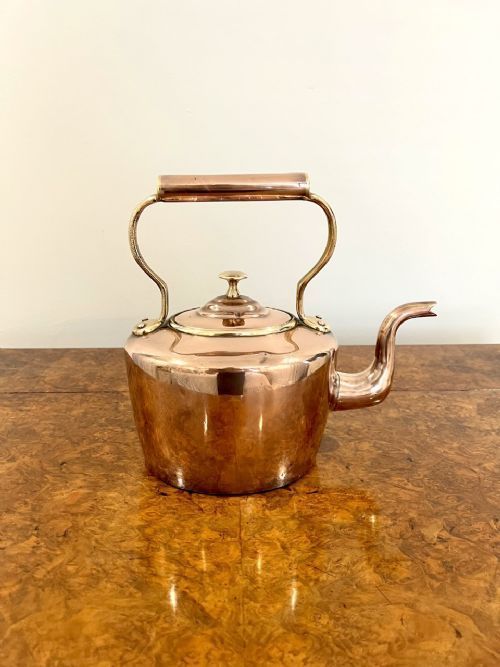


Copper Brass Tea Kettle
A copper brass tea kettle brings warmth and utility to the hearth, offering sturdy construction and enduring metallic lustre for the home.
Copper Brass Tea Kettle
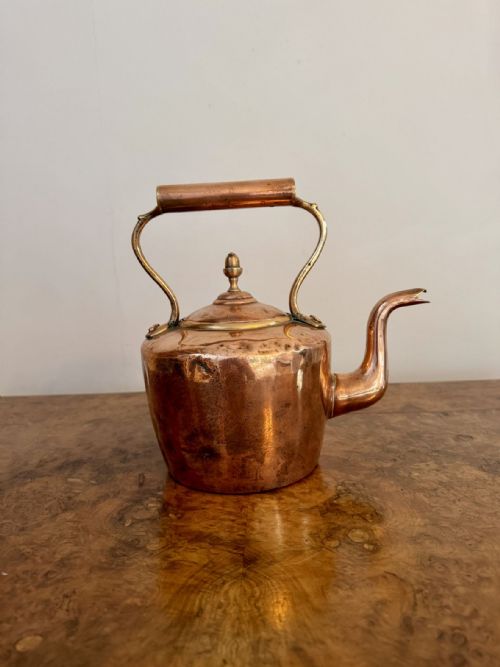
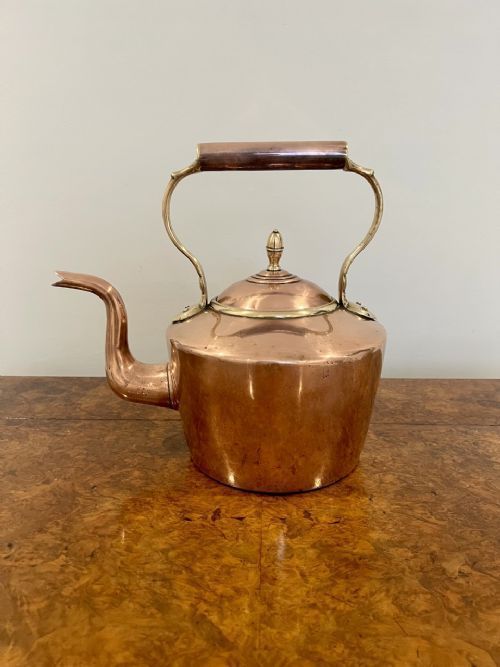
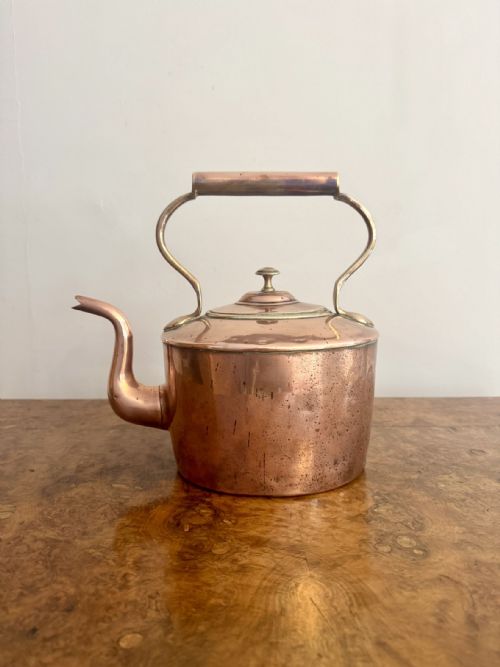
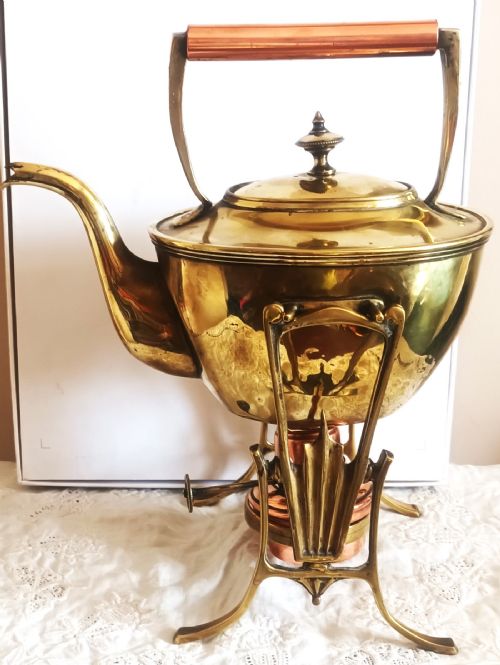
A copper brass tea kettle comprises practical water-heating vessels originating from the Georgian and Victorian eras. These pieces combine utilitarian form with warm metallic tones, spanning simple domestic kettles to elaborate tea urns and spirit kettles on stands.
Buyers are most likely to encounter George III period kettles alongside Victorian examples on this page. The selection ranges from small domestic kettles to large water urns and samovars reflecting nineteenth-century hospitality.
Materials and construction
The primary construction relies upon heavy sheet copper combined with contrasting brass mounts and handles. Makers incorporated iron, bone, teak and ebonised wood for insulation on handles and spouts to manage heat during use.
Construction techniques involve hand-beating and joining metal plates to create durable bodies suited for boiling water over a hearth or spirit burner. Stands and swing handles integrate brass components to secure the vessels during service.
Listings feature George III and Victorian eras, utilising copper, brass, wood, bone, iron and ebonised wood across kettles, urns and samovars.
Judging quality in metalwork
Quality rests on the weight of the metal and the integrity of the joins. Superior examples display careful hand-beating, well-proportioned brass fittings, and intact insulating materials on the handles.
The distinction between standard domestic items and finer pieces lies in the complexity of the form, such as oval shapes, integrated spirit stands, and well-executed samovar taps.
William Soutter And Sons
The Copper Brass Tea Kettle Glossary
- Samovar
- A heated metal container traditionally used to boil and heat water for tea. These large vessels often feature spigots and elaborate stands.
- Spirit kettle
- A kettle mounted on a metal stand with a small spirit burner underneath. This arrangement kept water hot at the table or tea service.
- George III
- A British stylistic and historical period spanning the later eighteenth and early nineteenth centuries. Pieces from this era often feature clean geometric lines and substantial copper gauge.
- Victorian
- The period covering the reign of Queen Victoria, noted for eclectic domestic metalwork. Kettles from this time frequently incorporate brass detailing and mechanical stands.
Copper Brass Tea Kettle: Frequently Asked Questions
How do I date a copper kettle?
Dating relies upon stylistic markers such as handle attachments, shape proportions, and manufacturing techniques recorded in the piece. Georgian examples often present simpler lines compared to Victorian variants with stands.
Examination of the metal gauge and seam construction also assists in determining whether a vessel originates from the eighteenth or nineteenth century.
Were these kettles used on open fires?
These vessels served to heat water over open hearths or dedicated spirit burners depending on whether they were standard kettles or mounted on stands. The heavy copper construction withstood daily domestic heating.
Spirit kettles utilised small burners underneath to maintain water temperature during tea service rather than boiling cold water from scratch.
How should I clean an antique copper kettle?
Maintenance involves preserving the stable patination that develops over centuries of handling and exposure to air. Gentle dusting and appropriate metal care maintain the surface without removing historical wear.
Aggressive polishing strips the aged character from the copper and brass surfaces, altering the appearance recorded by past generations.