




Copper and Glass Pendant
These copper and glass pendant lights combine sturdy metalwork with luminous shades, bringing warm character to any ceiling.
Copper and Glass Pendant
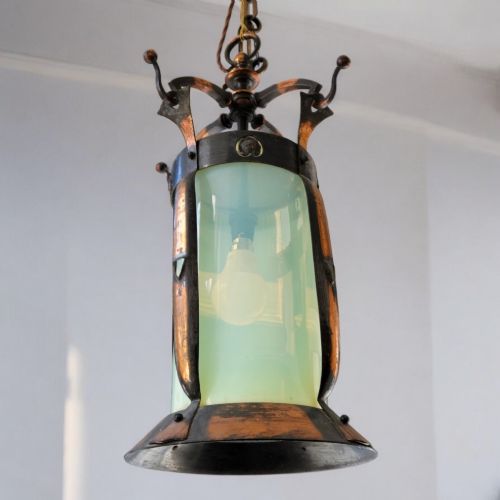
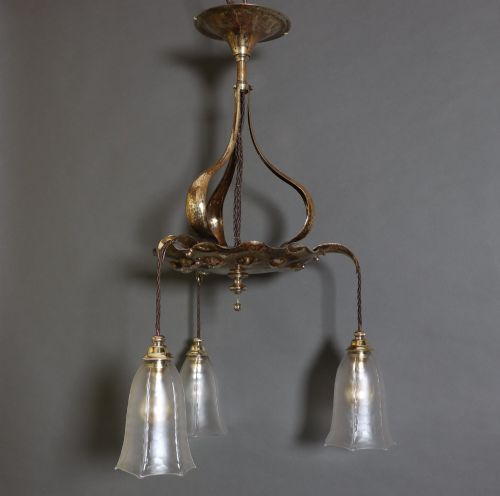
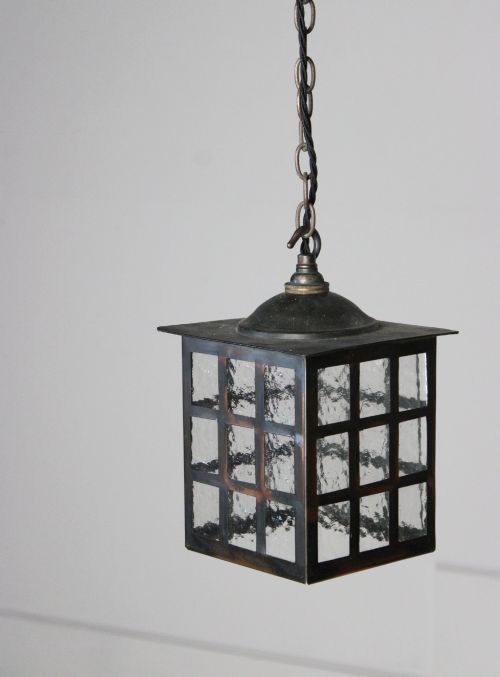
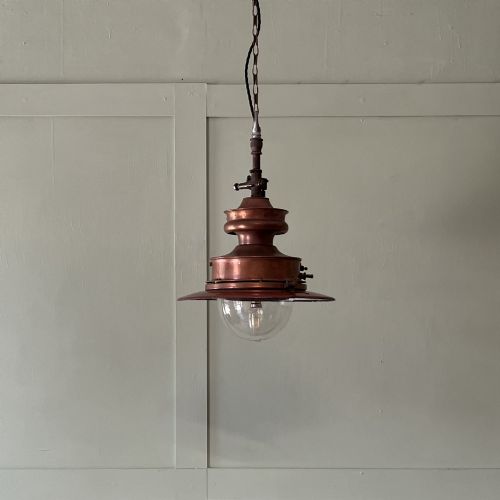
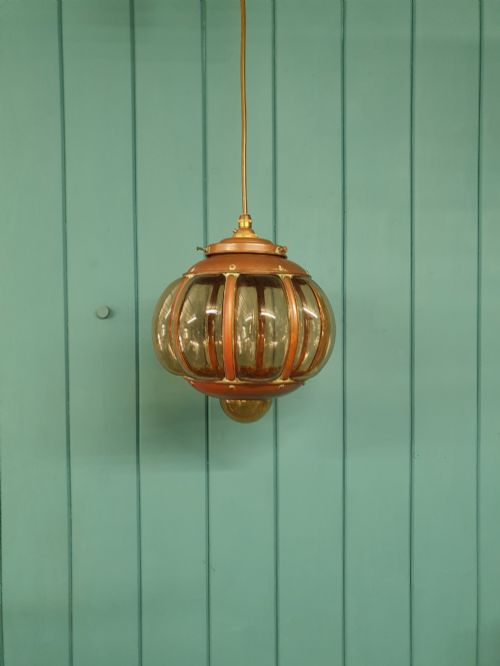
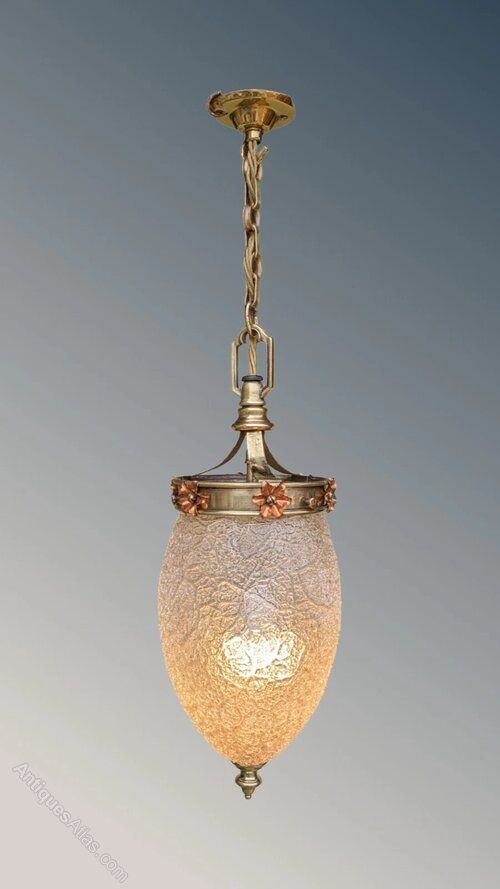
A copper and glass pendant typically takes the form of a ceiling light, lantern or chandelier designed to hang from above. These fixtures bridge utility and decoration, drawing the eye upward while casting functional illumination across a room.
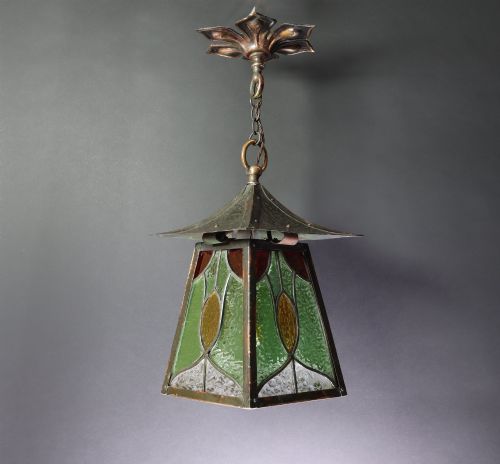
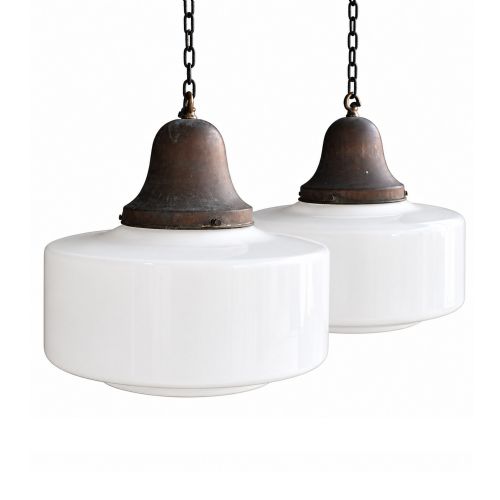
The pieces appearing most frequently on this page stem from the Arts and Crafts movement and the Edwardian era, alongside later Art Deco and mid-century designs. Collectors encounter everything from beaten copper lanterns with leaded stained-glass panels to sleek opaline hallway fixtures.
Earlier examples often show utilitarian roots, including railway hanging lanterns and nautical fittings, whereas later decades introduce stylised geometric glass and polished metalwork. Each style reflects the prevailing aesthetic of its period, from robust Victorian industrial builds to lighter 1930s forms.
Materials and construction methods
The fabrication relies heavily on beaten or planished copper sheet, shaped manually or spun to form the body and suspension hardware. Iron, brass and lead frequently support the primary copper structure to provide structural rigidity.
Glass elements range from plain frosted panes to coloured opaline, smoked variants and leaded stained-glass panels. Artisans secured these transparent panes using traditional lead cording or metal framing techniques common to period workshops.
Copper and Glass Pendant Retail Price Guide 2026
Typical asking prices for copper and glass pendant among the pieces listed under this phrase on Sellingantiques today, from the lower quarter to the upper quarter. They describe what is for sale here now, not the wider market.
Listings feature items spanning from the Victorian era and 1880 through Edwardian designs up to 1950 mid-century pieces.
Distinctions in craftsmanship
Superior quality in a copper and glass pendant reveals itself in the hand-worked detail of the metal surface, such as the deliberate texturing seen on planished or beaten copper. Lesser examples rely on plain, machine-pressed sheet metal with minimal hand-finishing.
The integration between the metal frame and the glass panels also dictates standard; tightly fitted leaded segments and thick, unblemished opaline or stained glass represent superior execution compared to loose, rattling panes.
Maison Jansen·Andre Arbus·Jean Gauthier
The Copper and Glass Pendant Glossary
- Planished
- A metalworking technique where a hammer with a smooth face strikes the copper surface repeatedly, leaving a distinctive pattern of small facets that catch the light.
- Opaline glass
- A milky, semi-translucent glass that diffuses light evenly across a space without creating harsh glare.
- Leaded glass
- Individual pieces of glass joined together by narrow strips of lead soldered at the joints to form a complete window or panel.
Copper and Glass Pendant: Frequently Asked Questions
How do I hang a heavy copper lantern safely?
Suspension requires locating a sturdy ceiling joist or installing a proper metal bracket capable of supporting the full weight of the metal and glass assembly.
Professional installation by a qualified electrician ensures the electrical wiring safely connects to the ceiling supply.
Can I use modern bulbs in these vintage lights?
Most period fixtures accommodate standard modern screw or bayonet bulbs, provided the wattage matches the historical wiring limits.
Low-heat LED bulbs work particularly well to prevent excessive warmth building up inside enclosed glass shades.
How do I clean old copper and glass?
Dust the glass panels gently with a soft cloth and wash them with mild soapy water if grease or grime accumulates.
Leave the copper unpolished if you prefer a mature, dark patina, or use a gentle metal cleaner only if bright copper is desired.
Are these lights suitable for low ceilings?
Pendant lights generally extend downward from a chain or rod, making them better suited for rooms with adequate vertical clearance.
Hall lanterns and compact ceiling lights offer shorter drops for spaces where headroom is limited.