


Converted Paraffin Light
A converted paraffin light brings period weight and warmth to a room while holding the wiring of today.
Converted Paraffin Light
A converted paraffin light takes a nineteenth-century or Edwardian domestic oil lamp and adapts its structure for modern electric use. These pieces bridge an era of heavy domestic metalwork and contemporary living, supplying both illumination and sculptural presence.
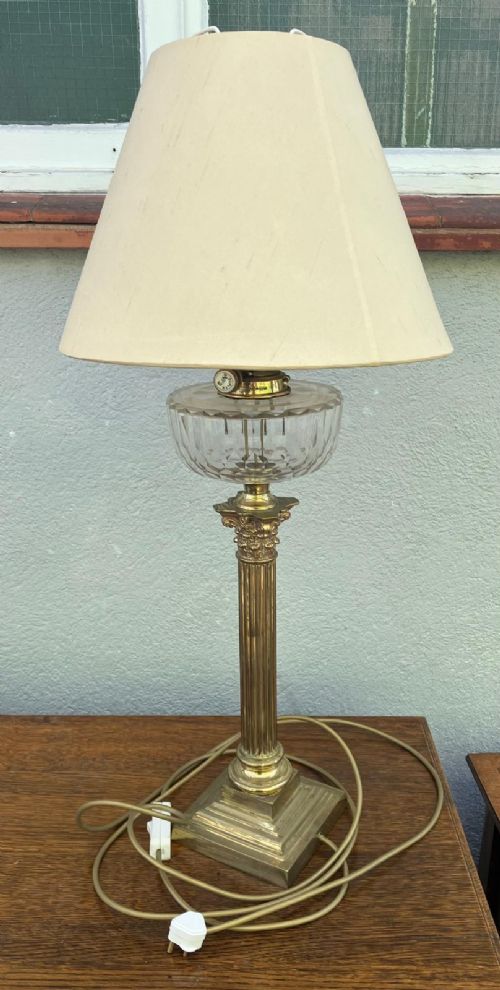
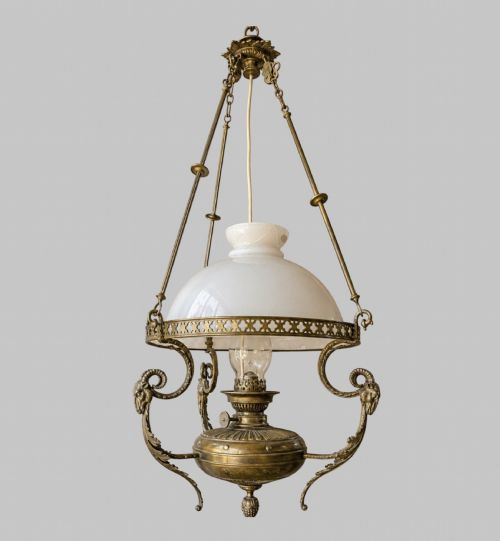
The versions most often met on this page are table lamps and ceiling lights drawn from Victorian, Edwardian, and Art Nouveau periods. They utilise bases originally fashioned for paraffin, kerosene, or oil, which now support modern bulb fittings.
How they were made
Makers formed these bodies from cast brass, gilt brass, bronze, copper, and silver-plate, often pairing metal columns with glazed ceramic or opaline glass reservoirs. These materials gave the original lamps the heft required to support tall burners and glass shades without tipping.
Decoration relied on surface working, including repousse, enamelling, and classical casting such as Corinthian columns. Individual elements like cherub orchestras or floral motifs were cast separately and fixed to the central stem before final finishing.
Current listings feature materials ranging from simple cast brass and copper to delicate opaline glass and hand-enamelled bronze.
What varies in quality
Quality rests in the weight of the metal casting and the crispness of the chasing. Superior examples display deep relief work in the repousse or sharp architectural detailing on Corinthian capitals, rather than soft or smoothed-over surface decoration.
The integration of the electrical conversion also marks the tier of the piece. Fine conversions respect the original reservoir and burner housing without compromising the proportions or structural integrity of the historic metalwork.
The Converted Paraffin Light Glossary
- Corinthian column
- A classical architectural column style featuring ornate acanthus leaves on the capital, frequently emulated in nineteenth-century metal lamp stems. This form gives a tall, formal silhouette to table lamps.
- Opaline glass
- A milky, translucent glass developed during the nineteenth century to diffuse light softly. It appears in lamp bodies and shades across Victorian and Edwardian examples.
- Repousse
- A metalworking technique where the design is hammered into relief from the reverse side. It creates textured, tactile surface patterns on brass and copper lamp bodies.
- Hinks burner
- A specific nineteenth-century mechanical burner assembly associated with oil lamps. Its presence on a converted piece indicates the original lighting mechanism before electrification.
Converted Paraffin Light: Frequently Asked Questions
How do I wire a converted paraffin light?
Most of these pieces arrive ready for modern sockets, retaining their historical stems while housing modern flex internally. A qualified electrician can inspect the interior routing to ensure safety matches standard household requirements.
Because the original oil reservoir is hollow, electricians usually run the cord discretely up through the centre without altering the external metal or ceramic silhouette.
Are these lamps stable on tables?
Victorian and Edwardian oil lamps were built with heavy metal or glass bases to support fuel and heavy glass shades safely. This original weight makes them exceptionally sturdy as electric table lamps today.
Their substantial heft prevents accidental tipping, even when paired with larger fabric shades suited to living rooms or studies.
Can I change the shade on my lamp?
Shades can be swapped provided the fitter size matches the gallery or shade ring left by the conversion. Many pieces accept standard modern shade carriers fitted above the electrical conversion housing.
Matching the scale of the shade to the heavy brass or opaline base ensures the finished light maintains correct visual balance.
How do I identify the period of a lamp?
Dating relies on stylistic clues such as the classical proportions of Neoclassical revival columns, the flowing motifs of Art Nouveau enamelwork, or the robust brass castings typical of the Victorian era. Material choices like opaline glass or gilt bronze also point to specific manufacturing decades.
Makers' marks or burner patents stamped onto the metal components often provide a narrower date range for the original paraffin hardware.