



Continental Writing Cabinet
A continental writing cabinet brings together practical workspace and concealed compartments in forms ranging from Biedermeier abattants to grand bureau bookcases.
Continental Writing Cabinet
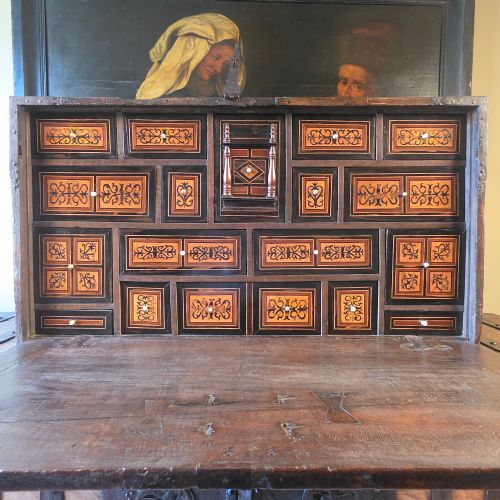
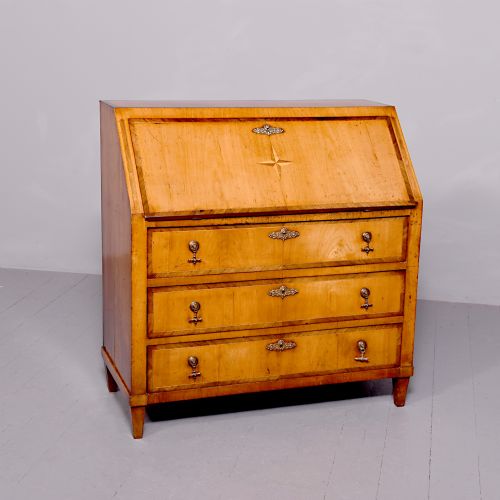
A continental writing cabinet encompasses forms such as escritoires, secretaire commodes, bureau bookcases, and desks spanning the seventeenth through to the early twentieth century. These pieces combine fitted desk interiors with storage capacity, often featuring drop-down writing flaps or sloping lids that conceal internal drawers and pigeonholes.
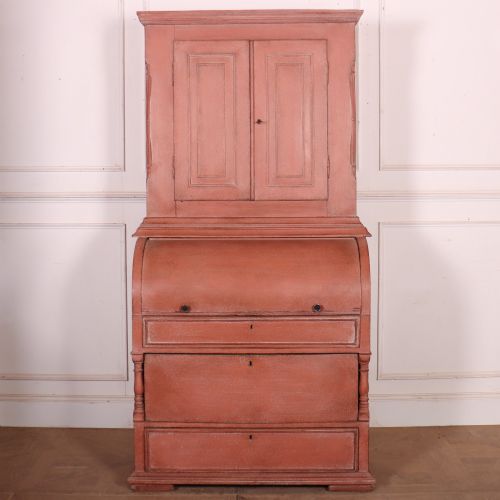
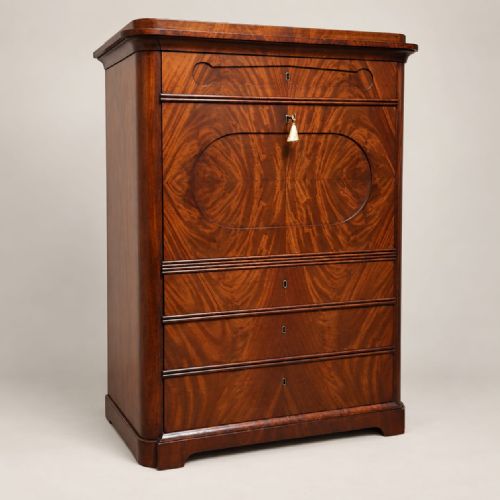
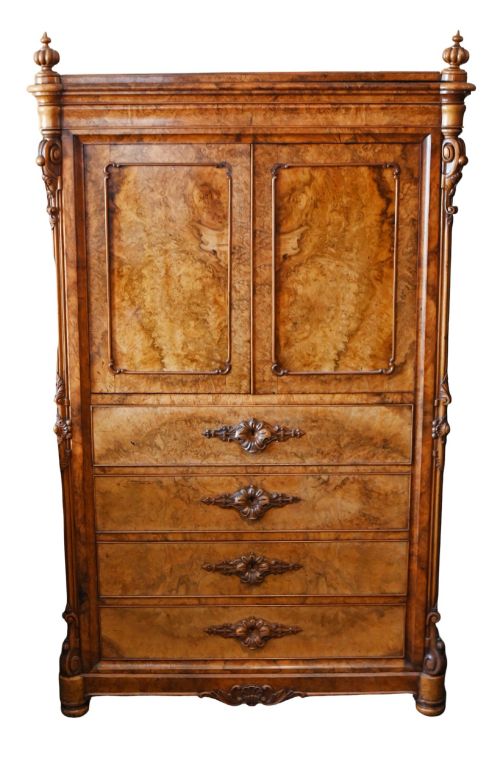
The pieces appearing on this page originate from various European centres, moving through styles like South German Baroque, Dutch marquetry, nineteenth-century Biedermeier, and Victorian country pine. Walnut, mahogany, and pine dominate the structural timber choices, frequently paired with lighter wood veneers or brass fittings.
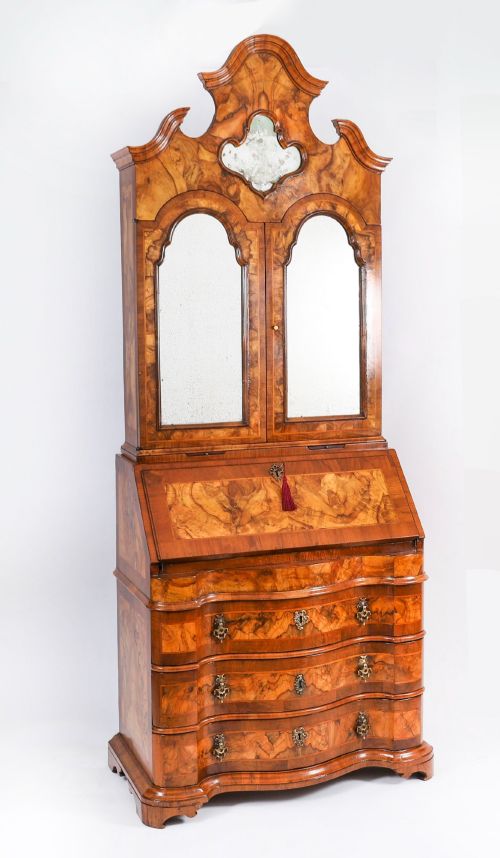
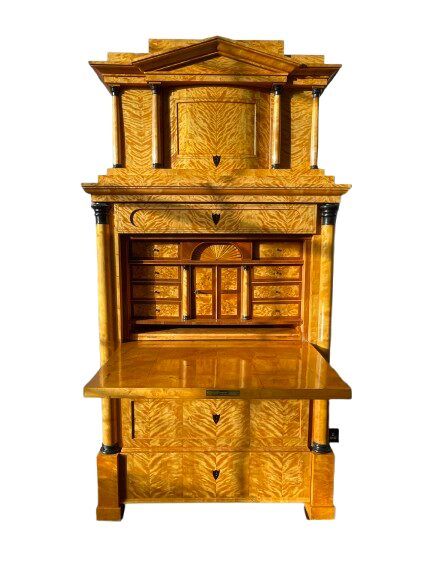
Buyers will most frequently encounter nineteenth-century Biedermeier examples alongside eighteenth-century walnut bureau bookcases and practical antique pine secretaire desks. Each regional variant demonstrates distinct architectural priorities, from clean-lined Biedermeier forms to heavily figured Baroque fronts.
How they were made
Cabinet makers utilised solid timbers alongside complex veneers, applying walnut, mahogany, Karelian birch, and fruitwood over secondary woods such as pine. Structural integrity relied on traditional joinery techniques, accommodating the movement of large timber panels across seasonal temperature shifts.
Surface decoration frequently involved marquetry and floral or geometric inlays, incorporating materials like bone and contrasting dark ebonised wood to highlight architectural details. Glazed doors on bookcase sections and precision-fitted secret drawers within the desk interiors required advanced woodworking skill.
Continental Writing Cabinet Retail Price Guide 2026
Typical asking prices for continental writing cabinet among the pieces listed under this phrase on Sellingantiques today, from the lower quarter to the upper quarter. They describe what is for sale here now, not the wider market.
Regional forms documented here include Dutch marquetry, South German Baroque, and nineteenth-century Biedermeier styles.
What varies in quality
The grade of timber selection and veneer matching defines the visual impact of a continental writing cabinet, with symmetrical figuring and choice grain patterns marking superior workshops. The execution of internal mechanisms, such as secret drawers and drop-front hinges, demonstrates the original maker's investment of time and precision.
Structural harmony between the upper bookcase or cabinet section and the lower desk or chest base separates standard regional furniture from exceptional examples. The crispness of marquetry inlays and the survival of original brass hardware further distinguish pieces produced by master craftsmen.
The Continental Writing Cabinet Glossary
- Secretaire abattant
- A tall upright cabinet featuring a drop-down writing flap that conceals an interior fitted with small drawers and compartments. This form allows a full desk workspace to be concealed behind a vertical facade when not in use.
- Biedermeier
- A dominant Central European style spanning the nineteenth century characterised by clean architectural lines, restrained ornamentation, and an emphasis on the natural beauty of wood grain. Common timbers include mahogany, walnut, and Karelian birch.
- Bureau bookcase
- A dual-purpose piece comprising a lower writing desk with a sloping lid or fall front, surmounted by a glazed or panelled cabinet for storing books. These substantial pieces frequently date from the eighteenth century.
- Marquetry
- The art of applying decorative veneer pieces of different woods, and occasionally bone or metal, to a structural surface to create pictorial or geometric patterns. Dutch workshops utilised this technique extensively on walnut carcasses.
- Escritoire
- A portable or freestanding writing cabinet equipped with a sloping or folding writing surface and internal compartments for stationery. The term encompasses various compact continental desk forms from the seventeenth to nineteenth centuries.
Continental Writing Cabinet: Frequently Asked Questions
What is a secretaire abattant?
A secretaire abattant is a tall, vertical cabinet with a hinged front panel that folds down horizontally to serve as a writing surface. Inside, it reveals a series of small drawers and pigeonholes designed for correspondence and stationery.
When closed, the piece presents a clean architectural facade that conceals the workspace entirely. This form gained significant popularity across Central Europe during the nineteenth century.
How do I identify a Biedermeier desk?
Biedermeier desks typically display smooth, unadorned surfaces that showcase the natural grain of timbers like mahogany, walnut, or Karelian birch. They favour architectural clarity and functional design over heavy carving or applied ornamentation.
These pieces often feature dark wood framing around lighter veneers and clean rectangular or slightly curved profiles. They represent a distinct shift toward domestic comfort in nineteenth-century furniture design.
Where were bureau bookcases used?
Bureau bookcases served as primary administrative and library furniture in prosperous homes, studies, and drawing rooms. The upper glazed section held reference volumes and prized books, while the lower sloping desk provided a secure surface for writing letters and managing household accounts.
Their substantial presence made them central fixtures in wealthy continental interiors throughout the eighteenth and nineteenth centuries. The combination of display and concealed storage offered practical utility for daily estate management.
What woods were used in continental cabinets?
Cabinet makers utilised regional hardwoods such as walnut and mahogany for primary visible surfaces, often enhanced by decorative veneers like Karelian birch and fruitwood. Pine frequently served as a secondary structural timber for drawer linings and internal framing.
Ebonised wood and bone appeared as contrasting elements for stringing and inlay work. The choice of timber usually reflects the geographical origin and period of the workshop.
Are secret drawers common in these desks?
Secret drawers and hidden compartments are a frequent feature in continental writing cabinets, concealed behind removable panels or false drawer bottoms within the fitted interior. Makers designed these spaces to secure private documents, currency, or valuables.
Accessing them often requires releasing hidden spring catches or sliding locking pins within the main pigeonhole structure. This craftsmanship highlights the ingenuity applied to high-end writing furniture.