






Continental Wooden Carving
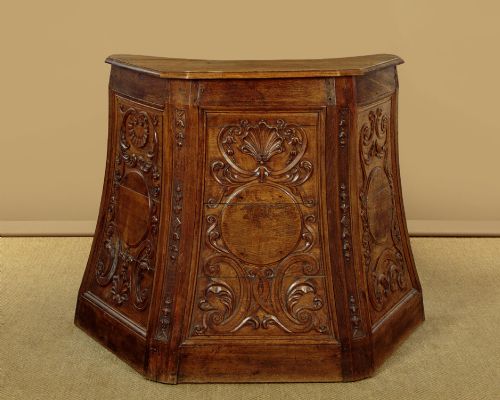
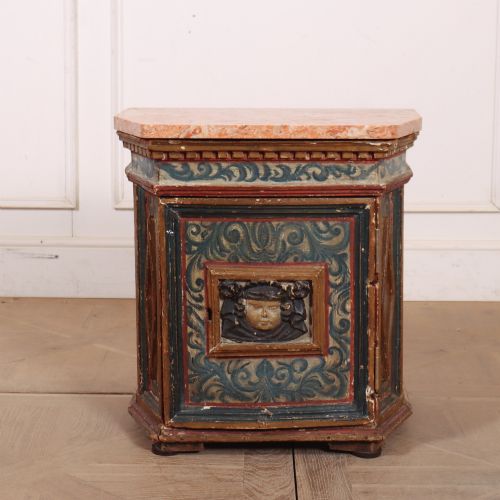
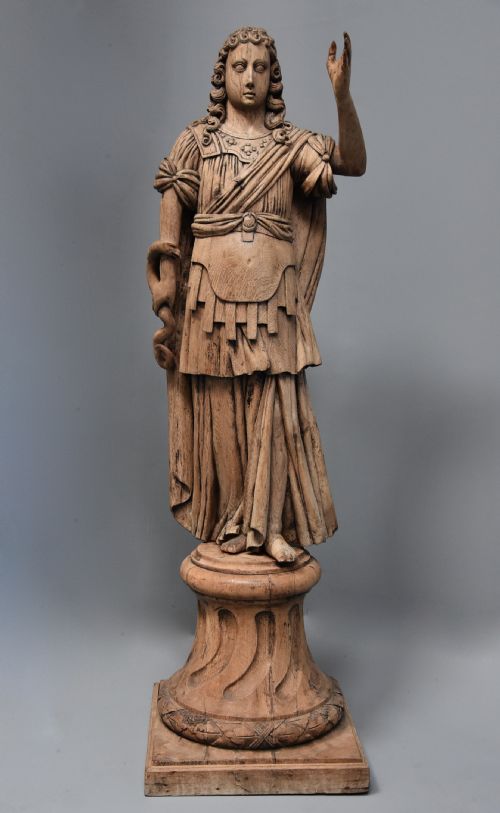
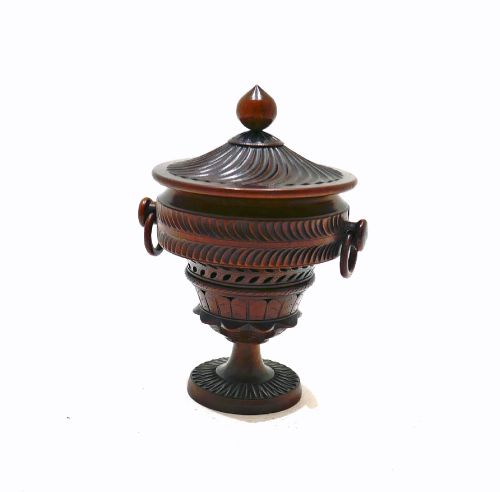
Continental wooden carving brings solid walnut, oak and limewood figures, architectural fragments and furniture from the sixteenth to the nineteenth century into a room.
Continental Wooden Carving
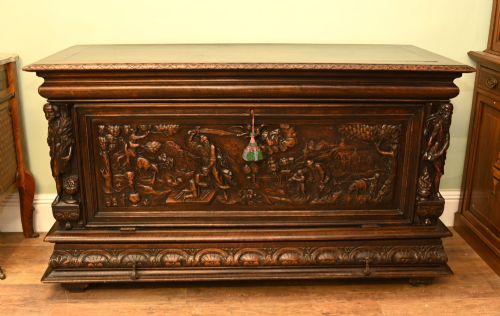
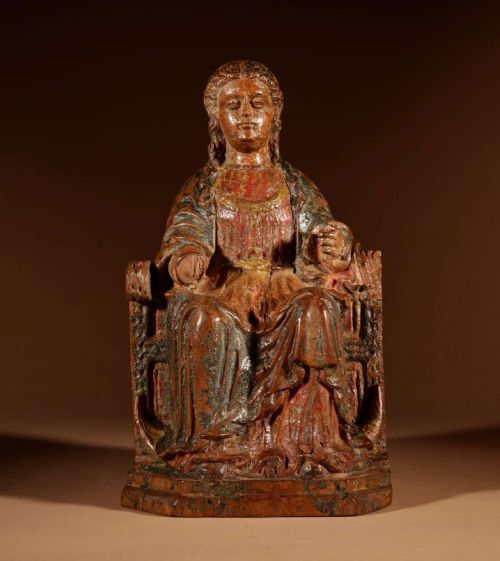
Continental wooden carving encompasses figures of saints and madonnas, architectural pillars, painted cabinets, panelled coffers and dining furniture shaped across several centuries. When searching for continental wooden carving, a buyer encounters everything from sixteenth-century walnut throne sculptures and seventeenth-century limewood saint figures to eighteenth-century life-size wooden statues and nineteenth-century pine wardrobes.
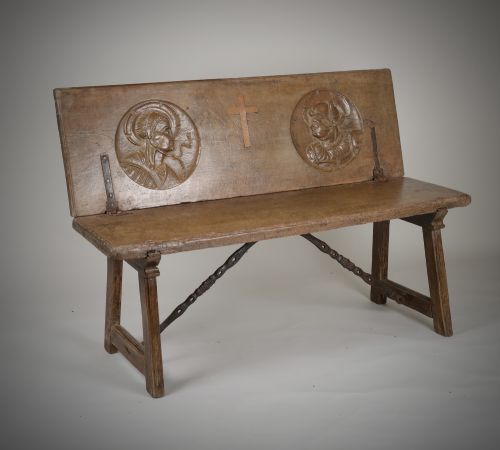
Religious figures, including polychromed saints and corpus christi carvings, sit alongside domestic pieces like walnut chests of drawers, armoires and oak benches. The selection spans Italian Baroque, Renaissance, Gothic Revival and French Chateau styles, with oak and walnut dominating the material record alongside painted pine and fruitwood.
Materials and technique
Craftsmen shaped these objects from dense hardwoods like oak, walnut and limewood, alongside softer pine and fruitwood, using hand chisels and gouges to form deep, high-relief decoration. Many figures and architectural elements received surface treatments such as gesso, polychrome paint, gold leaf or original green and blue paint layers.
Joinery techniques matched the period, utilising pegged mortise and tenon joints for heavy coffers, armoires and tables, while decorative surfaces often relied on chip carving or detailed hand modelling directly into the solid timber.
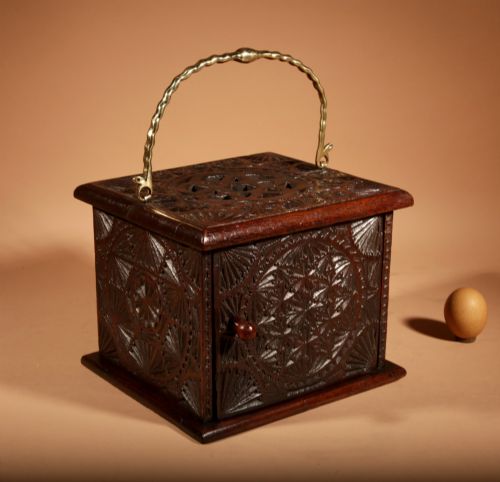
An eighteenth-century oak foot stove stands ready to warm chilly toes through long winter evenings.
Judging the work
Quality rests in the crispness and depth of the chisel work, the integrity of the original timber, and the survival of early surface finishes such as polychrome paint, gesso or gold leaf. Pieces retain greater character when tool marks remain distinct and the surface shows minimal intervention from later restorations.
The sophistication of the figural proportion or architectural carving separates standard utility items from monumental church figures, life-size statues and finely carved walnut cabinets.
The Continental Wooden Carving Glossary
- Polychrome
- Decorated in multiple colours, particularly applied to wood or plaster figures. This technique was widely used on religious sculptures from the seventeenth and eighteenth centuries.
- Gesso
- A plaster mixture spread over wood as a base for painting or gilding. It provides a smooth ground for gold leaf and fine pigment application.
- Treen
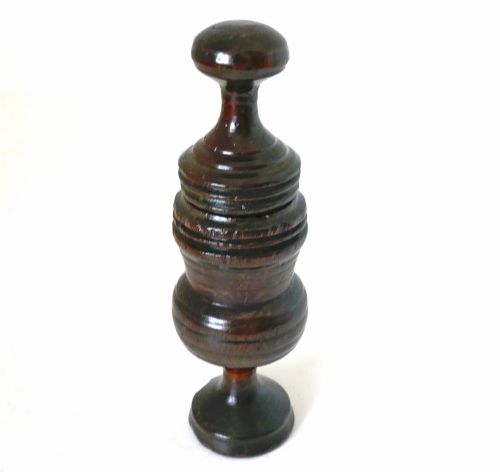
- Small handmade wooden household objects. Examples include spice grinders, lidded cups and small containers fashioned from fruitwood or sycamore.
- Coffer
- A large heavy box with a hinged lid used for storage. These timber chests often feature carved panels and robust pegged joinery.
- Torchiere
- A tall decorative stand or pedestal designed to support a lamp or candle. Pairs of these carved wooden stands often date to the nineteenth century.
Continental Wooden Carving: Frequently Asked Questions
How do I clean an antique wooden carving?
Dust the timber gently with a soft, dry brush to remove settled particles without disturbing fragile surfaces. Avoid using modern polishes, water or harsh chemical cleaners that can strip original wax or painted decoration.
Test any maintenance approach on a hidden area first, or consult a professional conservator if the piece retains delicate gesso, polychrome or gold leaf layers.
Where should I place a large wooden figure?
Position sculptures away from direct sunlight, radiators and open fires to prevent the timber from drying out, cracking or warping. Stable room temperatures and moderate humidity preserve the integrity of both the wood and any applied paint.
Free-standing figures or life-size statues require a sturdy floor, solid plinth or secure wall bracket to support their weight safely.
How can I tell the age of a carved piece?
Examine the tool marks left by the carver, the species of timber used, and the construction methods visible on the reverse or interior. Hand-cut joinery, timber shrinkage patterns and early surface finishes point toward specific historical periods.
Compare the stylistic details, such as drapery folds on figures or decorative motifs, against documented examples from Renaissance, Baroque or Neoclassical eras.
What is the difference between oak and walnut carvings?
Oak offers a heavy, coarse-grained texture well suited to robust architectural elements, coffers, pulpits and early furniture. It holds sharp structural lines and darkens naturally over centuries.
Walnut provides a finer grain that allows for intricate, high-relief sculptural detail on figures, panels and cabinets, often displaying a warmer tone.