


Continental Secretary Desk
A continental secretary desk offers concealed writing surfaces and shelved storage, combining architectural presence with practical utility in any room.
Continental Secretary Desk
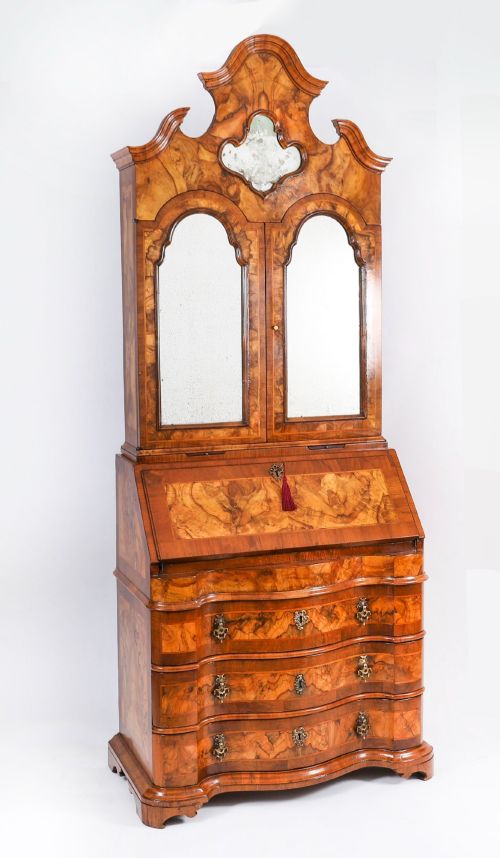
A continental secretary desk is a hybrid storage piece that typically pairs a fall-front writing surface with drawers or a glazed upper bookcase. When searching for a continental secretary desk, buyers encounter forms ranging from imposing baroque cabinets to streamlined Biedermeier writing furniture.
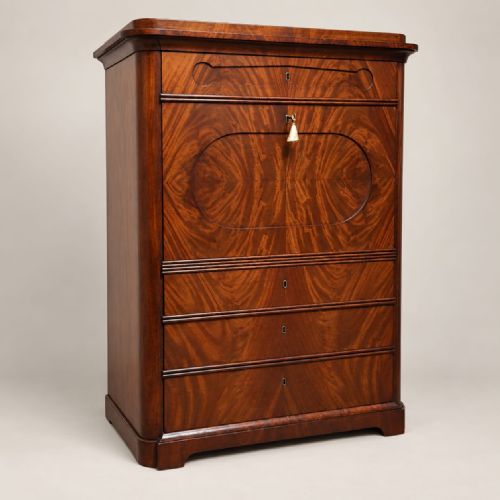
The selections span several centuries and regions, featuring walnut, mahogany, pine, and rosewood constructions. Bureau bookcases and secretaire a abattant forms dominate the available examples, reflecting diverse European cabinet-making traditions from the eighteenth and nineteenth centuries.
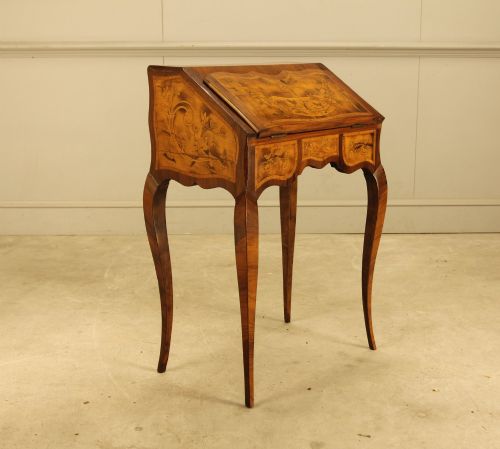
Regional variations display distinct stylistic priorities, such as the elaborate curves of South German and Dutch baroque pieces alongside the cleaner lines of later Biedermeier design. Eastern European pine versions also appear, demonstrating a more utilitarian approach to the same fundamental form.
How they were made
Makers constructed the carcases using solid timbers such as pine, walnut, and mahogany, often applying decorative veneers like burr walnut or Karelian birch to primary display surfaces. Marquetry inlay and brass mounts further enhanced the visual depth of walnut and rosewood exteriors.
Internal compartments required intricate joinery to create small drawers, pigeonholes, and secret spaces behind the primary writing flap. Glazed upper sections utilised delicate wooden framing to house glass panes securely within large bookcase structures.
Secret compartments hidden behind sliding panels remind us that past owners treated their stationary storage with high-stakes paranoia.
What varies in quality
The standard of construction is visible in the choice of cabinet timbers and the precision of veneer matching across drawer fronts and fall-front panels. Finer examples display meticulous marquetry work and well-integrated brass hardware that complement the primary wood grain.
Internal complexity also distinguishes pieces, with superior desks offering sophisticated arrangements of concealed compartments and fitted stationery drawers behind the main writing flap. The harmony of proportions between lower drawer units and upper bookcase sections dictates the overall architectural success of the piece.
The Continental Secretary Desk Glossary
- Secretaire a abattant
- A tall upright cabinet featuring a hinged writing flap that pulls down to reveal a fitted interior of small drawers and pigeonholes. This vertical format maximises storage capacity while occupying minimal floor space.
- Bureau bookcase
- A two-part piece comprising a lower writing desk and an upper glazed cabinet for displaying books or porcelain. The combination creates an imposing focal point in larger rooms.
- Marquetry
- The art of applying pieces of veneer to a structure to form decorative patterns and pictures. Craftsmen utilised contrasting timbers to achieve pictorial depth on cabinet surfaces.
- Biedermeier
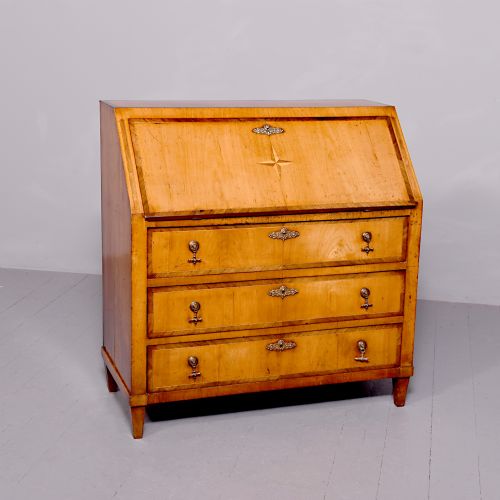
- A central European style dating from the nineteenth century that favored clean lines, minimal ornamentation, and blonde wood veneers. This aesthetic emphasised domestic comfort and functional elegance over baroque exuberance.
- Block front
- A furniture front divided vertically into three sections, with the two outer sections projecting forward and the central section recessed. This technique adds sculptural weight to heavy walnut and mahogany desks.
Continental Secretary Desk: Frequently Asked Questions
What is a continental secretary desk?
A continental secretary desk is a storage piece featuring a hinged writing surface that conceals small drawers and pigeonholes when closed. These pieces often include lower storage drawers and occasionally upper glazed bookcase sections.
Originating across various European regions, these desks served as private writing cabinets and storage furniture for homes and offices during the eighteenth and nineteenth centuries.
How do I identify a Biedermeier desk?
Biedermeier desks typically display restrained neoclassical forms with smooth surfaces and blonde wood veneers such as birch and walnut. Ornamentation is kept minimal to highlight the natural grain of the timber.
These pieces emerged in nineteenth-century central Europe, prioritizing clean structural lines and domestic utility over the heavy carving seen in earlier baroque furniture.
What woods were used for these desks?
Cabinetmakers utilised a variety of primary woods including walnut, mahogany, pine, and rosewood. Decorative surfaces frequently featured burr walnut veneer, Karelian birch, and detailed marquetry inlay.
Internal compartments and secondary framing often relied on more accessible timbers like pine, while show woods defined the exterior appearance of the furniture.
How do bureau bookcases differ from standard desks?
Bureau bookcases incorporate an upper shelved cabinet with glass doors mounted directly onto the lower writing desk base. This taller construction provides combined storage for books and writing materials within a single footprint.
Standard desks focus primarily on the writing surface and lower drawer capacity without the expansive upper display cabinet.
Where were these secretary desks made?
These pieces originated in various European workshops, including South German, Dutch, and Eastern European centres of cabinet-making. Regional preferences strongly influenced the decorative styles and timber choices.
Baroque influences predominated in earlier German and Dutch pieces, whereas later nineteenth-century pieces embraced cleaner Biedermeier aesthetics or utilitarian pine construction.