



Continental Porcelain Cherub
These continental porcelain cherub pieces bring sculptural charm and classic Victorian style to a room.
Continental Porcelain Cherub
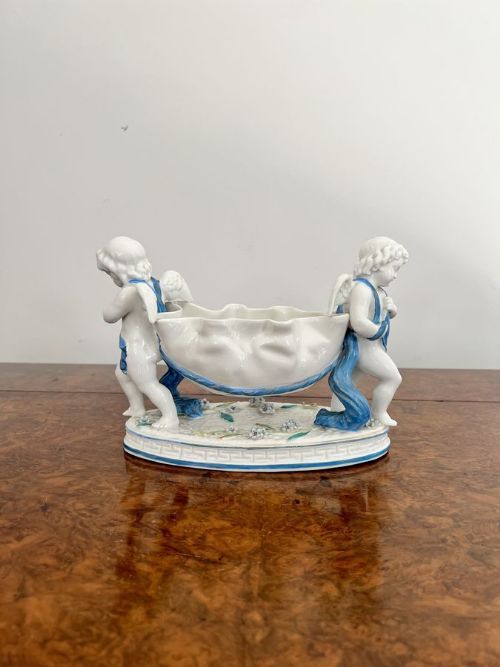
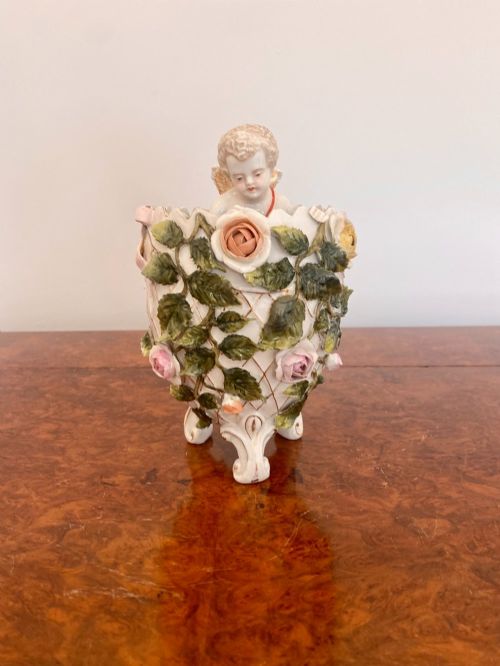
When searching for a continental porcelain cherub, you are looking at figural decorative objects that typically incorporate winged figures alongside vessels, mirrors, and table centrepieces. These items span the nineteenth century and the early twentieth century, showing influences from Rococo revival styles.
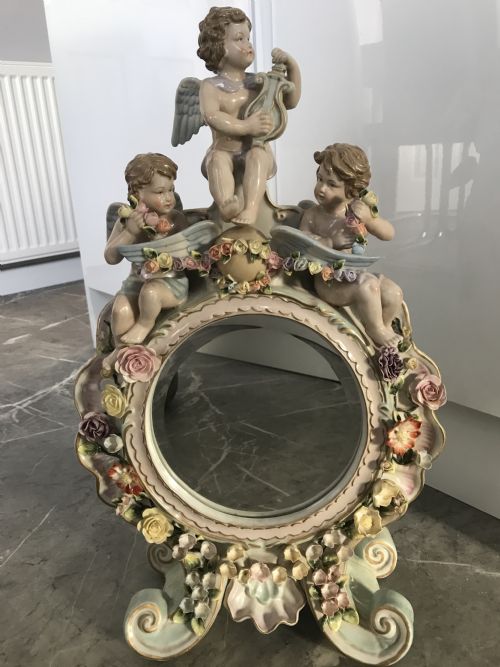
The versions you are most likely to meet on this page include dressing table mirrors framed in porcelain flowers, lidded vases, and sweetmeat figures. Such pieces originate from continental factories, including German workshops in Saxony and Volkstedt.
Object forms range from small mantel figurines and easel mirrors to large centrepiece bowls featuring cherubs seated on shells. Each item combines utilitarian functions, such as holding flowers or reflecting light, with ornate figural modelling.
How they were made
Maker workshops shaped porcelain into detailed figures and vessels, finishing the surfaces with applied enamel and gloss glaze. Many items incorporate delicate modelled flowers and sculptural groupings of cherubs.
Makers integrated porcelain elements with other media, mounting mirrors onto wood backing with mirror glass and framing details in gold leaf or gilt. Some designs paired the fired ceramic base with additional glass and gilt metal components.
Continental Porcelain Cherub Retail Price Guide 2026
Typical asking prices for continental porcelain cherub among the pieces listed under this phrase on Sellingantiques today, from the lower quarter to the upper quarter. They describe what is for sale here now, not the wider market.
Cherubs perpetually ride porcelain shells and clutch oversized flowers without ever dropping their heavy sweetmeat dishes.
What varies in quality
The standard of modelling separates standard productions from finer workshop outputs, visible in the sharpness of the cherub faces and the dexterity of the applied floral work. Higher grade pieces display intricate hand-painted enamel and well-preserved gilding.
The complexity of the form dictates distinction, as single standing figurines differ significantly from large multipart centrepieces or elaborately framed dressing table mirrors. Construction robustness, such as the stability of wood backing on easel mirrors, also defines the build quality.
Volkstedt·German Saxony Porcelain
The Continental Porcelain Cherub Glossary
- Centrepiece
- A large decorative object placed in the middle of a table. These often take the form of bowls or shaped dishes supported by figures.
- Sweetmeat dish
- A small vessel designed for serving confectionery or dried fruits. In porcelain, these are frequently held by modelled figures.
- Gilt
- A thin layer of gold applied to a surface for decoration. This finish highlights raised details on vases and mirror frames.
- Easel mirror
- A looking glass supported by a hinged leg at the back for standing upright on a surface. The frames are often heavily decorated with porcelain flowers and cherubs.
Continental Porcelain Cherub: Frequently Asked Questions
What are continental porcelain cherub pieces?
These items are nineteenth and early twentieth-century decorative ceramics featuring sculpted winged figures. They encompass table mirrors, vases, and figural centrepieces produced by European factories.
Many incorporate floral appliques and gilt highlights. They were designed primarily for ornamental display in domestic settings.
How were these porcelain pieces used?
Owners placed them on dressing tables, mantelpieces, and dining tables for decorative effect. Vases held floral arrangements, while sweetmeat dishes served small confectioneries.
Mirrors served both a reflective function and as ornamental dressing room accessories. Centrepieces decorated dining room settings during formal meals.
How do I live with continental porcelain?
Position these items away from direct sunlight and high-traffic areas to protect delicate applied porcelain flowers. Stable surfaces prevent accidental tipping of top-heavy centrepieces and mirrors.
Dust them gently with a soft dry brush. Avoid harsh cleaning agents that might damage the enamel or gold leaf.
How do I tell periods apart?
Victorian examples often display heavier Rococo revival scrolling and rich gilt embellishments characteristic of nineteenth-century production. Later pieces from the early twentieth century show subtle shifts in form and floral styling.
Factory marks and the nature of the glaze help determine the era. Stylistic details like the modelling of the cherubs align with specific manufacturing decades.