


Continental Carved Chair
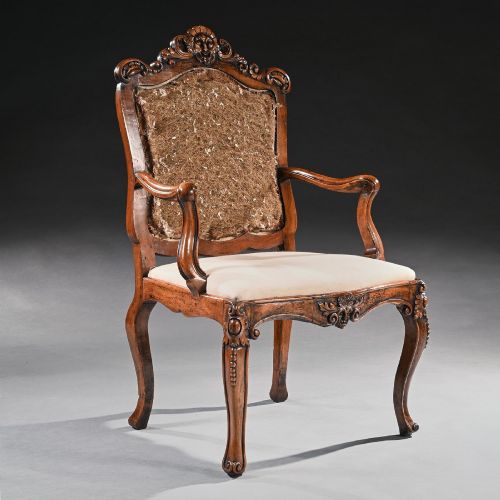
These continental carved chair examples bring centuries of European craftsmanship and robust timber into a room.
Continental Carved Chair
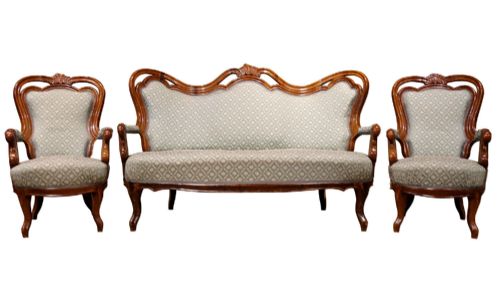
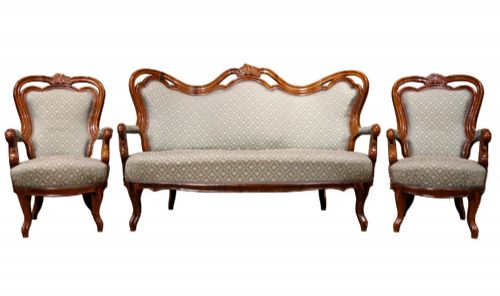
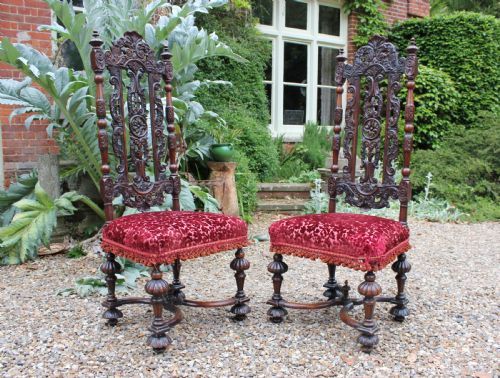
A continental carved chair encompasses various seating options originating from European workshops, spanning the seventeenth century through to the Victorian era. Buyers searching for a continental carved chair encounter forms ranging from imposing high-backed armchairs to delicate side chairs and salon suites.
The selection includes specific regional identities such as Italian Baroque models, Dutch Rococo pieces, and Alpine rustic seating. Walnut and oak serve as primary timbers, frequently paired with textile, leather, or hessian upholstery.
Materials and construction methods
Makers utilised solid timbers including walnut, oak, maple, and beech to construct the structural frames of these seats. Hand-carving defines the ornamentation, rendered directly into the timber rather than applied through moulding.
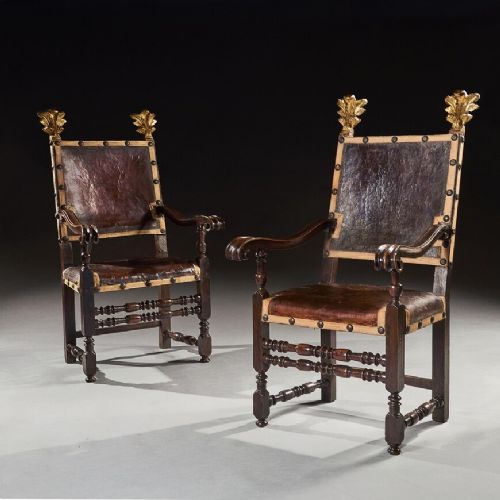
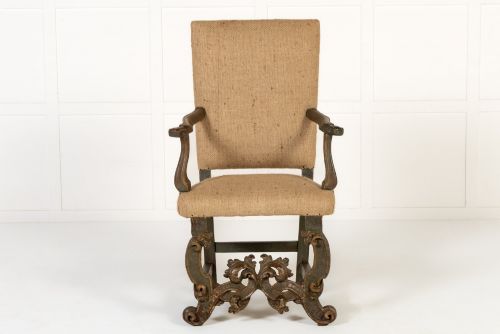
Finishes incorporate gold leaf, silver gilt, paint, and parcel-gilt details over natural wood grounds. Upholstery methods rely on traditional stuffing materials secured with fabric, leather, or hessian covers.
One bull hall chair stands ready to meet guests.
Assessing quality in carved seating
The depth and crispness of the hand-carving distinguish finer pieces from simpler utilitarian production. Sharp relief work on walnut or oak frames demonstrates superior artisan skill.
Original surface treatments, such as genuine period gilding or untouched patinated wood surfaces, elevate a piece above later refinishing efforts. The structural integrity of the joints and the authenticity of the associated upholstery components also dictate overall worth.
The Continental Carved Chair Glossary
- Parcel-Gilt
- Partially gilded with gold leaf over specific carved details while leaving surrounding wood exposed. This technique highlights particular ornamental motifs on the frame.
- Caquetoire
- A sixteenth-century style conversational armchair featuring a high, narrow back and a trapezoidal seat. The design allows sitters to converse easily.
- Rococo Revival
- A nineteenth-century design movement mimicking the asymmetrical scrolls and shell motifs of the eighteenth-century Rococo period. It appears frequently on Victorian salon suites.
- Gilt
- Covered with a thin layer of gold leaf or gold paint. This treatment signifies high status and decorative intent.
- Hessian
- A coarse woven fabric typically made from jute fibres. It functions as a traditional foundation layer beneath outer upholstery textiles.
Continental Carved Chair: Frequently Asked Questions
How do I date a carved wooden chair?
Examine the timber species, tool marks left by the maker, and the style of the carved ornamentation.
Compare these physical characteristics against documented period designs, such as seventeenth-century Baroque or eighteenth-century Rococo conventions.
Are these chairs suitable for daily seating?
Many sturdy examples function well for everyday use, provided the frame joints remain solid and secure.
Delicate gilt salon chairs or antique pieces with fragile upholstery require more careful placement and lighter usage.
What is the difference between an armchair and a side chair?
Armchairs feature structural armrests designed to support the sitter's arms and generally occupy a more prominent position in a room layout.
Side chairs omit armrests entirely, making them compact enough to fit multiple seats around a dining table or along a wall.
How should I care for antique walnut frames?
Dust the carved wooden surfaces regularly with a soft, dry cloth to prevent dirt accumulation.
Avoid placing the timber near direct heat sources or strong sunlight to prevent the wood from drying out or cracking.