

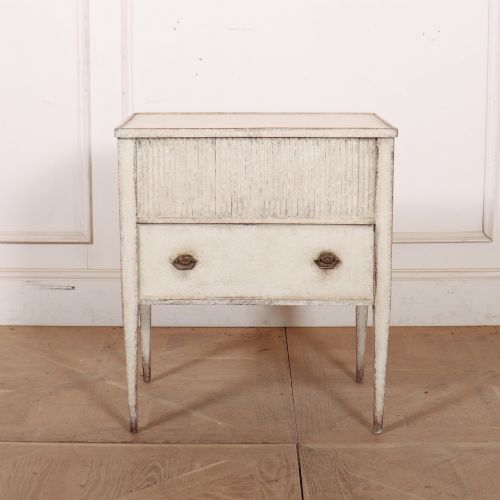


Continental Bedside Cupboards
Continental bedside cupboards are practical and decorative pieces originating from various European traditions, offering compact storage with distinct period character.
Continental Bedside Cupboards
Continental bedside cupboards span several centuries of European cabinet-making, encompassing pieces from the eighteenth, nineteenth, and early twentieth periods. These items serve the practical function of bedside storage while displaying regional decorative traits from countries such as Italy, France, the Netherlands, and Hungary.
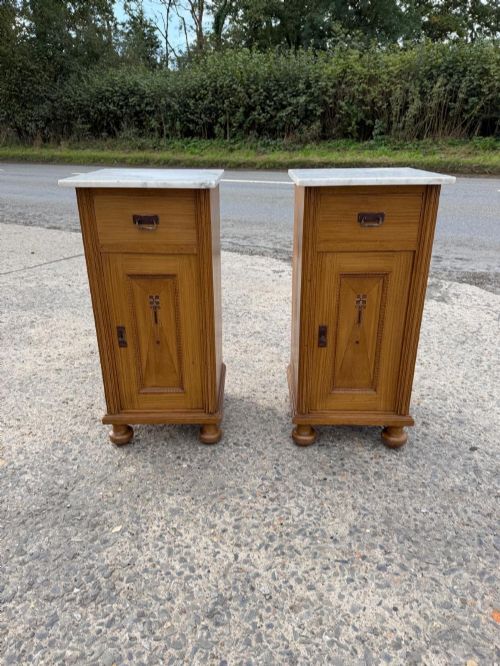
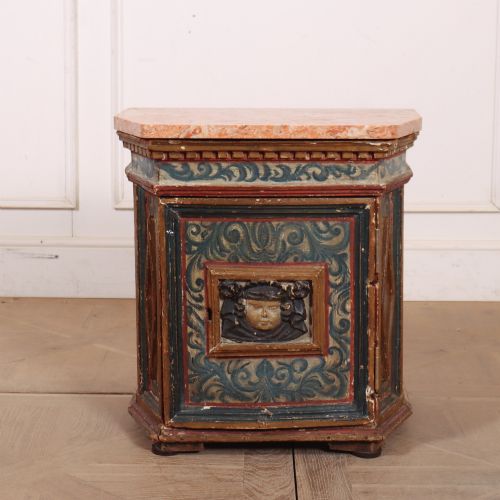
The versions most commonly met on this page include painted pine and oak examples, often featuring marble tops or distinctive regional styles like Dutch provincial and French revival. Buyers encounter both single cabinets and matched pairs constructed as bedside tables, nightstands, or small side cupboards.
Makers and workshops across Europe utilised local timbers such as walnut, satinwood, pine, and oak, incorporating finishes from plain polished wood to intricate painted decoration and marquetry inlay. These varied forms reflect the diverse domestic requirements of continental households across different historical eras.
How They Were Made
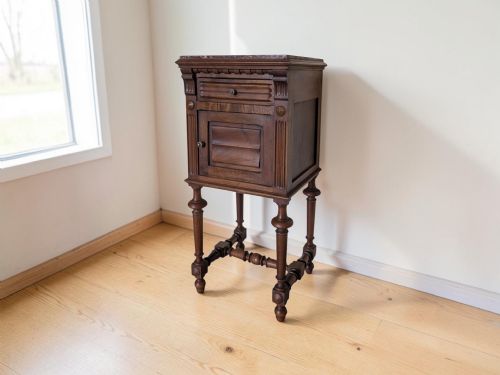
Construction relies heavily on traditional timber framing using woods like oak, pine, walnut, and satinwood, frequently paired with fitted marble tops for durable surfaces. Cabinet-makers employed solid carcases alongside applied mouldings, columns, and panelled doors to build robust storage units.
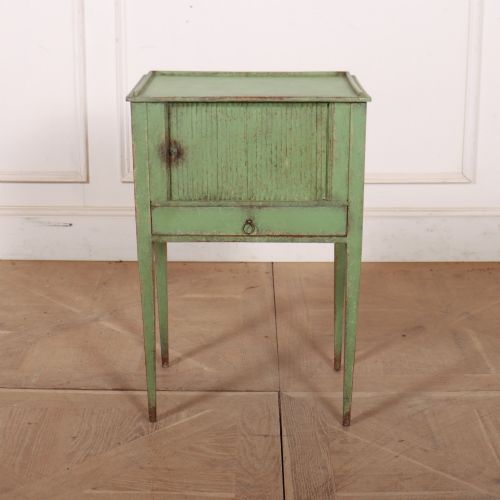
Surface treatment defines many of these pieces, utilising hand-painted finishes, pigmented layers, and detailed marquetry inlay to achieve rich visual textures. Hardware components in brass were integrated into doors and drawers to complement the timber and stone materials.
Continental Bedside Cupboards Retail Price Guide 2026
Typical asking prices for continental bedside cupboards among the pieces listed under this phrase on Sellingantiques today, from the lower quarter to the upper quarter. They describe what is for sale here now, not the wider market.
Current listings feature pieces spanning the 18th, 19th, and early 20th centuries, constructed from walnut, oak, pine, satinwood, and marble.
What Varies in Quality
Quality in these pieces rests upon the selection of timber and the sophistication of surface ornamentation, such as figured walnut grain or precise marquetry patterns. Finer examples display integrated stonework like fitted marble tops and well-executed painted finishes that have aged naturally.
Structural integrity and the retention of original decorative schemes, including period brass hardware and authentic painted surfaces, distinguish higher grade items from simpler utilitarian versions.
The Continental Bedside Cupboards Glossary
- Marquetry
- Decorative inlay technique using pieces of fitted wood veneer to create pictorial patterns on cabinet surfaces. This method adds significant visual complexity to walnut and satinwood side cabinets.
- Marble Top
- A fitted stone slab used as the upper surface of a bedside cabinet to provide a durable and water-resistant finish. These tops are commonly seen on nineteenth-century continental pieces.
- Provincial
- A term describing furniture made in regional areas outside capital cities, often displaying charming local vernacular characteristics. Dutch and Hungarian examples frequently exhibit these distinct regional traits.
- Apothecary Cabinet
- A small storage unit traditionally used for holding medicines and herbs, often fitted with numerous small drawers or compartments. These specialist pieces are occasionally adapted for domestic bedside use.
- Neoclassical
- A style drawing inspiration from classical antiquity, characterised by symmetry, restrained ornamentation, and straight architectural lines. It appears across various continental furniture types from the eighteenth and nineteenth centuries.
Continental Bedside Cupboards: Frequently Asked Questions
What periods do these continental bedside cupboards date from?
The pieces span from the eighteenth century through the Victorian era up to the early twentieth century, encompassing periods like 1750, 1860, 1900, and 1930.
This broad chronological range means buyers encounter both eighteenth-century painted pine cupboards and later nineteenth-century walnut or satinwood bedside tables.
Are these bedside cupboards sold as pairs?
Listings frequently feature both matched pairs and individual pieces, depending on the specific cabinet origins.
Pairs of oak, pine, or walnut bedside cabinets appear regularly alongside single nineteenth-century examples.
What materials are typically used in their construction?
Construction materials include traditional European timbers such as oak, pine, walnut, and satinwood, often enhanced with marble tops and brass hardware.
Many examples also feature painted wooden surfaces, sometimes incorporating intricate marquetry inlay or regional decorative schemes.
How do regional styles differ among these cupboards?
Regional styles reflect the distinct cabinet-making traditions of countries like France, Italy, the Netherlands, and Hungary, ranging from Dutch provincial work to French revival designs.
Characteristics vary from painted columns and rustic pine finishes to refined figured walnut and neoclassical proportions.