




Continental Bureau
A continental antique bureau brings a fitted writing compartment and rich walnut or mahogany timber straight from European workshops into a home.
Continental Bureau
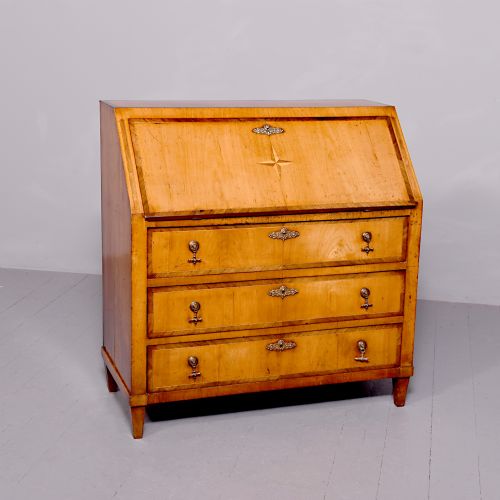
A continental antique bureau combines a writing slope with concealed drawers behind a drop-front flap or vertical fall-front panel. Buyers exploring this category encounter walnut, mahogany, fruitwood, and pine examples spanning the eighteenth and nineteenth centuries.
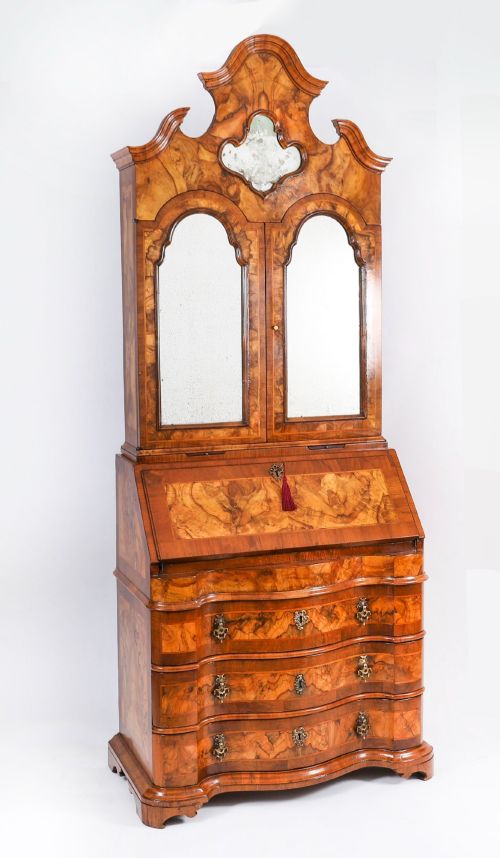
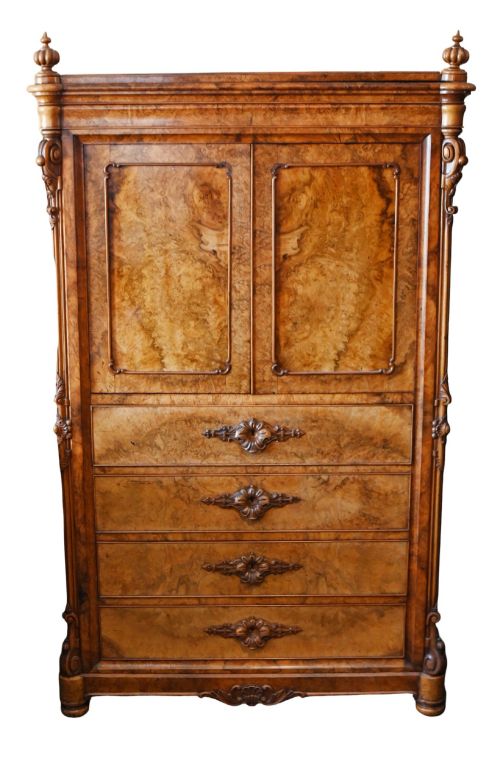
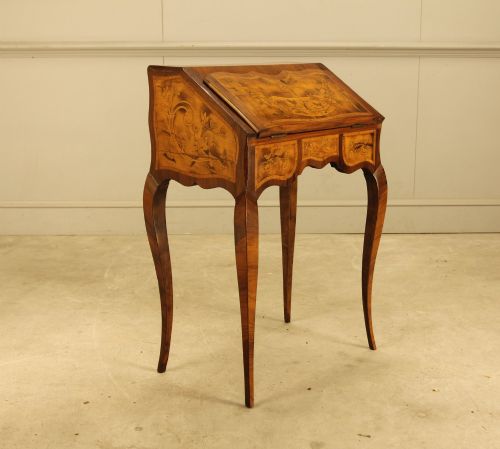
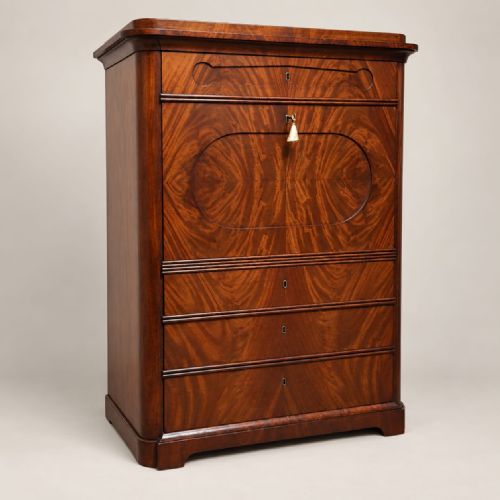
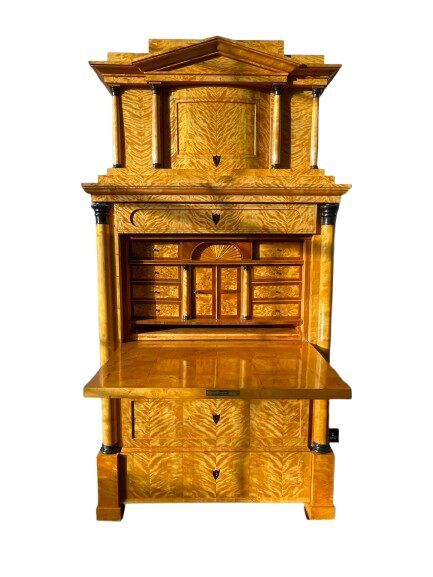
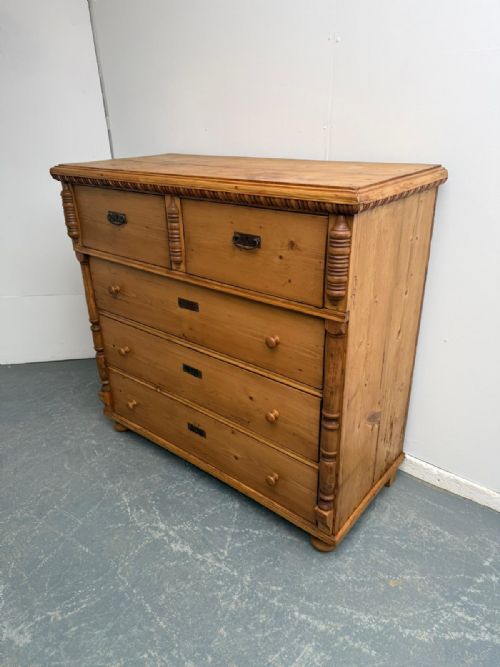
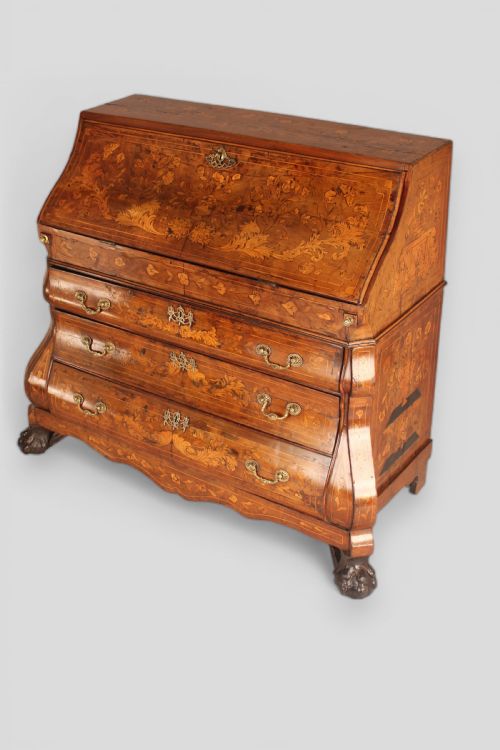
The selection ranges from imposing Biedermeier secretaires and Dutch marquetry bombé forms to South German baroque bureau bookcases and country pine pieces. Regional workshops shaped distinct profiles, from straight-fronted carcases to swelling curves and architectural pediments.
Many variants include upper display cabinets with glazed doors or fitted pigeonholes within the internal writing compartment. These forms served specific domestic uses for correspondence and record keeping across European households.
Assessing quality in European desks
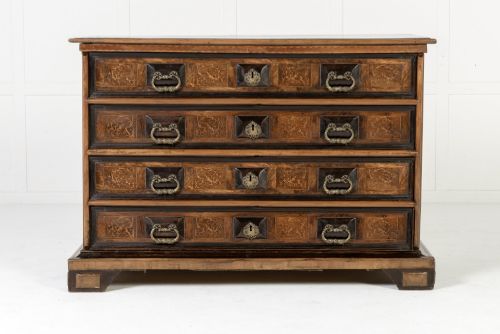
Quality rests in the precision of the marquetry inlay, the continuity of the timber grain across the fall-front, and the crispness of carved mouldings. Superior examples maintain balanced proportions and retain their original brass hardware.
The complexity of the interior fitting marks the distinction between standard and finer pieces, particularly where secret drawers, pigeonholes, and small cupboards are integrated seamlessly. The integrity of the structural joinery in the carcase and drawer linings determines long-term durability.
Several desks hide ingenious secret drawers behind false partitions, designed to keep family receipts safe from overly curious guests.
The Continental Bureau Glossary
- Secretaire a abattant
- A tall vertical bureau featuring a hinged fall-front writing panel that conceals an arrangement of small drawers and pigeonholes. This upright form saves floor space while offering substantial storage.
- Marquetry
- Decorative veneer work arranged in pictorial or geometric patterns using various coloured woods, fruitwoods, and organic materials. Craftsmen cut these elements precisely to fit flush across the writing surface or drawer fronts.
- Bombé
- A swelling or outwardly curving furniture shape characteristic of eighteenth-century Dutch and continental design. This voluptuous profile requires advanced woodworking skill to build the curved carcase and drawers.
- Escritoire
- A small writing desk or cabinet designed for correspondence and paperwork. These pieces often incorporate internal compartments and small drawers for stationery.
- Biedermeier
- A influential nineteenth-century central European style favouring clean lines, restrained neoclassical forms, and blonde veneers like Karelian birch and mahogany. The aesthetic prioritises domestic comfort and timber grain over excessive ornamentation.
Continental Bureau: Frequently Asked Questions
How do I identify a Biedermeier bureau?
Biedermeier bureaux date from the nineteenth century and are characterised by restrained neoclassical lines, minimal carving, and figured veneers such as mahogany, birch, or cherry. They often appear as tall upright secretaires with smooth, flat surfaces that highlight the natural wood grain.
The aesthetic focuses on utility and proportion rather than heavy ornamentation. Brass escutcheons and simple columns frequently accent the corners of the carcase.
Were these desks used for writing?
These desks served as the primary household station for managing correspondence, household accounts, and personal documents. The fold-down or drop-front panel provided a stable writing surface when needed.
Inside, the fitted pigeonholes and small drawers kept stationery, inkwells, and letters organised. The secure locking mechanism on the main flap protected private papers.
What woods were commonly used?
Cabinetmakers utilised walnut and mahogany for formal urban pieces across Europe. Softer timbers like pine appear frequently in Hungarian, German, and Eastern European country variants, often with waxed or painted finishes.
Fruitwoods, oak, and exotic veneers like Karelian birch provided contrast for marquetry panels and stringing details. Secondary woods inside drawer linings typically include pine or oak.
How do I care for a walnut bureau?
Maintain walnut furniture by keeping it away from direct sunlight and steady heat sources to prevent timber shrinkage and veneer lifting. Apply a quality wax polish sparingly to nourish the wood and preserve the surface sheen.
Dust regularly with a soft, dry cloth rather than using silicone-based sprays. Stable room humidity prevents the timber and historical joints from shifting.