

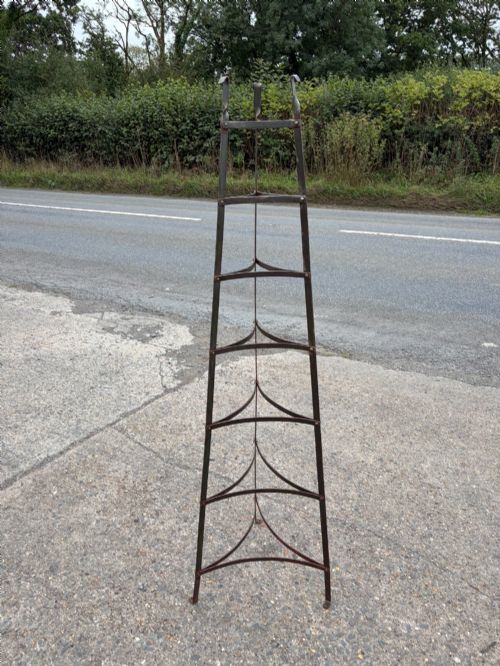
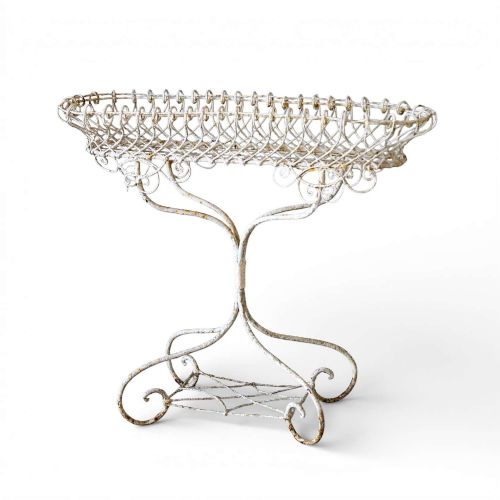
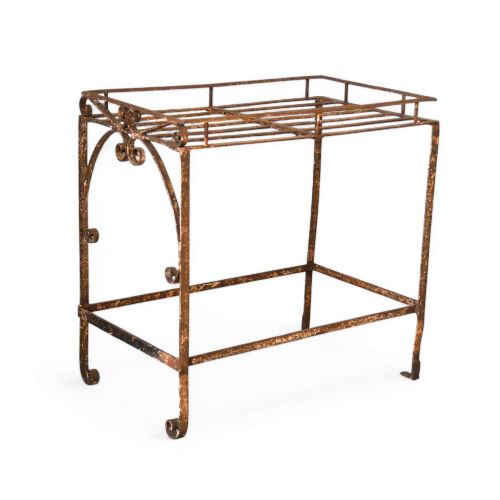


Conservatory Metal Plant Stand
These conservatory metal plant stand pieces bring architectural greening indoors, offering sturdy tiers and scrollwork baskets designed to display potted flora.
Conservatory Metal Plant Stand
When you search for a conservatory metal plant stand, you encounter utilitarian and decorative frames designed to elevate greenery within interior glasshouses or domestic rooms. The selection spans periods from the Georgian era through to the 1930s, encompassing Victorian designs and Edwardian country house pieces.
Most examples take the form of plant stands, jardinieres, and tiered wirework planters. You also find garden tables, storage shelves, and hanging birdcages sharing the same metallic construction.
Origins represented in the inventory include English and French workshops. These pieces range from estate-made wrought iron racks to slatted iron riveted corner stands.
How they were made
Makers utilised wrought iron, cast iron, and brass to build robust skeletal frames capable of supporting heavy pots. Scrollwork, lattice basket tops, and strapp work demonstrate the manual manipulation of metal.
Conservatory Metal Plant Stand Retail Price Guide 2026
Typical asking prices for conservatory metal plant stand among the pieces listed under this phrase on Sellingantiques today, from the lower quarter to the upper quarter. They describe what is for sale here now, not the wider market.
Several stands double as birdcages, proving that plants and parrots occasionally shared the same interior real estate.
What varies in quality
The sophistication of the scrollwork and the complexity of the wirework define the upper tier of these pieces. Estate-made examples with hand-forged decorative details sit apart from simpler utilitarian shelving.
Material combination also elevates a piece, such as the integration of brass fittings with cast iron or the precision of riveted slatted construction. Original painted surfaces carry more desirability than modern refinishing.
The Conservatory Metal Plant Stand Glossary
- Wrought iron
- Iron that has been heated and hammered into shape by hand, resulting in a fibrous structure visible through surface grain. This material allows for strong yet slender structural elements in plant stands.
- Wirework
- Metal strands bent and joined to form open baskets, tiers, and plant supports. It provides a lighter visual weight compared to solid cast iron.
- Jardiniere
- An ornamental pot or stand designed to hold growing plants or flowers. These items often feature decorative lattice or basket tops.
- Strapp work
- Metal formed into flat strips and riveted or joined to create geometric frameworks. This technique appears on tables and plant stands from the early twentieth century.
- Scrollwork
- Curved ornamentation shaped into spiral or scroll motifs, commonly found on Victorian and Edwardian ironwork. It serves both structural bracing and decorative purposes.
Conservatory Metal Plant Stand: Frequently Asked Questions
How do I date a metal stand?
Dating relies on observing construction methods, such as early Georgian hand-forged scrollwork versus later twentieth-century riveted sheet metal and strapp work.
Period styles like Art Nouveau brasswork or Victorian white-painted cast iron provide further clues to the decade of manufacture.
Can I use them outside?
Most of these pieces were built to withstand damp environments in conservatories or sheltered garden settings, using materials like iron, brass, and zinc.
Continuous exposure to heavy outdoor weather may accelerate corrosion on painted or untreated wirework surfaces.
What is wirework?
Wirework involves shaping metal wire into open mesh baskets, tiered stands, and structural frames that allow air circulation around pots.
This technique became popular in the nineteenth century for creating lightweight yet robust garden furniture and plant displays.