
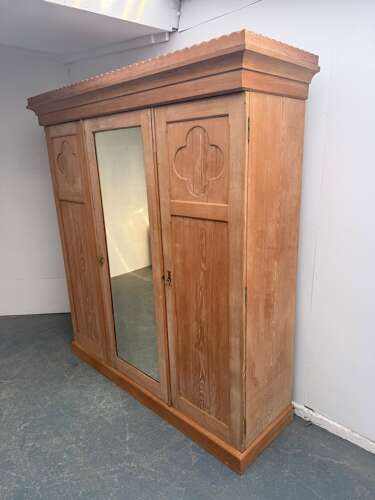
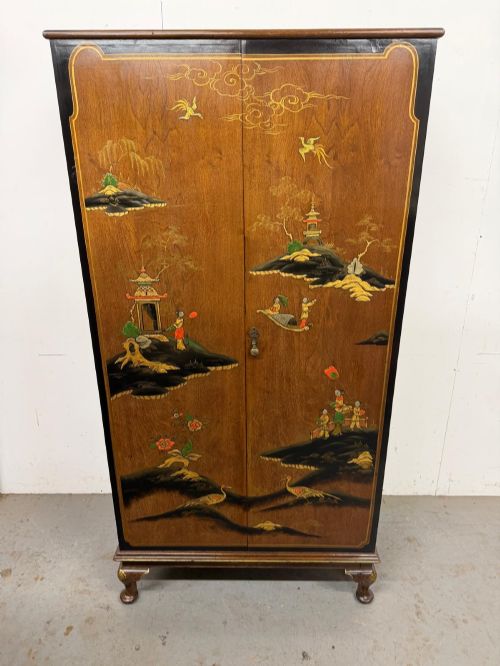
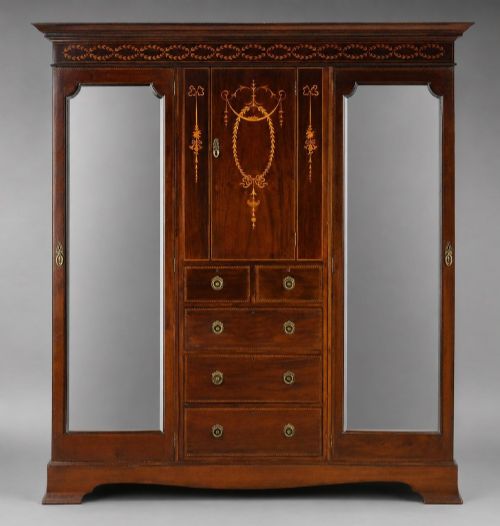
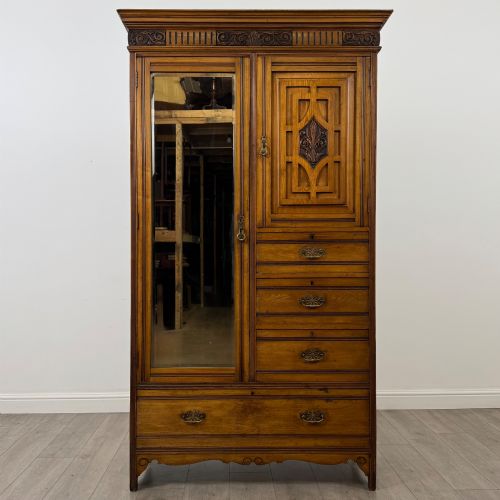
Compactum Armoire Wardrobe
A compactum armoire wardrobe provides fitted interior storage through a combination of hanging space, shelves and drawers.
Compactum Armoire Wardrobe
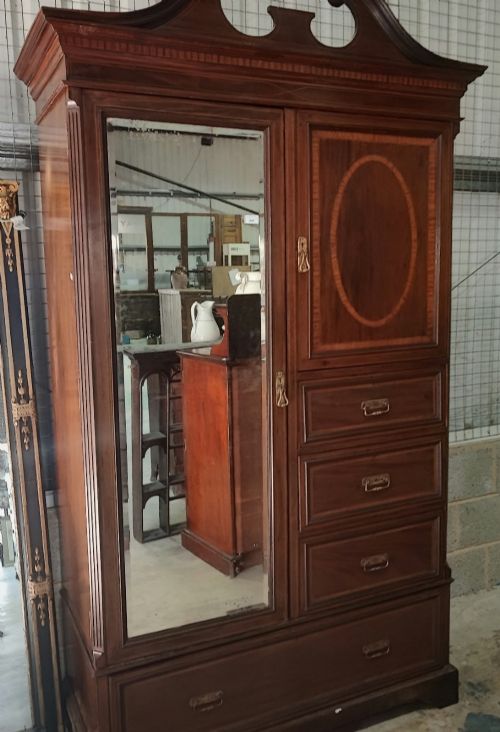
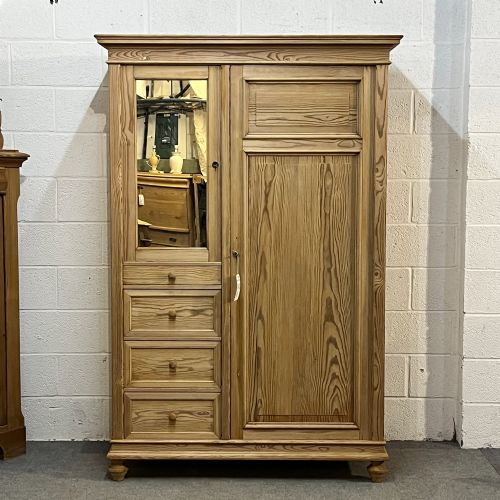
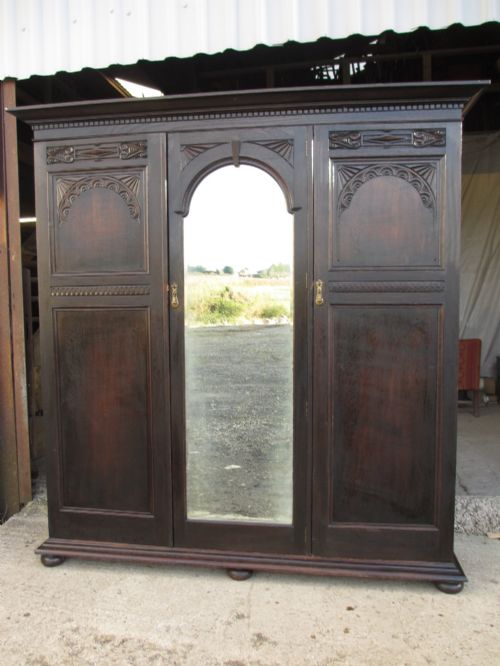
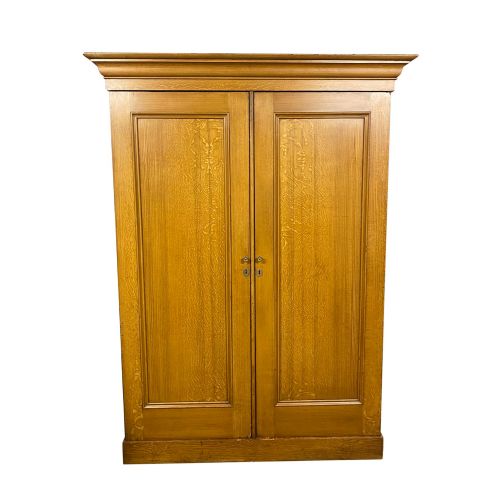
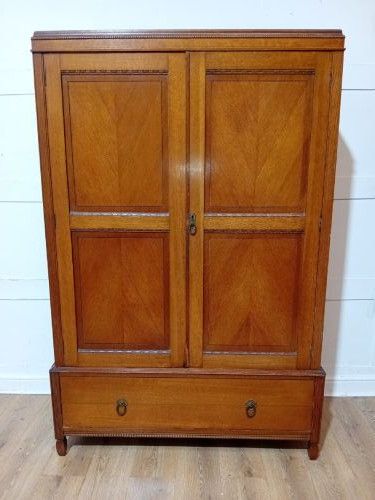
A compactum armoire wardrobe stands as a substantial storage piece designed to hold clothing and linen within a single carcass. These items combine hanging sections with internal drawers and sliding trays, dividing the interior into functional compartments. Buyers searching for a compactum armoire wardrobe encounter pieces spanning the Victorian, Edwardian and Art Deco periods.
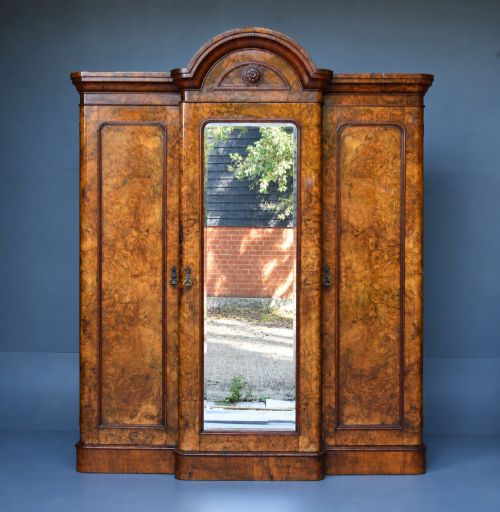
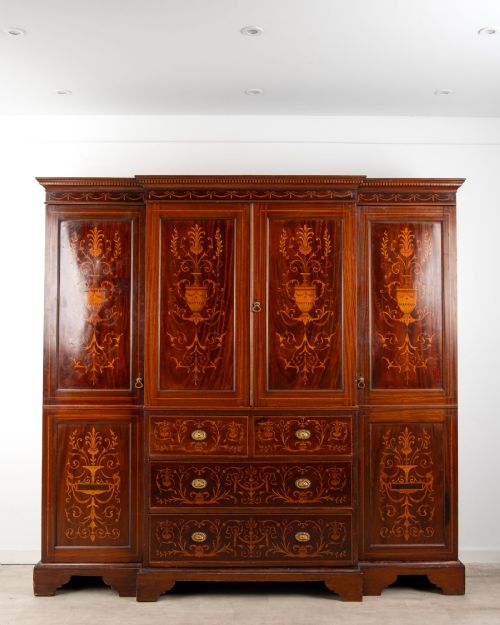
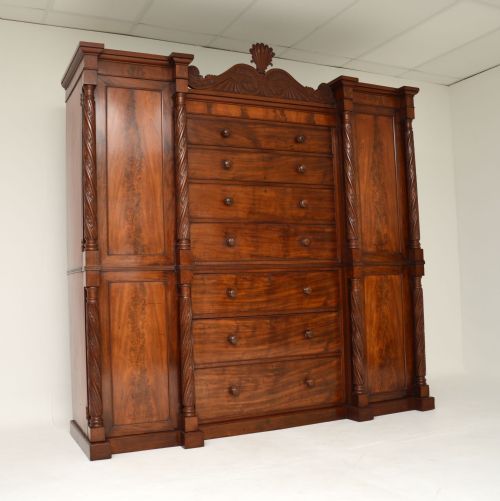
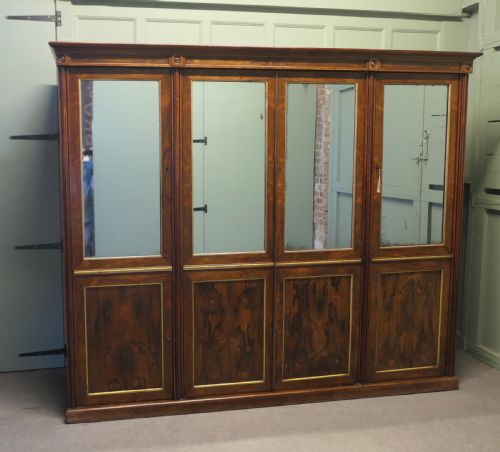
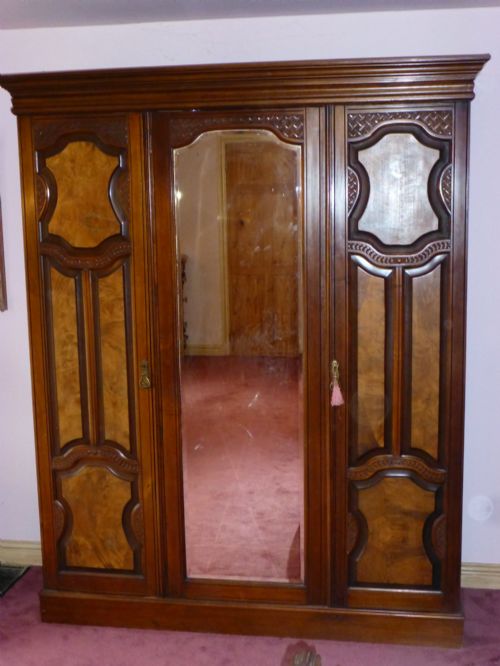
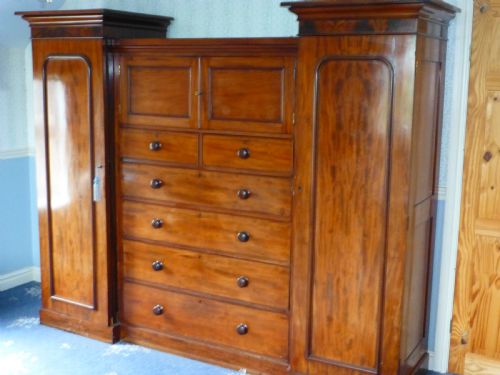
The version most commonly met on this page is the mahogany or walnut triple wardrobe from the nineteenth or early twentieth century. Many examples include central mirrored doors flanked by hanging wings and linen presses. Woods such as burr walnut, ash, satinwood and oak appear across different eras.
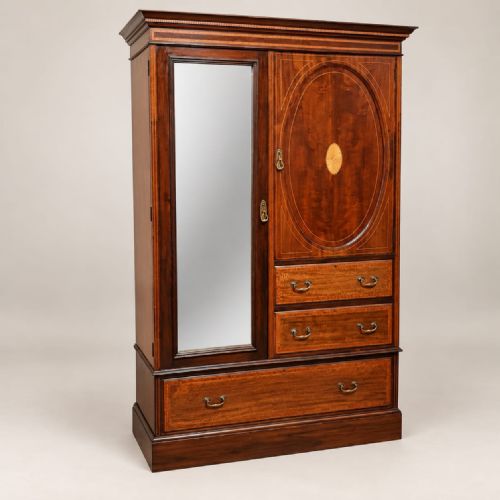
Makers ranging from large workshops to retail furnishers produced these fitted cabinets to meet domestic storage demands. Regional styles shift from heavy carved Victorian forms to lighter Edwardian inlaid designs and streamlined Art Deco shapes.
How They Were Made
Cabinet makers constructed these large pieces using solid timber frames faced with figured veneers such as burr walnut, flame mahogany and birds eye maple. Carcasses were often built in modular sections to allow assembly within domestic bedchambers. Secondary timbers like pine and oak formed internal drawer boxes and backing boards.
Joinery techniques included dovetailed drawer construction and panelled doors designed to accommodate seasonal wood movement. Surfaces received hand-applied wax, polish or painted finishes, occasionally incorporating scumble paintwork to imitate finer grains. Brass hardware, mirrored glass panels and inlaid bandings completed the exterior decoration.
Listings feature woods spanning mahogany, walnut, burr walnut, satinwood, ash, oak, pine and birds eye maple.
What Varies in Quality
Quality rests upon the selection of timber veneers and the precision of the internal cabinetwork. Superior pieces display book-matched figuring across large door panels and robust solid mahogany or walnut drawer linings. Lesser examples rely on simpler construction with plain pine interiors and minimal decorative inlay.
The sophistication of the internal fittings defines the tier of the piece. Top-tier cabinets feature sliding linen trays, adjustable shelving and compartmentalised jewellery drawers behind fitted doors. Standard models provide basic hanging rails and fixed shelf arrangements without secondary internal drawers.
Edwards and Roberts·Holland and Sons·Gillows·Harris Lebus·Shapland and Petter·Lamb of Manchester·Maple and Co
The Compactum Armoire Wardrobe Glossary
- Compactum
- A multi-functional wardrobe containing a combination of hanging space, drawers, shelves and sliding trays. This internal division allows comprehensive storage of various garments within one frame.
- Armoire
- A large standing cupboard historically used for storing weapons or dress. In modern antique terminology, the term often interchanges with wardrobe.
- Breakfront
- A cabinet facade where the central section projects forward from the flanking wings. This architectural arrangement creates depth and visual interest on large triple wardrobes.
- Scumble
- A decorative paint technique applied over a base coat to simulate wood grain or figure. This finish appears on alternative timbers like pine to mimic more costly woods.
- Linen Press
- A piece of furniture featuring upper cupboard doors enclosing sliding trays for folded textiles above lower storage drawers. They frequently merge into wardrobe designs to form combination compactums.
Compactum Armoire Wardrobe: Frequently Asked Questions
What is a compactum wardrobe?
A compactum wardrobe is a large multi-purpose storage cabinet that integrates hanging space, sliding trays and drawers into a single unit.
These pieces were designed to hold an entire wardrobe of clothing and household linen within one fitted carcass.
How do I date an antique wardrobe?
Dating relies on observing the prevailing timber choices, construction methods and stylistic motifs of the piece. Victorian examples often feature heavy mahogany or walnut, while Edwardian versions frequently display satinwood inlay and lighter framing.
Secondary woods, handle types and interior configurations also provide clues to the decade of manufacture.
Can these wardrobes be dismantled?
Many large nineteenth and twentieth-century wardrobes were constructed to separate into modular sections for transport and installation. Cornices, plinths, side wings and central mirror doors often unbolt or lift apart.
This modular design allowed the substantial pieces to fit up staircases into upper bedrooms.
What woods were used?
Cabinet makers utilised a variety of native and exotic timbers depending on the period and style. Mahogany and walnut dominated the Victorian era, while Edwardian pieces frequently employed satinwood, ash and oak.
Finer cabinets utilised decorative veneers like burr walnut and birds eye maple over solid secondary carcase timbers.