


Compact Writing Bureau Desk
A compact writing bureau desk is a practical piece that fits neatly into small rooms while providing a dedicated workspace and concealed storage.
Compact Writing Bureau Desk
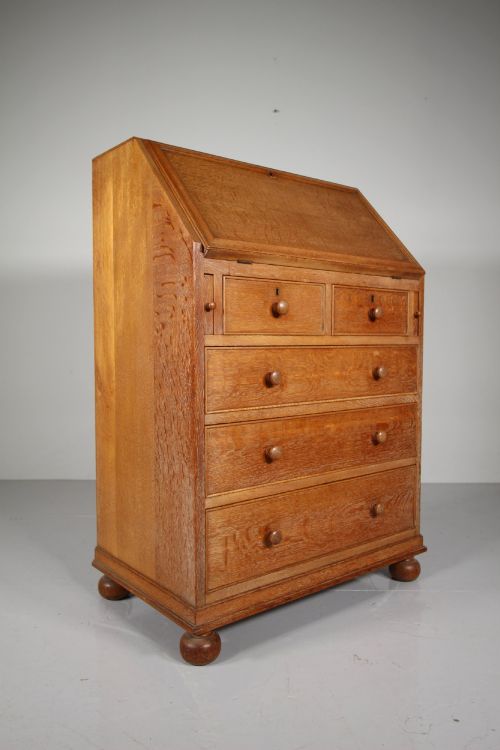
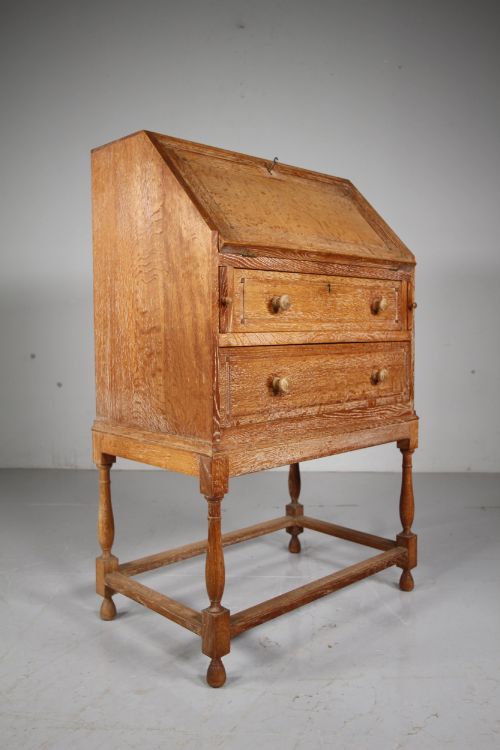
A compact writing bureau desk gives you a sloping fall-front flap that opens to reveal small drawers and pigeonholes for correspondence. You will encounter these functional writing pieces across multiple eras, ranging from early examples in oak and walnut to later variations.
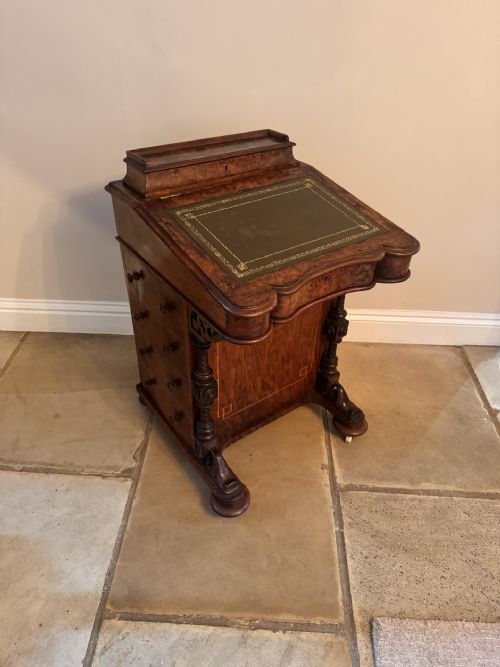
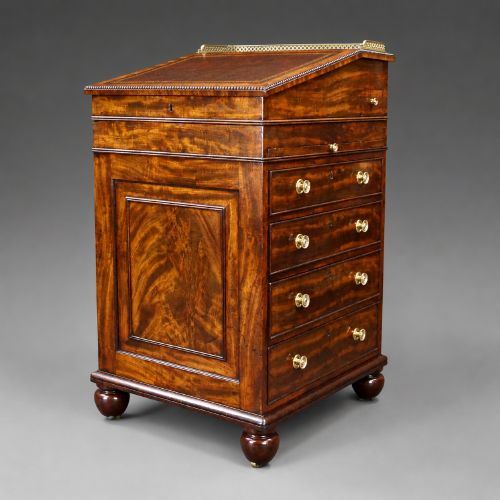
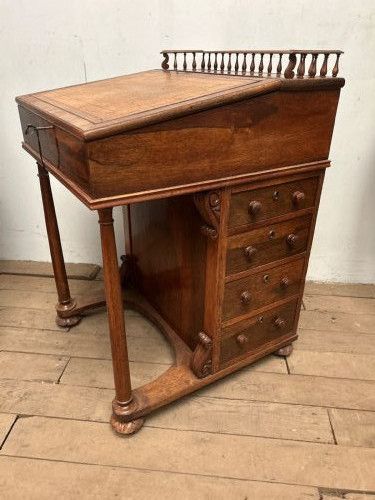
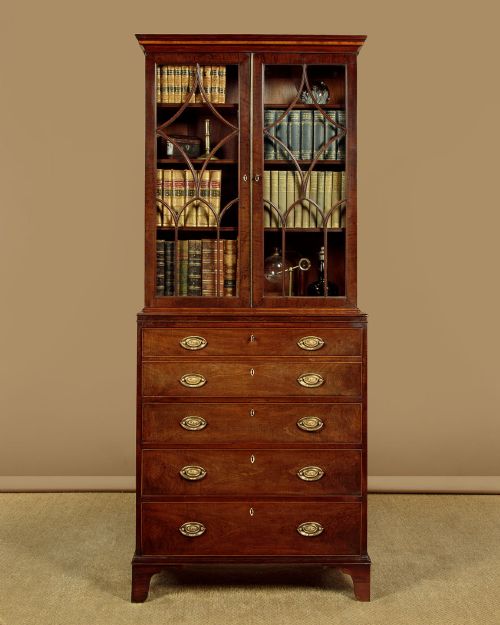
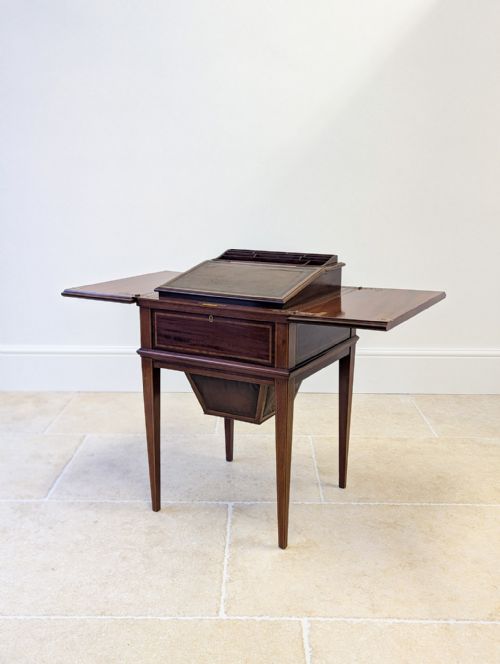
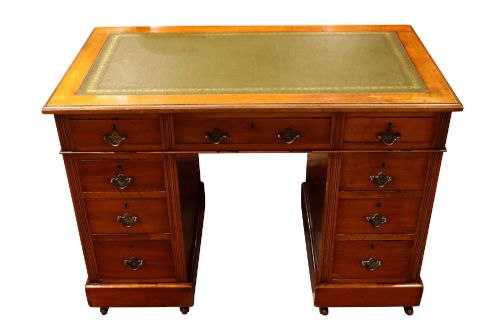
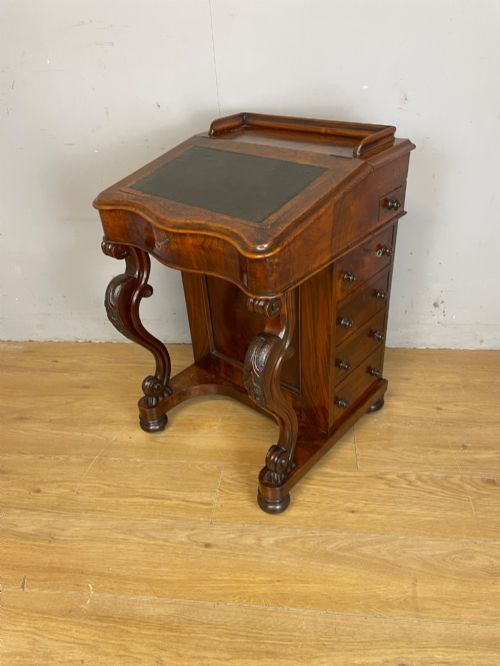
The selection on this page spans several distinct forms, including traditional slant-front bureaux, tall bureau bookcases with glazed upper sections, and compact Davenport desks. You will also find pedestal desks and specialised writing cabinets designed to maximise surface area in confined spaces.
Most pieces date from the Georgian, Victorian, and Edwardian periods, alongside a notable number of earlier 18th century items and later 1930s Art Deco designs. Makers such as Gillows of Lancaster appear among the more substantial pieces, alongside labelled examples from Heals of London and F.H. Marshall & Co Glasgow.
Materials and construction
Cabinet makers utilised a range of dense hardwoods for these desks, relying predominantly on mahogany, oak, and walnut, frequently featuring figured veneers like burr walnut and flame mahogany. Rosewood and rarer timbers such as amboyna, yew wood, and satinwood also feature on specific Regency and 19th century pieces.
Structural integrity relied on traditional joinery methods, with dovetailed drawers and panelled fall-fronts built to withstand daily use. Secondary woods were integrated into drawer linings and internal dividers, while brass handles, escutcheons, and leather writing inserts completed the hardware and fitted surfaces.
Several desks manage to pack nine drawers, secret compartments, and a sloping flap into a footprint smaller than a modest armchair.
Evaluating standard and execution
The degree of refinement in the cabinet work distinguishes ordinary examples from exceptional ones. Finely figured wood veneers, balanced grain patterns across the fall-front, and delicate marquetry or string inlay indicate greater care by the maker.
Internal arrangement and secondary detailing reveal the tier of production. Elaborate pigeonhole configurations, secret compartments, and original brass fittings set apart superior workshop outputs from simpler utility pieces.
Gillows of Lancaster·Heals of London·F.H. Marshall & Co Glasgow·Bryn Mawr Welsh
The Compact Writing Bureau Desk Glossary
- Bureau
- A desk featuring a sloping hinged lid that opens down to form a writing surface over a set of drawers. This term covers both standard freestanding writing cabinets and pieces raised on stands or bracket feet.
- Davenport
- A compact pedestal desk with a sloping writing surface, usually incorporating a hinged lid and small drawers accessed from the side. They were popular throughout the 19th century for domestic correspondence.
- Secretaire
- A piece of furniture containing a pull-out drawer or drop-front flap that serves as a writing desk. It often forms the upper section of a taller cabinet or bookcase.
- Linenfold
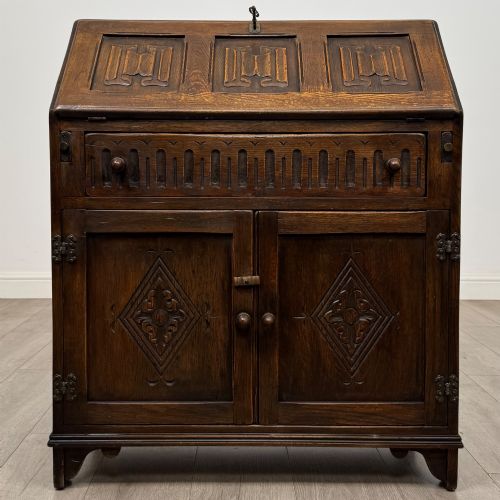
- A style of carved wooden panelling that resembles folded fabric, frequently seen on oak pieces from the Edwardian era. It draws on medieval and Tudor decorative traditions.
- Kneehole desk
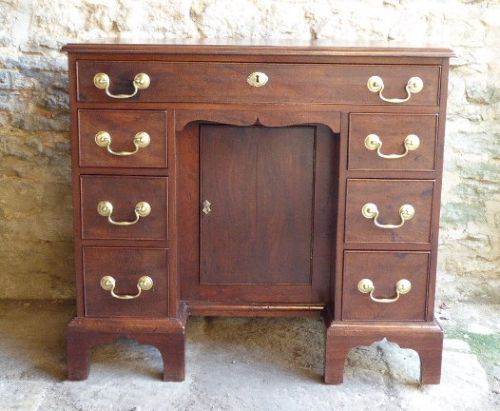
- A flat-topped desk featuring a central recessed space for the legs, flanked by pedestals containing banks of small drawers. Georgian examples in mahogany are particularly sought after.
Compact Writing Bureau Desk: Frequently Asked Questions
What is a compact writing bureau desk?
A compact writing bureau desk is a domestic furniture piece designed primarily for letter writing and paperwork storage. It typically combines a slanted writing flap with internal pigeonholes and lower drawers.
Because of its modest footprint, it serves well in smaller rooms where a full-sized partner desk or library table would prove too large.
How do I identify a Georgian bureau?
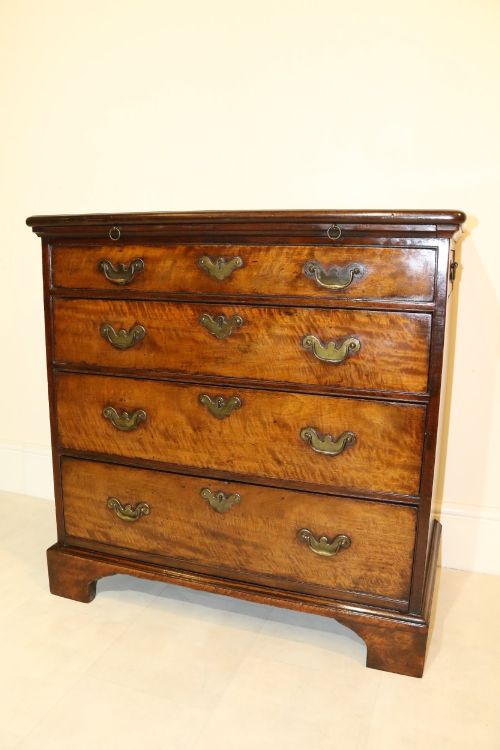
Georgian bureaux generally display solid proportions with timber such as mahogany, oak, or walnut. They often rest on bracket feet and feature hand-cut dovetails inside the drawer construction.
Internal fittings tend to include shaped pigeonholes and small secret compartments beneath sliding or removable panels.
What is a Davenport desk?
A Davenport is a small, upright desk featuring a sloping, leather-lined writing surface that lifts to reveal storage. A bank of small drawers usually opens along one side of the pedestal.
Originating in the Regency period, these pieces were designed for ladies to use in drawing rooms or boudoirs.
How should I care for an antique bureau?
Keep wooden desks out of direct sunlight and away from heat sources to prevent the timber and veneers from drying out. Periodic application of quality wax helps nourish the polished surface.
Avoid placing damp items on leather writing inserts to prevent staining and lifting of the material.