



Compact Wooden Nightstands
Compact wooden nightstands bring practical timber storage and surface space to smaller bedrooms through designs spanning Victorian, Edwardian, and Georgian periods.
Compact Wooden Nightstands
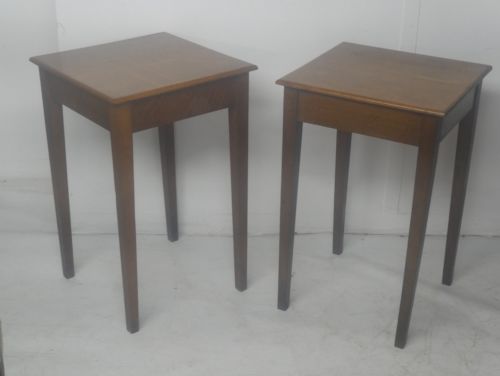
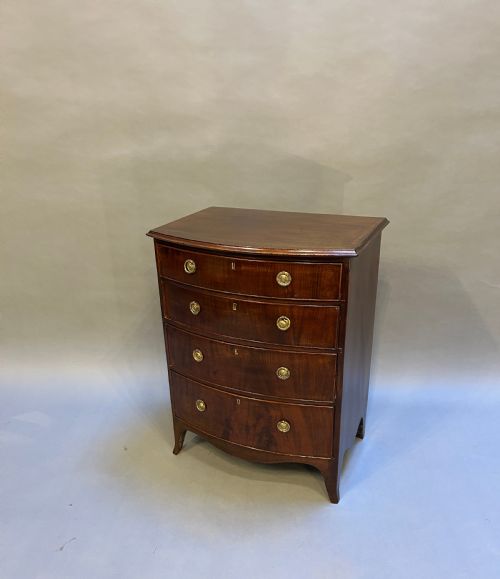
Compact wooden nightstands encompass smaller forms such as bedside cabinets, small chests of drawers, drop leaf tables, and occasional tables designed for bedside use.
The pieces appearing in this category span the Georgian, Victorian, and Edwardian eras, alongside items dated around 1900.
Buyers are most likely to encounter Edwardian and Victorian designs, including small chests of drawers and bedside cabinets fitted with cupboards or drawers.
Materials and construction
Makers utilised solid mahogany, teak, oak, and rosewood, often combining primary timbers with secondary woods for drawer linings and internal framing.
Surface decoration relies on subtle boxwood stringing and inlay work, paired with brass fittings such as drop handles and drawer pulls.
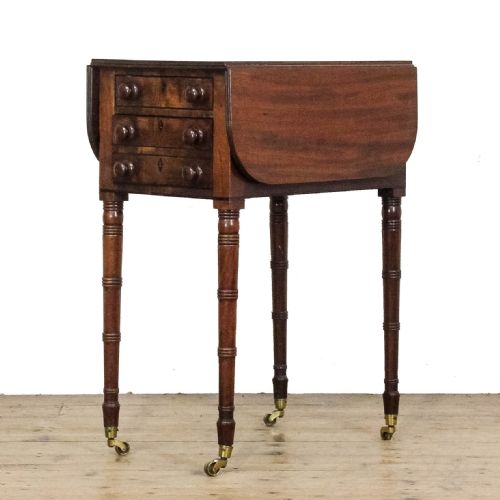
Dropleaf mechanisms and small pivoting leaves feature in occasional and pembroke tables, allowing surfaces to expand when needed.
Compact Wooden Nightstands Retail Price Guide 2026
Typical asking prices for compact wooden nightstands among the pieces listed under this phrase on Sellingantiques today, from the lower quarter to the upper quarter. They describe what is for sale here now, not the wider market.
Current listings feature mahogany, oak, teak, and rosewood across Victorian, Edwardian, and Georgian eras.
Judging quality in timber and form
Quality rests in the selection of timber figures, such as figured mahogany and warm Scottish oak, matched with precise joinery in the drawer construction.
The refinement of inlaid boxwood lines and the originality of brass hardware separate standard utility pieces from finer cabinet work.
The Compact Wooden Nightstands Glossary
- Pembroke table
- A drop leaf table with hinged flaps on two opposing sides, typically fitted with a single drawer.
- Bowfront
- A curved front facade on a cabinet or chest of drawers that swells outward in the centre.
- Drop leaf
- A hinged table leaf that folds down when not in use to reduce the overall footprint of the furniture.
- Boxwood stringing
- A narrow inlay of pale boxwood set flush into the darker timber surface for decorative contrast.
Compact Wooden Nightstands: Frequently Asked Questions
What periods do these pieces cover?
The selection spans the Georgian period through the Victorian and Edwardian eras up to around 1900.
Most items reflect the domestic cabinet making styles of the nineteenth and early twentieth centuries.
Are these items strictly for bedside use?
Many function as bedside cabinets, but the category also includes small chests of drawers, lamp tables, and occasional tables.
These versatile forms adapt easily to sitting rooms and narrow hallways as well as bedrooms.
What timbers were commonly used?
Makers relied heavily on mahogany, oak, teak, and rosewood for their durability and rich grain patterns.
Inlay details often incorporate paler woods like boxwood to frame drawer fronts and tabletops.
How do I spot an Edwardian piece?
Edwardian items often display lighter proportions and delicate inlay work, reflecting the taste of the early twentieth century.
They frequently appear as small chests of drawers or drop leaf occasional tables.