





Compact Walnut Chest
A compact walnut chest offers clever storage and rich timber grain for smaller rooms.
Compact Walnut Chest
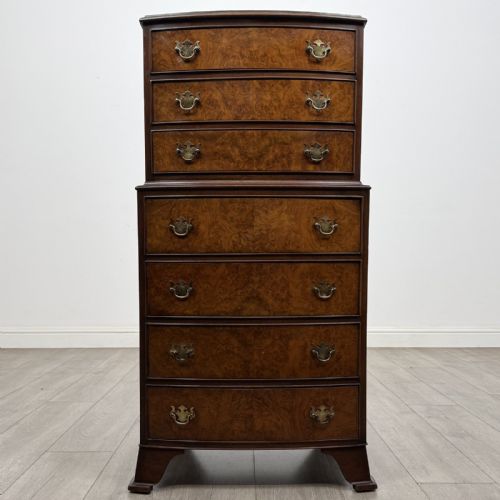
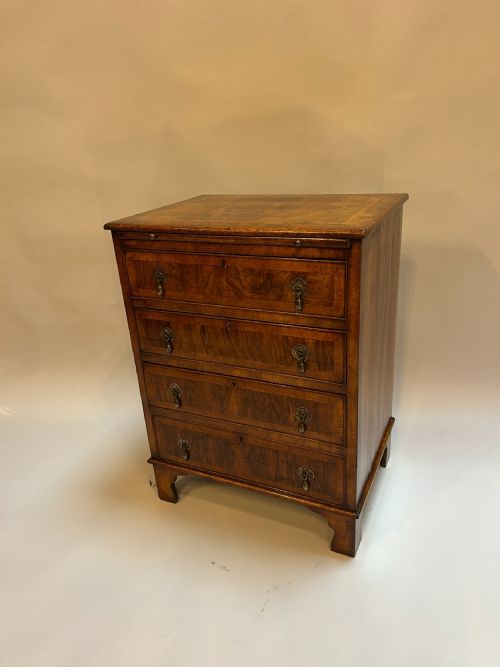
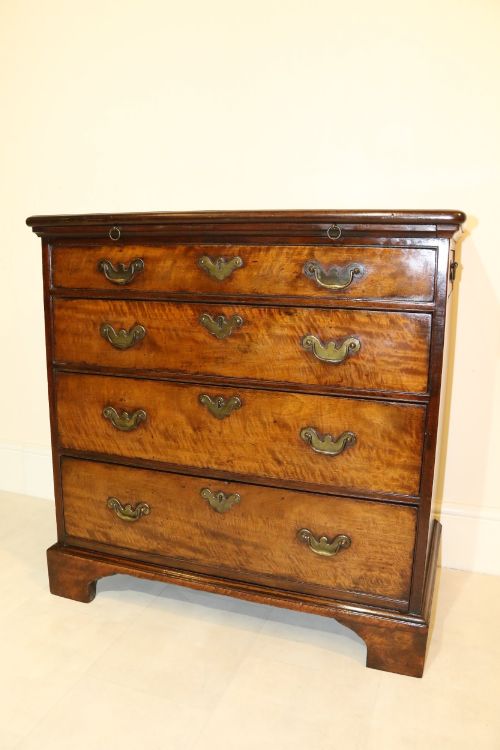
A compact walnut chest provides deep drawer space within a modest footprint, suiting rooms where floor space matters. These pieces range from small chests of drawers and tallboys to bachelors chests, writing desks, and bedside lockers.
The selections here stretch from 18th century pieces to 1920s revivals, capturing styles like Georgian, Queen Anne, and Art Deco. Walnut and burr walnut dominate, alongside oak and brass fittings.
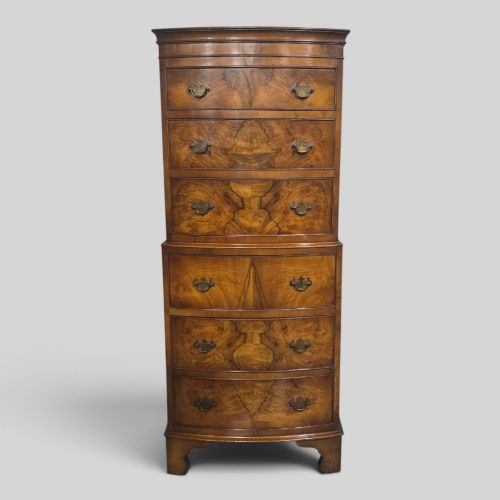
Buyers frequently encounter Georgian revival styles and 1920s burr walnut tallboys alongside Victorian bedside pairs. Each form balances utility with proportion, designed to fit tighter spaces without sacrificing drawer depth.
How they were made
Cabinetmakers constructed these chests using solid walnut and oak frameworks, often applying highly figured burr walnut veneers to primary surfaces to create striking grain patterns. Brass handles and escutcheons finished the drawer fronts.
Secondary timbers like oak reinforced the interior drawer linings and structural backs, ensuring stability across centuries of opening and closing. Expert matching of veneer leaves created symmetrical patterns across the drawer tiers.
Compact Walnut Chest Retail Price Guide 2026
Typical asking prices for compact walnut chest among the pieces listed under this phrase on Sellingantiques today, from the lower quarter to the upper quarter. They describe what is for sale here now, not the wider market.
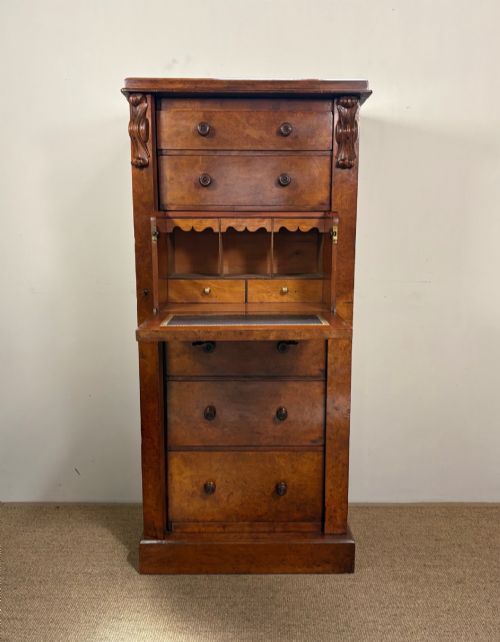
Wellington chests lock all drawers at once using a hinged side pillar, keeping midnight diaries safe from prying eyes.
What varies in quality
The choice of timber veneer dictates much of the visual appeal, with heavily figured burr walnut creating a more dramatic surface than plain walnut boards. The precision of the veneer matching across drawer fronts separates standard work from finer output.
Hardware choice and secondary wood selection indicate the original maker's intent, from heavy brass drop handles on early pieces to refined cast brass plates on revival chests.
Gillows of Lancaster
The Compact Walnut Chest Glossary
- Burr walnut
- A prized timber harvested from the tree's growth warts, showing intricate swirling grain patterns. It provides a highly decorative surface for drawer fronts and tops.
- Tallboy
- A tall chest of drawers standing on a base section, offering significant vertical storage while retaining a narrow floor footprint. These pieces often feature multiple graduating drawers.
- Bachelor's chest
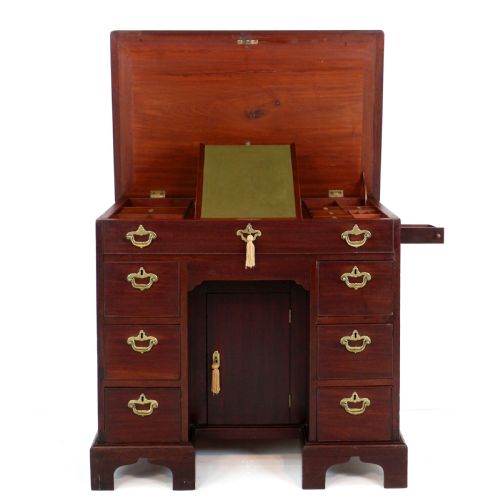
- A small chest of drawers fitted with a folding top or slide used for writing. These versatile pieces date back to the Georgian era.
- Wellington chest
- A tall, narrow chest of drawers secured by a hinged locking side stile that fastens with a key. This design originated in the 19th century.
- Kneehole desk
- A compact desk featuring a central recess for the legs flanked by columns of small drawers. They frequently double as dressing tables.
Compact Walnut Chest: Frequently Asked Questions
How do I date a walnut chest?
Dating relies on examining construction methods, hardware types, timber choice, and prevailing furniture styles like Georgian or Art Deco.
Revival pieces from the 1920s often replicate earlier 18th century proportions using period-appropriate veneers.
Where should I place a bedside chest?
Late Victorian burr walnut bedside lockers or small chests sit neatly beside a bed to hold lamps and books.
Their modest width ensures they fit comfortably in tighter bedroom layouts.
What is burr walnut veneer?
Burr walnut veneer is a thin slice of highly figured wood cut from the knotty growths of walnut trees.
Cabinetmakers applied these decorative sheets to primary surfaces to create swirling, organic patterns.