



Compact Storage Drawers
Compact storage drawers offer genuine period utility for tight spaces, bringing centuries of clever cabinetmaking directly into modern rooms.
Compact Storage Drawers
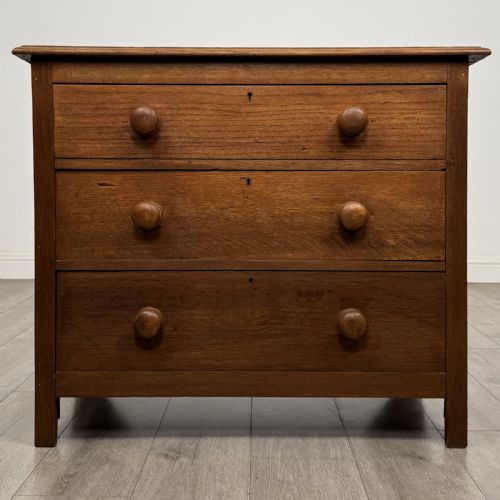
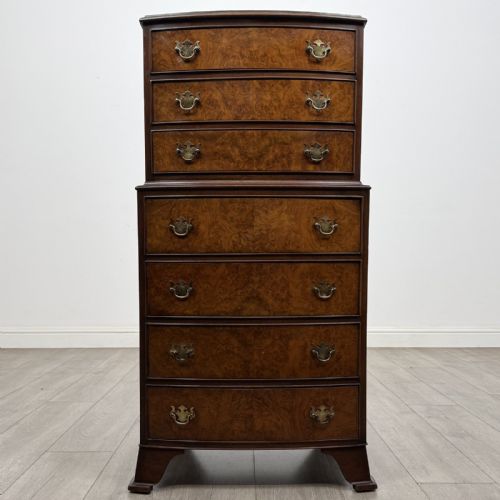
Compact storage drawers encompass smaller chests, tallboys, bachelors chests, and narrow banks of drawers built to hold possessions without dominating a room. These pieces span the 17th century through the Edwardian period, representing centuries of domestic organisation.
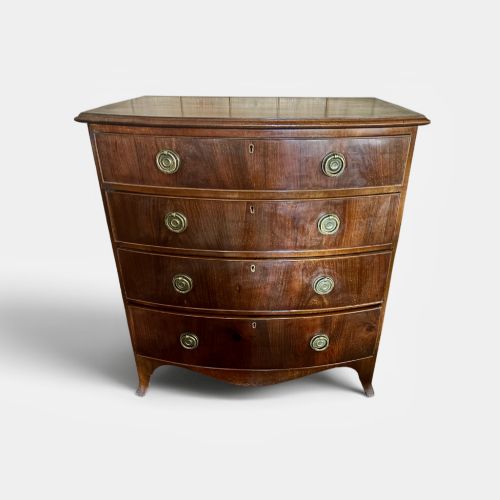
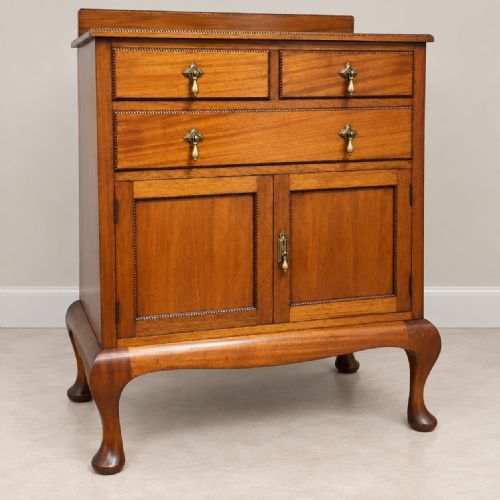
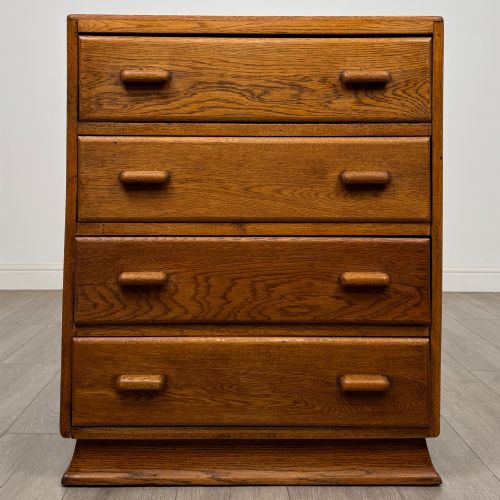
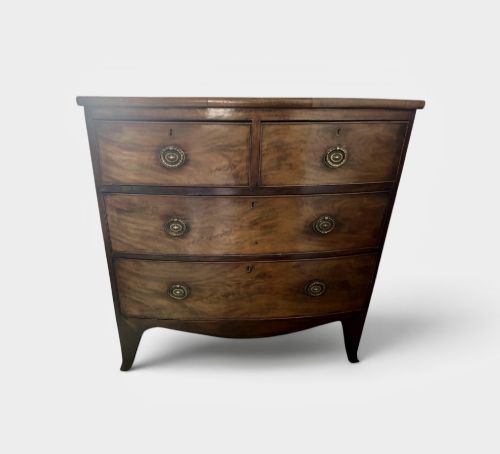
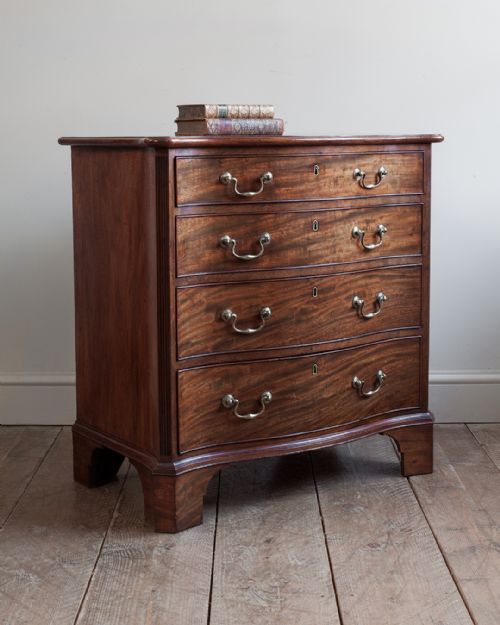
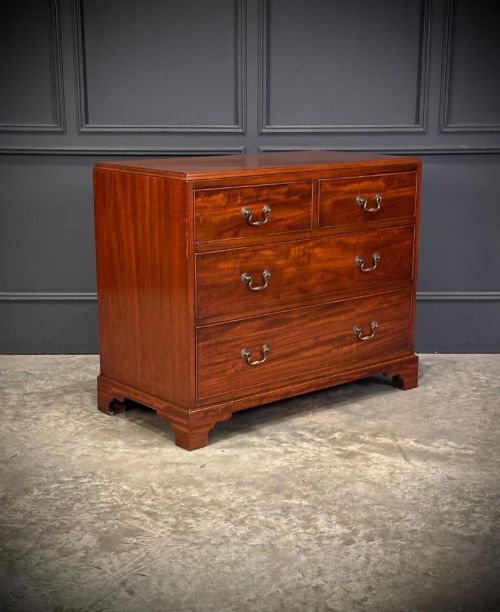
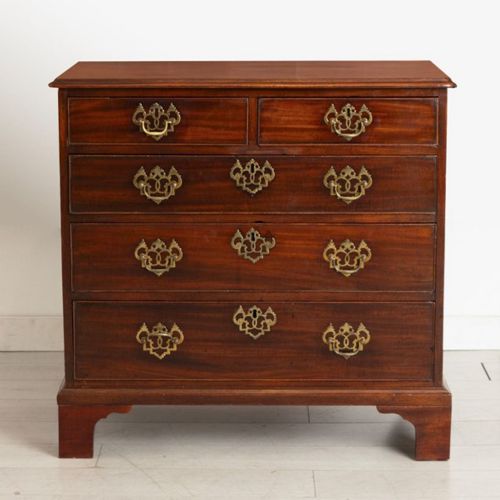
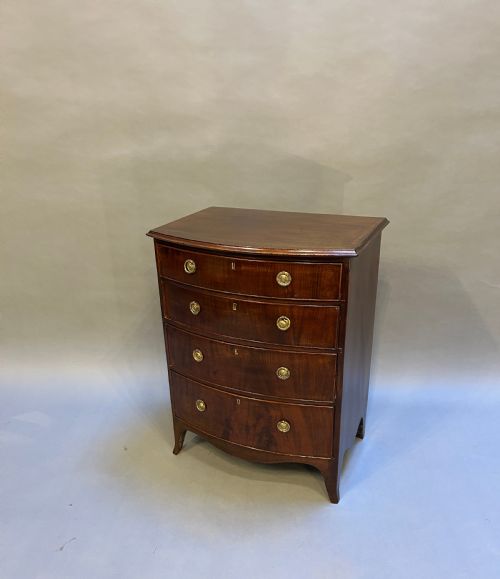
The selection on this page relies heavily on Georgian, Regency, and Edwardian examples in mahogany, oak, and burr walnut. Buyers frequently encounter smaller proportions and bow-front or serpentine shapes designed for intimate chambers rather than grand halls.
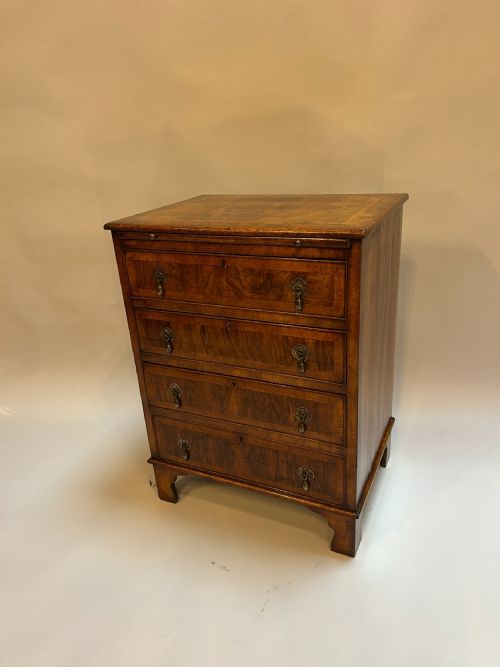
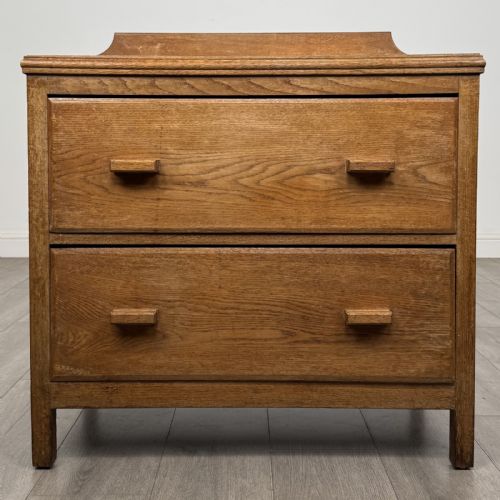
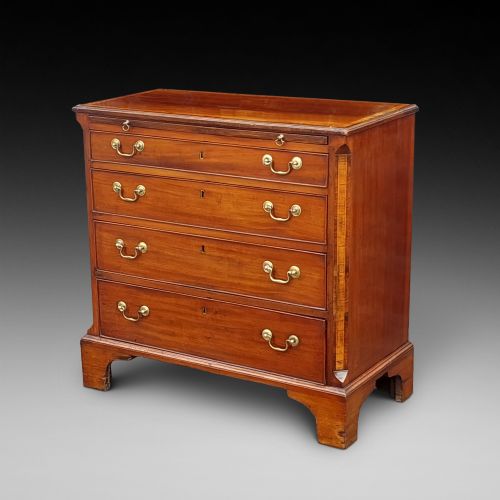
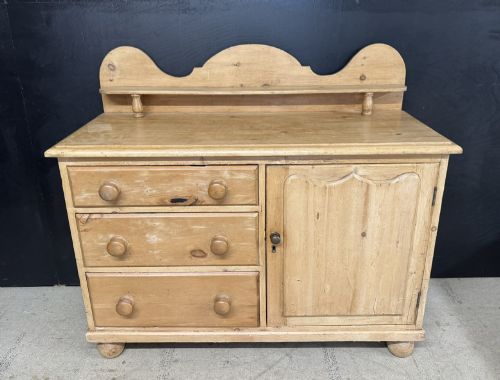
Forms range from simple pine dressers and oak chests to refined mahogany bachelor chests featuring pull-down writing slides and bracket feet. Each variation serves the fundamental need to store belongings within a minimal floor footprint.
Materials and Construction
Cabinetmakers utilised dense hardwoods like mahogany, oak, yew, and burr walnut, often selecting highly figured veneers for primary drawer fronts and tops. Secondary timbers such as pine appeared in hidden structural locations.
Hardware played a functional and decorative role, featuring cast brass drop handles alongside original wooden pulls. Drawer construction relied on tight hand-cut dovetails to ensure durability through centuries of daily use.
Compact Storage Drawers Retail Price Guide 2026
Typical asking prices for compact storage drawers among the pieces listed under this phrase on Sellingantiques today, from the lower quarter to the upper quarter. They describe what is for sale here now, not the wider market.
Materials represented include mahogany, oak, pine, burr walnut, yew, and brass.
Assessing Quality and Proportion
Quality rests upon the crispness of the cabinetmaker's joinery and the selection of timber figure, such as richly grained mahogany or burr walnut. Superior pieces retain original handles, bracket feet, and uncompromised surface patination.
Proportion dictates value, as authentic pieces built to small scales require exceptional skill to maintain structural integrity and visual balance. Altered dimensions or mismatched replacement hardware diminish the integrity of the piece.
Gillow of Lancaster·Reprodux
The Compact Storage Drawers Glossary
- Bachelors chest
- A small chest of drawers featuring a fold-over top or a pull-out slide used as a writing desk. These versatile pieces gained popularity during the Georgian period.
- Tallboy
- A tall chest of drawers built in two stacked sections, maximising vertical storage capacity while maintaining a narrow floor footprint. They frequently appeared in oak and mahogany during the 18th and early 19th centuries.
- Wellington chest
- A tall, narrow locking chest secured by a hinged side locking bar that fastens over the drawer edges. Named after the Duke of Wellington, this form emerged in the 19th century.
- Serpentine front
- A furniture front curving outward in the centre and inward at the sides in an undulating line. This advanced shaping required expert woodworking skill.
- Bracket foot
- A simple foot shape resembling a bracket, often shaped with mitred corners supporting case furniture from the late 17th through the 18th centuries.
Compact Storage Drawers: Frequently Asked Questions
How do I spot a bachelors chest?
A bachelors chest typically incorporates a pull-out wooden slide directly above the top drawers, originally intended for writing letters.
They appear frequently in Georgian mahogany and offer dual functionality as both storage and a small desk.
Are these drawers suitable for daily use?
Period drawers built with solid dovetail construction remain robust and practical for holding modern clothing and household items.
Their sturdy hardwood frames tolerate everyday handling far better than modern flat-pack alternatives.
How do I date a wooden chest?
Dating relies on observing wood species, handle styles, foot configurations, and the hand-cut dovetailing inside the drawer boxes.
Earlier pieces from the 18th century often feature oak linings and distinct bracket feet, whereas Edwardian examples display lighter framing and different brassware.