
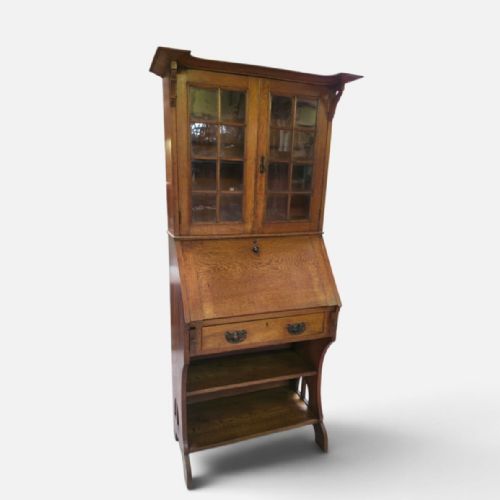
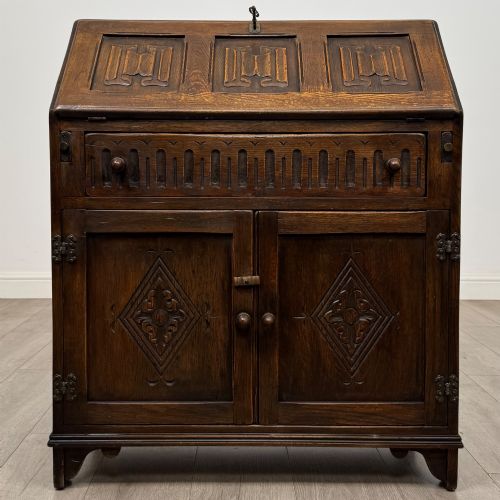

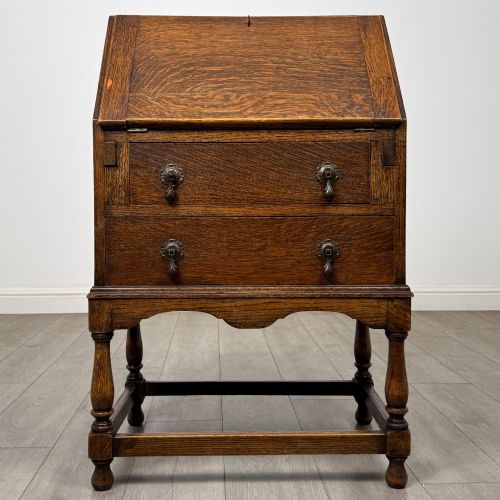
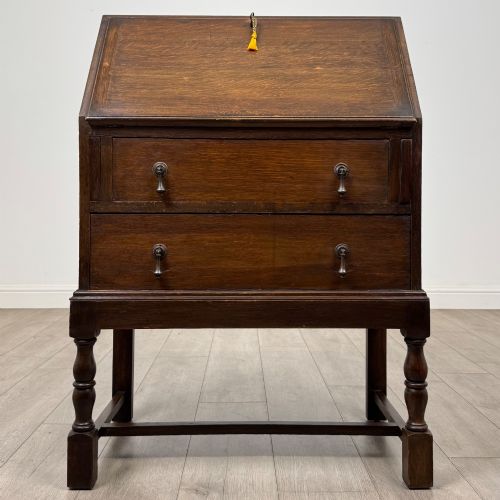
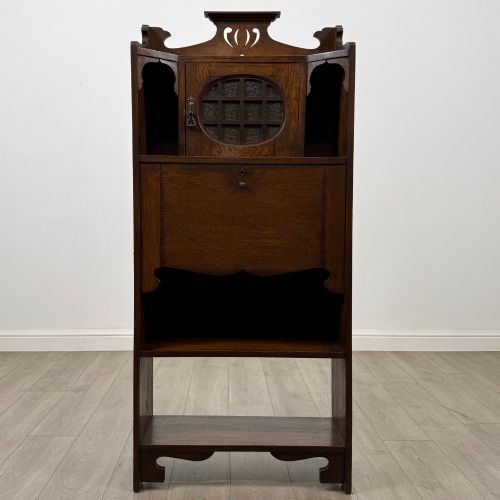
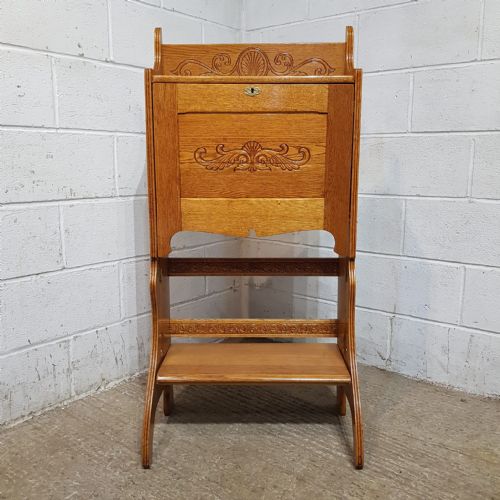
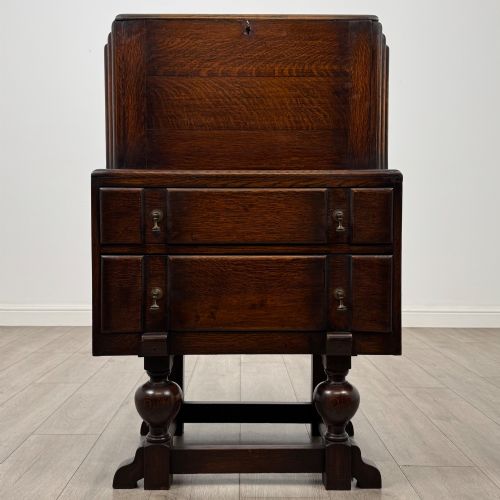
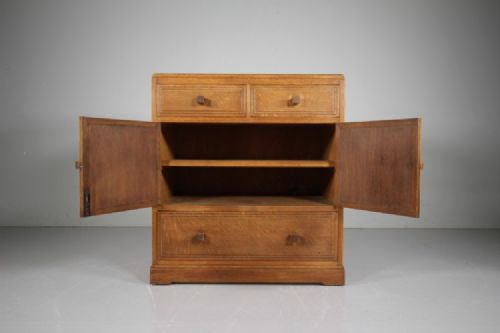
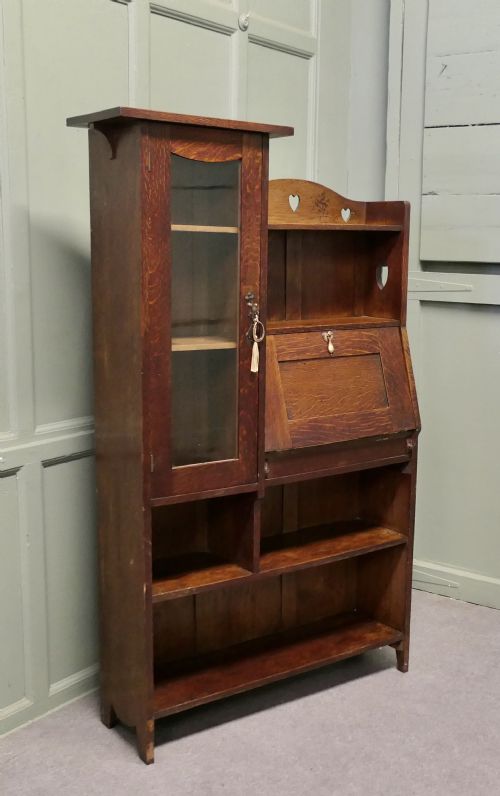


Compact Oak Writing Cabinet
A compact oak writing cabinet offers neat domestic storage and a dedicated writing surface, combining robust timber with clever compartments for daily correspondence.
Compact Oak Writing Cabinet
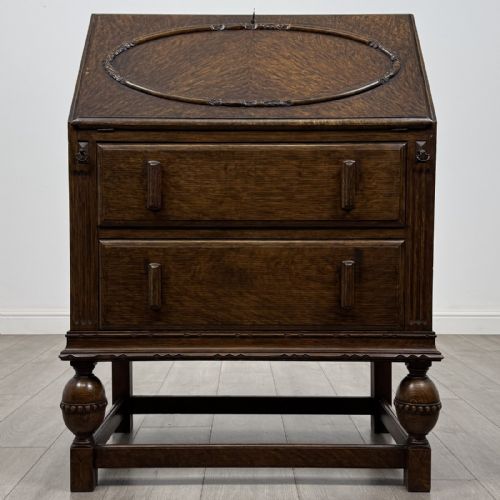
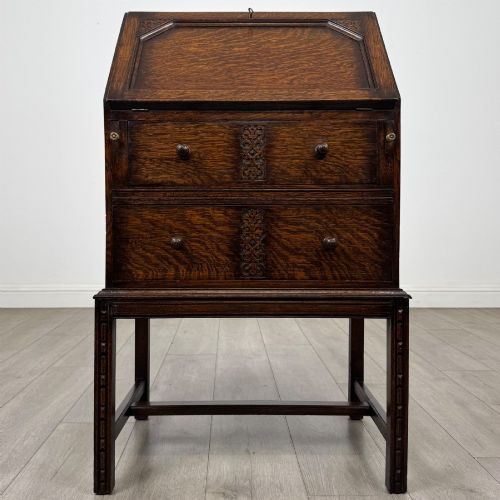
A compact oak writing cabinet, often listed as a bureau or writing desk, provides a practical station for letters and paperwork within a modest footprint. These pieces emerge predominantly from the Edwardian era and the early twentieth century, alongside occasional Victorian and seventeenth-century examples.
Materials and construction
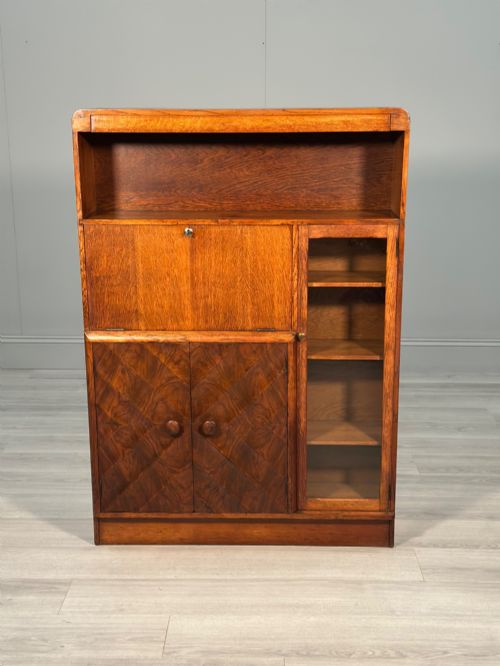
The primary material is oak, occasionally selected as pollard oak, burr oak, or golden oak, complemented by contrasting grains and veneers. Workshops frequently integrated brass for handles and escutcheons, leather for the writing surface inserts, and occasionally glass for upper bookcase doors.
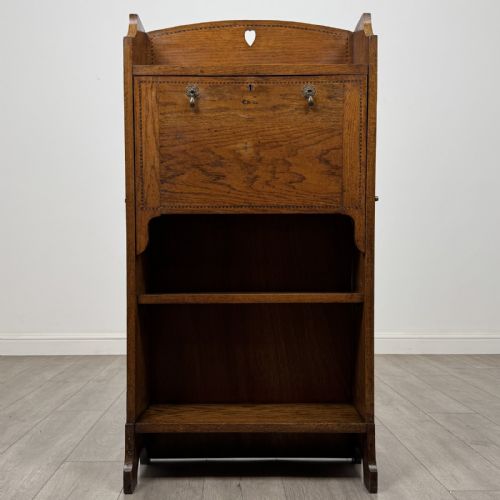
Joinery methods reflect the periods of manufacture, moving from earlier panelled construction to the distinctive carved details and linear forms of the Arts and Crafts movement. Makers utilised iron and lead hardware where functional reinforcement was required inside the fitted interiors.
Some Victorian desks arrive with a green man carving peering out from the timber, watching over your daily correspondence.
Distinctions in quality
The standard of a compact oak writing cabinet rests on the selection of timber and the sophistication of the internal fittings. Superior pieces display carefully chosen grain patterns, such as burr or pollard oak, alongside finely dovetailed drawers and neatly partitioned pigeonholes.
Carved ornamentation and applied details further separate workshop output, moving from plain utilitarian desks to pieces bearing deliberate Arts and Crafts motifs or figural carvings. The integration of glazed upper bookcases or labelled maker details adds further structural complexity to the design.
Larkin·Harris Lebus·Bryn Mawr
The Compact Oak Writing Cabinet Glossary
- Bureau
- A desk featuring a sloping hinged lid or fall front that conceals a nest of small drawers and pigeonholes. This form serves as the primary configuration found among these pieces.
- Fall-front
- A writing flap hinged at the bottom that pulls down to form a horizontal desk surface. It often rests on lopers or support arms when opened.
- Linenfold
- A style of wood carving used to panel surfaces, resembling folded parchment or linen. It appears frequently on Edwardian oak furniture.
- Pollard oak
- Timber taken from trees that have been pollarded, producing a dense, highly figured grain pattern. This material was favoured for decorative veneering on nineteenth-century desks.
- Pigeonholes
- Small, open compartments fitted inside the interior of a bureau for sorting letters and stationery. They represent a key feature of fitted writing desks.
Compact Oak Writing Cabinet: Frequently Asked Questions
What is a compact oak writing cabinet?
A compact oak writing cabinet is a domestic desk featuring a fall-front writing surface and internal compartments, designed to save space while holding correspondence and stationery.
These pieces range from early seventeenth-century examples to Edwardian and Arts and Crafts variations made primarily from solid oak.
How do I use a bureau desk?
The fall-front lid opens downward to create a flat writing ledge, supported by wooden arms known as lopers. Inside, small drawers and pigeonholes organise paper, pens, and documents.
When writing is finished, the flap closes to conceal the workspace and keep the room tidy.
How do I identify an Edwardian oak bureau?
Edwardian oak bureaux often display light golden oak tones, clean lines, and occasional Arts and Crafts influence such as copper hardware or subtle carved details. They frequently feature fitted writing interiors behind a simple fall-front panel.
These desks date from the early twentieth century and prioritise domestic utility.
Where should I place a writing cabinet?
These cabinets suit studies, living rooms, and bedrooms due to their modest footprint and enclosed storage. Position them away from direct heat sources to protect the oak timber and leather writing surfaces.
Ensure sufficient clearance in front of the desk for the fall-front flap to open fully.