
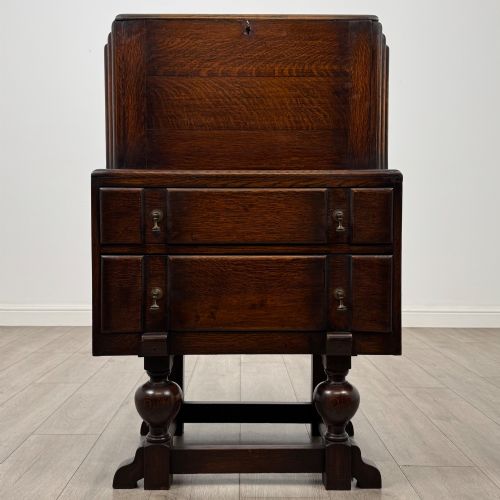
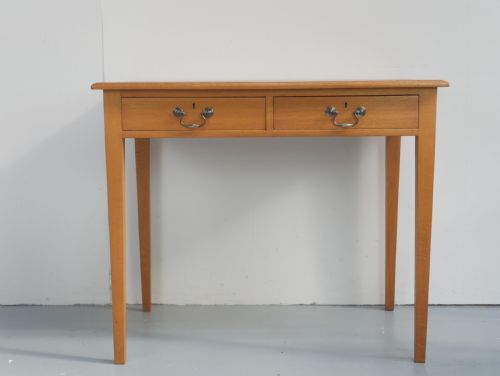


Compact Oak Office Desk
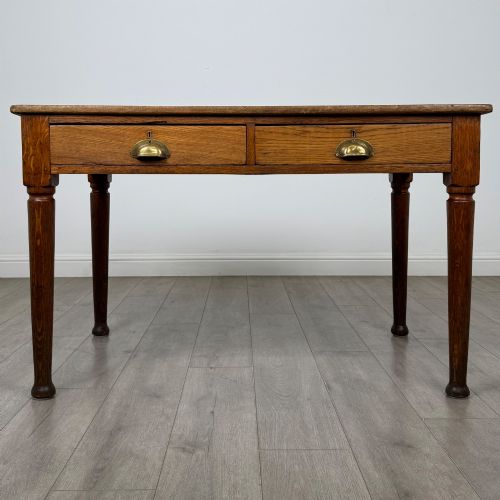
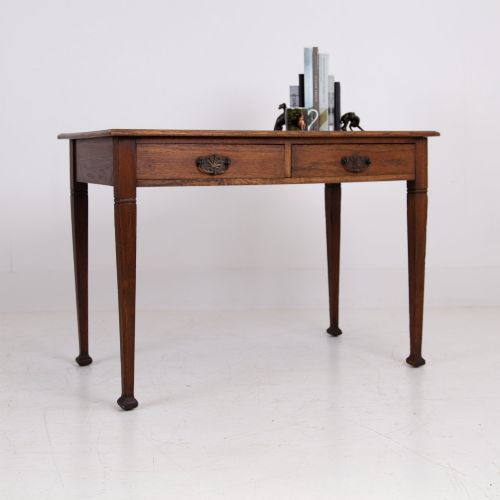
A compact oak office desk is a practical workspace built from sturdy timber, offering daily utility without dominating a room.
Compact Oak Office Desk
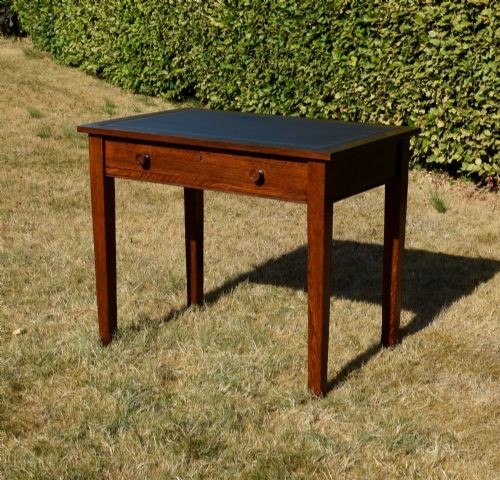
A compact oak office desk provides a functional surface for writing and paperwork while maintaining a modest footprint suited to smaller rooms. The selection on this page centres primarily on pieces from the Edwardian era and the 1920s, alongside older examples.
Forms span writing tables, small bureaus, and narrow writing desks, often equipped with practical drawers. Oak is the defining material, appearing in light tones, golden hues, and figured pollard oak.
Buyers frequently encounter Edwardian and Arts and Crafts pieces that reflect robust construction and straightforward utility. These items bridge historical craftsmanship and everyday domestic workspace requirements.
How they were made
Carpenters utilised solid oak and pollard oak to build durable frames, often selecting figured timber for visible surfaces. Brass and iron hardware provided functional strength for hinges, handles, and drawer pulls.
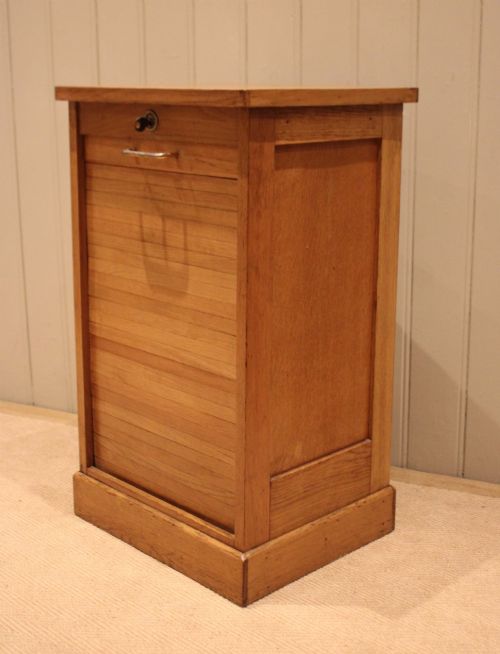
Leather inserts occasionally lined the writing surfaces of tables and desks to offer a smooth texture for pen work. Metal and steel elements appeared in associated filing cabinets to reinforce internal mechanisms.
One municipal town hall desk bears the specific mark of Clarks and Simpsons of Kendall, carrying civic history straight into the study.
What varies in quality
The standard of timber selection and grain figure largely dictates the visual appeal of each piece. Superior examples display carefully matched oak boards and thoughtful proportions rather than purely utilitarian construction.
The integration of original brass or iron fittings and well-fitted drawers distinguishes finer workshops from mass production. Integration of secondary woods and the neatness of internal partitions reveal the care taken by the maker.
Jenners·Clarks·Simpsons of Kendall
The Compact Oak Office Desk Glossary
- Bureau
- A desk featuring a sloping flap that opens to reveal a fitted interior of pigeonholes and small drawers. It provides a concealed workspace that can be closed up when not in use.
- Pollard oak
- Timber taken from trees that have been pollarded, producing a dense, highly figured grain pattern with decorative knots. Cabinet makers utilised this wood on statement panels and writing surfaces.
- Writing table
- A freestanding table designed primarily for correspondence, typically featuring one or more drawers beneath the top. Unlike heavy pedestal desks, these pieces remain light in appearance and construction.
- Arts and Crafts
- A design movement prioritising traditional craftsmanship, visible construction methods, and simple forms. Pieces from this style often emphasise the natural grain of the oak.
- Edwardian
- Pertaining to the reign of King Edward VII, spanning the early twentieth century. Furniture from this period frequently reinterprets earlier historic styles with lighter proportions.
Compact Oak Office Desk: Frequently Asked Questions
How do I fit a small desk into a tight space?
Measure the available floor area and check the kneehole clearance underneath the writing surface before purchasing. Narrow bureaus and small writing tables offer functional depth without protruding far into a room.
Position the desk near natural light sources while ensuring doors and drawers can open fully without obstruction.
What is the difference between a bureau and a writing table?
A bureau incorporates a fold-down flap that covers internal letter compartments and small drawers when closed. This design conceals paperwork and stationery from view.
A writing table provides an open flat top with or without shallow drawers underneath, offering immediate surface access for daily tasks.
How do I care for an antique oak surface?
Dust the timber regularly with a dry, soft cloth to prevent particulate buildup in the grain. Apply occasional applications of beeswax to nourish the wood and maintain a gentle sheen.
Avoid placing oak furniture in direct sunlight or near heat sources to prevent the timber from drying out or splitting.
How can I distinguish Edwardian desks from earlier pieces?
Edwardian desks often display lighter proportions and simplified interpretations of earlier historical styles. They frequently utilise light oak finishes suited to domestic interiors of the early twentieth century.
Earlier pieces from the seventeenth or late nineteenth century typically feature heavier timber scantries, darker patina, and hand-cut joinery details.