


Compact Oak Cabinet
A compact oak cabinet brings timber warmth and practical storage to tight spaces without dominating a room.
Compact Oak Cabinet
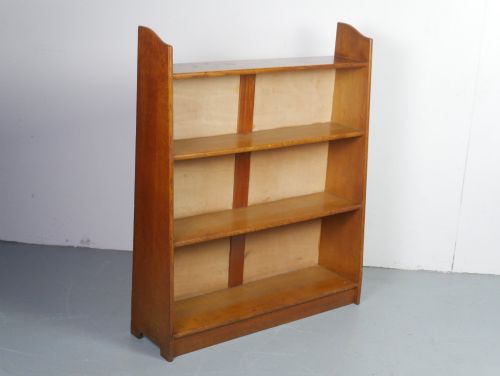
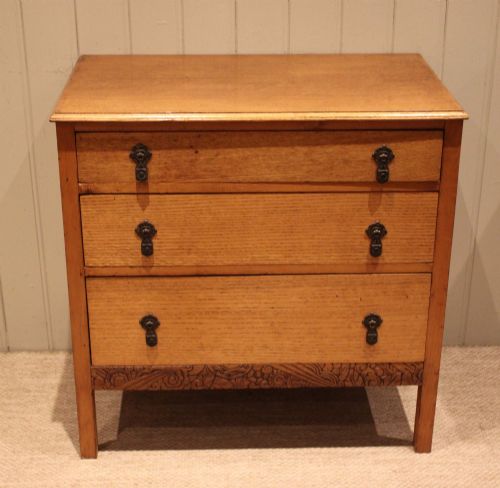
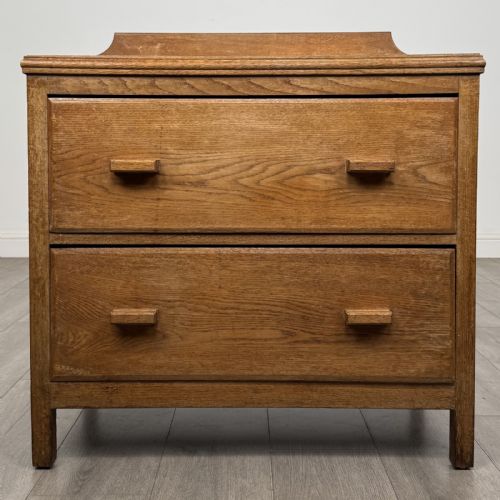
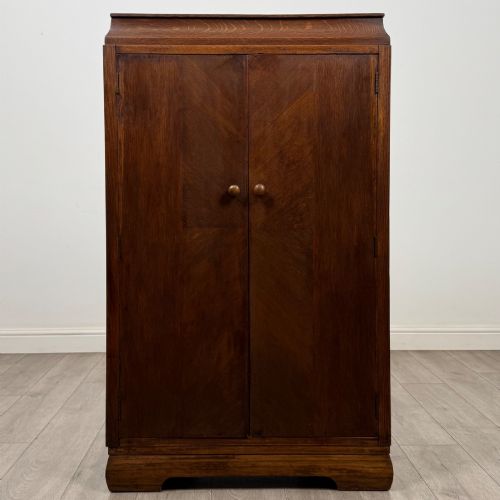
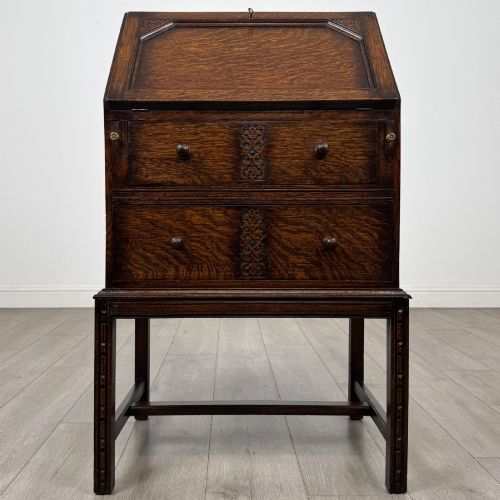
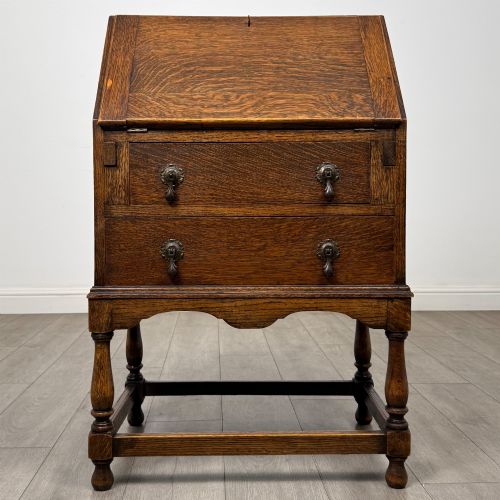
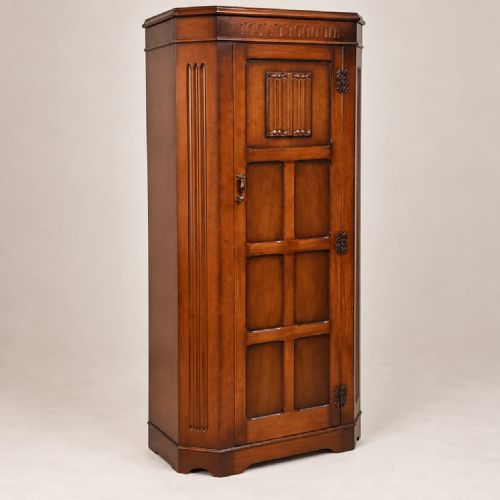
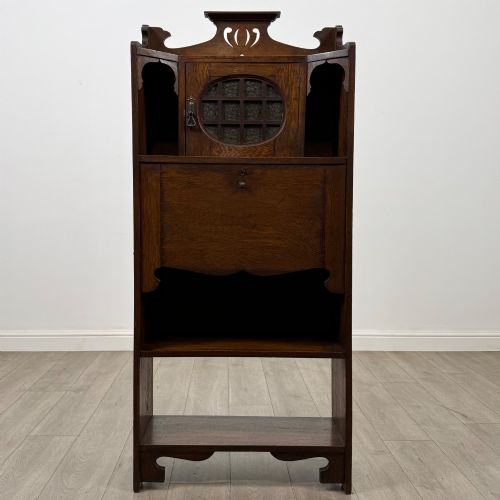
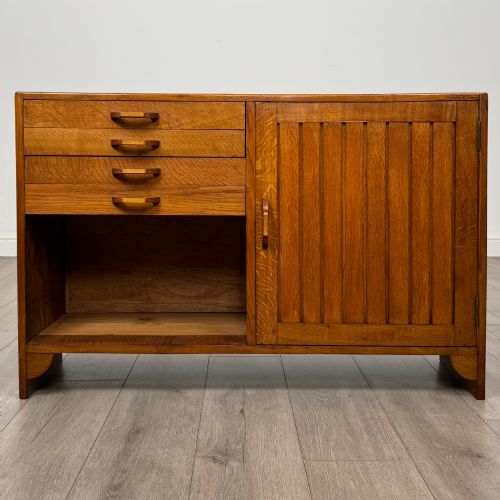
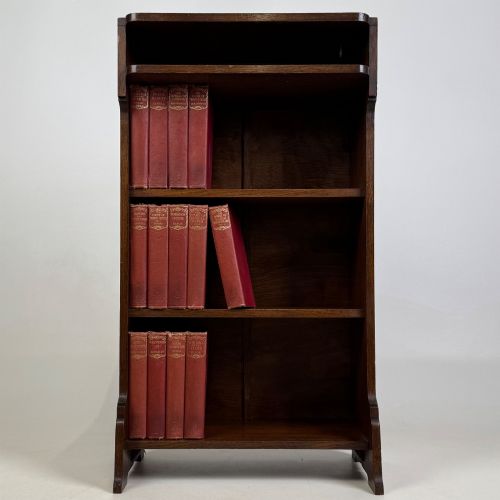
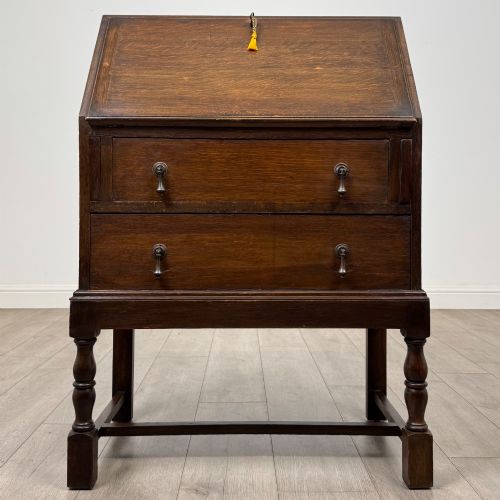
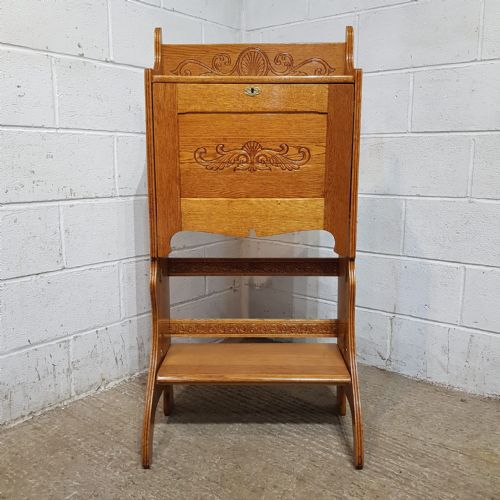
A compact oak cabinet spans several forms across this selection, most commonly appearing as small writing bureaux, narrow bookcases, and diminutive wardrobes. These pieces emerge from periods ranging from the Victorian era and the Edwardian years through to the 1920s and 1930s.
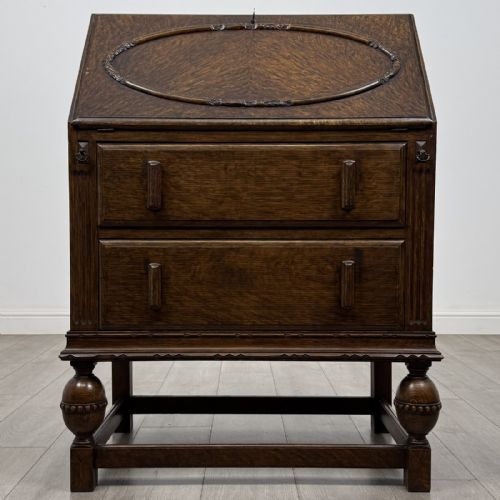
Buyers seeking a compact oak cabinet often encounter variations like Arts and Crafts student pieces, Jacobean revival styles with carved details, and Art Deco designs. Bureau bookcases combine a writing flap with upper shelving, while open bookcases and small sideboards offer simpler display and storage.
Materials and construction
Makers utilised solid oak and oak veneer over structural timbers, pairing the wood with brass handles, iron hardware, and occasional glass panels for glazed doors. Leather inserts sometimes provide a writing surface on desks and bureaux.
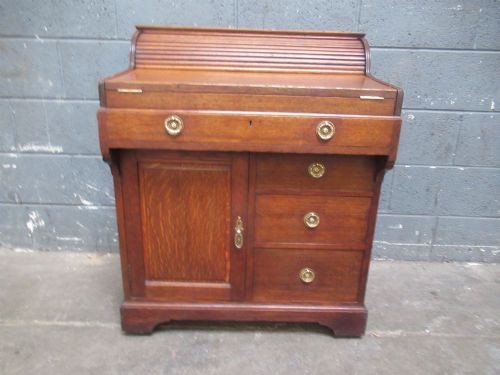
Construction techniques include raised galleries, linenfold carving, inlaid details, and tambour doors. Fitted interiors organise small spaces with pigeonholes and small drawers behind folding writing flaps.
Compact Oak Cabinet Retail Price Guide 2026
Typical asking prices for compact oak cabinet among the pieces listed under this phrase on Sellingantiques today, from the lower quarter to the upper quarter. They describe what is for sale here now, not the wider market.
Listings feature oak material paired with brass, glass, iron, and leather across Edwardian, Art Deco, Arts and Crafts, and Victorian styles.
Assessing quality and finish
Quality rests on the selection of figured or golden oak grain, the crispness of carved details like Green Man motifs or edge moulding, and the integrity of fitted writing interiors. The balance of proportions in small-scale furniture dictates visual success.
Maker signatures and labels from firms such as E Gomme, Crown Furniture, Ercol, Larkin, Harris Lebus, and Bryn Mawr separate standard workshops from notable producers. Thoughtful integration of hardware, such as brass fittings and glass, elevates the piece.
E Gomme·Crown Furniture·Ercol·Larkin·Harris Lebus·Bryn Mawr
The Compact Oak Cabinet Glossary
- Bureau bookcase
- A combination furniture form featuring a sloping writing flap that folds down above shelving enclosed by glass or wooden doors. This dual-purpose piece saves floor space.
- Linenfold
- A style of wood carving that imitates folded parchment or linen, frequently seen on panels from the Edwardian period. It adds texture to cabinet doors.
- Tambour door
- A flexible door made of narrow strips of wood attached to canvas or leather backing, allowing it to slide along a track around a curve. This mechanism suits small sideboards.
- Raised gallery
- A low decorative railing or rim fitted to the top surface of a chest or desk. It prevents small items from rolling off the edge.
- Pollard oak
- Timber taken from trees that have been pollarded, producing a distinctive clustered, nubbed grain pattern. It appears on mid-19th-century pieces.
Compact Oak Cabinet: Frequently Asked Questions
What rooms suit a compact oak cabinet?
These small pieces fit neatly into home offices, hallways, and bedrooms where floor space is limited. Their modest footprints provide storage without overwhelming a domestic interior.
Bookcases and bureaux offer practical shelving and writing surfaces for daily use in smaller apartments.
How do I maintain oak furniture?
Keep oak pieces away from direct heat sources and strong sunlight to prevent the timber from drying out or splitting. Dust regularly with a soft, dry cloth.
Occasional application of natural wax preserves the grain and nourishes the solid wood or veneer finish.
How do I date an Edwardian oak piece?
Edwardian oak furniture, produced between roughly 1901 and 1910, often displays stylistic links to the Arts and Crafts movement or Jacobean revival. Look for lighter golden oak tones alongside simple carved edges and brass hardware.
Interior construction methods, such as machine-cut dovetails and maker labels, also help pinpoint the manufacturing era.