




Compact Georgian Bureau Desk
A compact georgian bureau desk is a scaled-down writing cabinet offering concealed storage and a fitted interior for modest domestic spaces.
Compact Georgian Bureau Desk
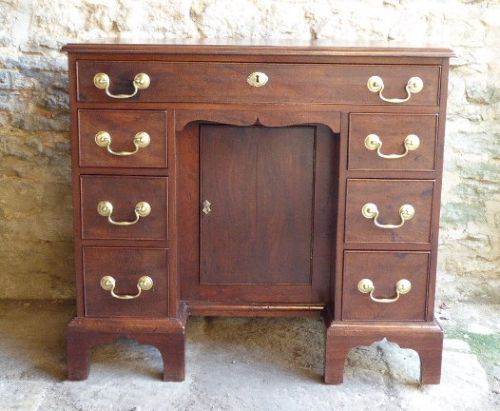
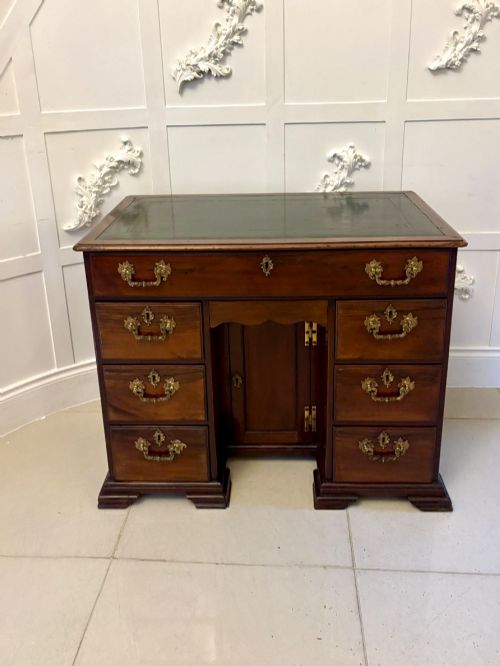
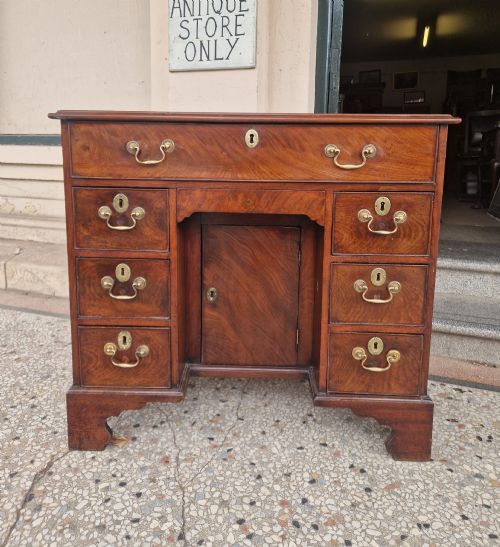
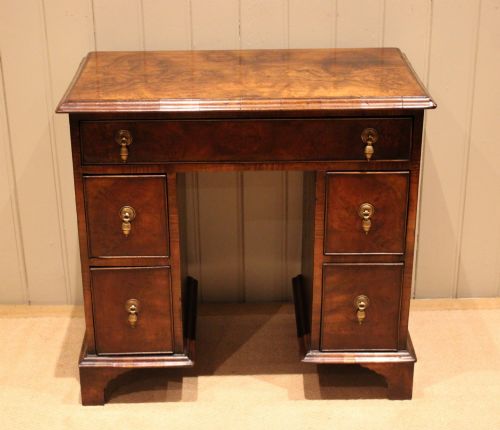
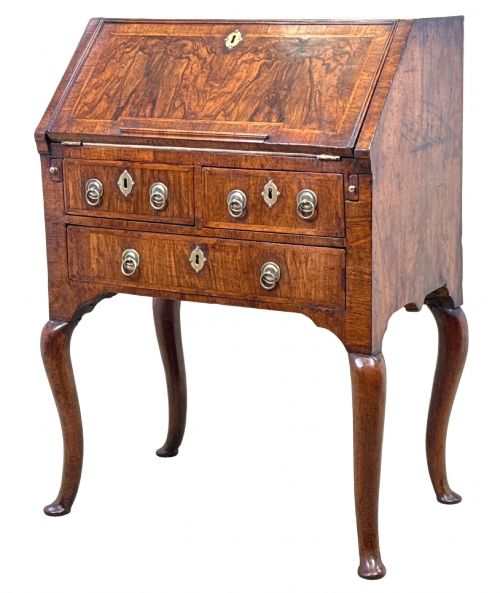
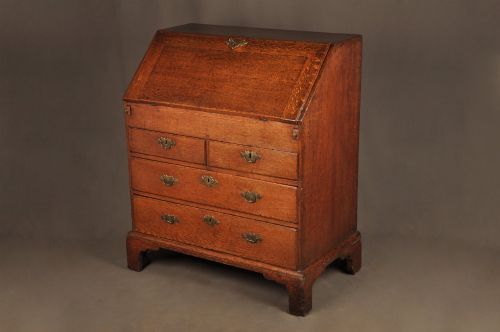
A compact georgian bureau desk typically takes the form of a drop-front writing cabinet or a kneehole desk made during the eighteenth or early nineteenth century. These pieces combine a writing surface with small drawers and pigeonholes, designed specifically for domestic correspondence and record keeping in smaller rooms.
The selection here includes walnut, oak, and mahogany variants spanning the Georgian, Regency, and Queen Anne periods, alongside later revival pieces. Buyers frequently encounter smaller proportions, such as narrow kneehole desks and miniature bureaux on stands or legs, which suit contemporary room sizes.
Materials and construction
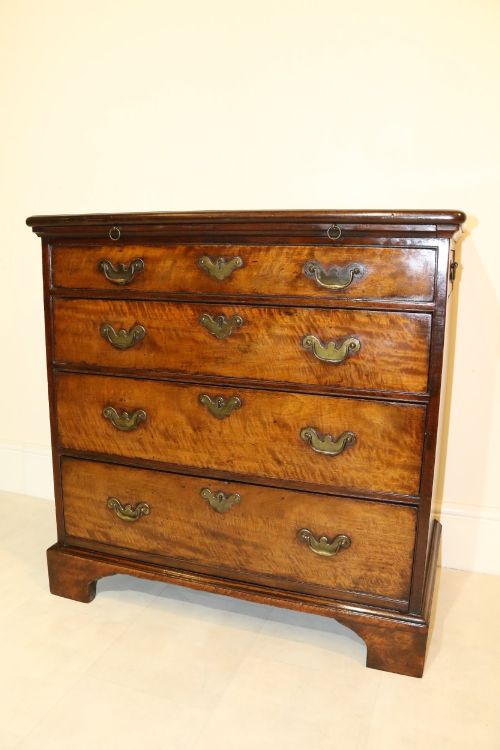
Cabinet makers constructed these desks using solid timbers like mahogany, oak, and walnut, frequently applying figured veneers such as burr walnut or satinwood to the writing flaps and drawer fronts. Brass handles, escutcheons, and hinges secure the fall fronts and drawers, while leather inserts occasionally line the writing surfaces.
Joinery techniques involve closely fitted drawer linings, dovetail joints, and panelled construction to maintain structural integrity in smaller frames. Interior compartments incorporate secret drawers, pigeonholes, and small cupboards arranged behind the main writing flap.
Periods represented across the selection range from the early eighteenth century through the Georgian and Regency eras into later revivals.
Craftsmanship and preservation
The standard of a compact georgian bureau desk depends on the selection of timber figure, the crispness of the cabinet work, and the survival of original brass hardware and key mechanisms. Finer examples display meticulous attention to internal drawer construction and symmetrical grain matching across the fall front.
Proportion and scale dictate much of the desirability, with genuinely diminutive pieces commanding attention for their balanced dimensions. Alterations to feet, handles, or interior fittings distinguish unaltered period pieces from heavily restored or later revival examples.
Gillows of Lancaster
The Compact Georgian Bureau Desk Glossary
- Bureau
- A writing desk featuring a sloping fall-front that opens to reveal internal compartments and drawers. This form became central to domestic writing furniture during the eighteenth century.
- Kneehole desk
- A compact desk featuring a central recess for the user's legs, flanked by pedestals of small drawers. They offer substantial storage within a constrained footprint.
- Fall front
- The hinged writing flap on a bureau that drops down to provide a horizontal working surface. It conceals the pigeonholes and small drawers inside.
- Secretaire bookcase
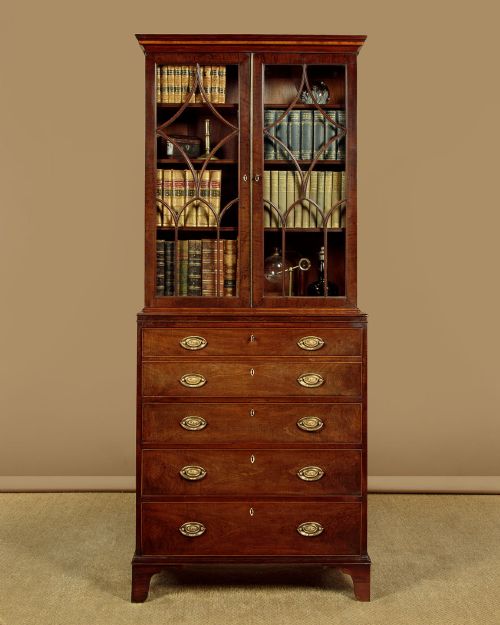
- A tall cabinet combining a upper bookcase section with a desk drawer or fall-front bureau compartment below. These dual-purpose pieces maximise vertical storage.
- Dovetail
- A joint formed by interlocking wedge-shaped fingers, used extensively in period drawer construction. Cleanly cut dovetails indicate careful cabinet work.
Compact Georgian Bureau Desk: Frequently Asked Questions
How do I identify a genuine period piece?
Examine the timber shrinkage, interior secondary woods, and hand-cut dovetails within the drawer construction. Period surfaces show natural ageing and wear patterns consistent with centuries of domestic use.
Compare the proportions and hardware fixings against known examples from the same century. Consistency in the construction methods offers reliable clues to authenticity.
Where were these desks used in the home?
These small desks served in private chambers, parlours, and dressing rooms where larger library furniture proved impractical. They provided a secure private space for correspondence and personal accounts.
The modest footprint allowed them to sit against bedroom or drawing room walls without dominating the floor space.
What is a bureau on stand?
A bureau on stand elevates the writing cabinet upon a separate base with legs, lightening the visual weight of the piece. This form frequently appears in early eighteenth-century walnut and oak.
The raised legs provide an airy silhouette while retaining the fitted interior compartments of a standard writing desk.
How do I care for antique wood surfaces?
Maintain timber finishes by avoiding direct sunlight and excessive temperature fluctuations that cause wood to dry and split. Regular dusting with a soft dry cloth protects the historic polish.
Apply traditional wax sparingly when the surface appears dry, buffing gently to preserve the natural lustre developed over centuries.