


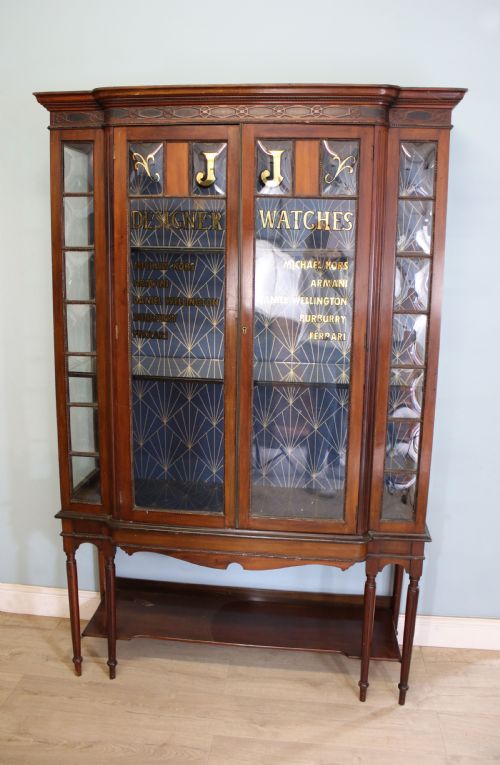
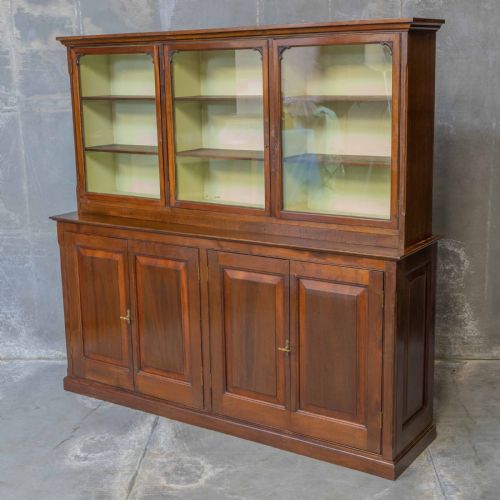
Commercial Shop Bookcase
These commercial shop bookcase examples are robust trade fixtures built for display and storage, offering authentic mercantile character for the home.
Commercial Shop Bookcase
A commercial shop bookcase is a utilitarian trade fixture designed to showcase and store goods in a retail environment. Buyers examining this category will find robust pieces originating from the Victorian, Edwardian, and 1930s periods.
The selection here encompasses glazed bookcases, haberdashery cabinets, and display units originally made for commercial premises. These functional items frequently combine shelving with glass doors to protect merchandise while maintaining visibility for customers.
Originating from the nineteenth and early twentieth centuries, these units reflect the sturdy construction demands of historic shops. Specimens range from light oak and mahogany frames to specialised trade fittings bearing historic sign-writing.
Materials and construction
Makers utilised dense timbers such as mahogany, oak, and American walnut to build these resilient commercial fixtures. These hard-wearing woods provided the structural integrity required for daily trade use over decades.
Glazing and brass hardware are integral components, featuring fully glazed doors and brass fittings designed for heavy retail handling. Selected pieces incorporate marble elements and painted timber surfaces tailored to specific shop interiors.
Commercial Shop Bookcase Retail Price Guide 2026
Typical asking prices for commercial shop bookcase among the pieces listed under this phrase on Sellingantiques today, from the lower quarter to the upper quarter. They describe what is for sale here now, not the wider market.
One mahogany cabinet carries later hand sign-writing for a gunsmith, whispering tales of old high-street trade.
Evaluating quality and character
Quality in a commercial shop bookcase rests on the selection of timber and the integrity of the original joinery. Solid mahogany and oak examples exhibit greater durability and finish than lesser timber variants.
Historical alterations, such as later hand sign-writing, add specific provenance and trade context to individual cabinets. The clarity of the glass and the preservation of original brass hardware further distinguish superior examples.
The Commercial Shop Bookcase Glossary
- Haberdashery cabinet
- A mercantile fixture originally utilised for storing small clothing accessories, typically featuring multiple shallow drawers or glass-fronted compartments. These units are prized by collectors for their compartmentalised storage.
- Vitrine
- A glass-fronted display cabinet or bookcase designed specifically for showing valuables or stock. The French Louis XV style variations introduce curved woodwork and ornate framing.
- Glazed bookcase
- A shelving unit enclosed by glass doors that protects books or merchandise from dust. Such fixtures formed the backbone of late Victorian and Edwardian shop interiors.
- Shop fitting
- Custom-built furniture and architectural elements designed for commercial retail spaces. These pieces were constructed to withstand heavy daily use by merchants and their customers.
Commercial Shop Bookcase: Frequently Asked Questions
What is a commercial shop bookcase?
A commercial shop bookcase is a heavy-duty storage and display unit originally manufactured for use in nineteenth or early twentieth-century retail environments.
These fixtures were built by trade craftsmen to showcase merchandise securely while enduring constant daily customer interaction.
How were these bookcases used historically?
Merchants utilised these cabinets to display books, dry goods, and specialised wares in shops, keeping items visible yet protected behind glass doors.
Over time, many of these utilitarian fixtures migrated from commercial premises into domestic interiors for storage and display.
How do I identify Victorian and Edwardian periods?
Victorian examples often display dense mahogany construction, heavy mouldings, and robust commercial proportions associated with nineteenth-century trade.
Edwardian pieces tend to present lighter timber treatments, such as oak and burr walnut, reflecting evolving interior tastes up to the 1930s.
How do I live with a shop bookcase?
Integrating a commercial trade fixture into a home requires sufficient wall space to accommodate its robust proportions and generous depth.
These cabinets serve practical roles as bookcases or display units, bringing distinct mercantile history and functional shelving to modern rooms.