

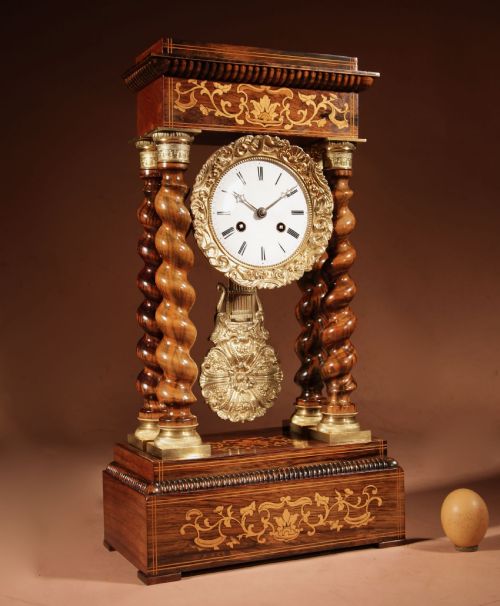
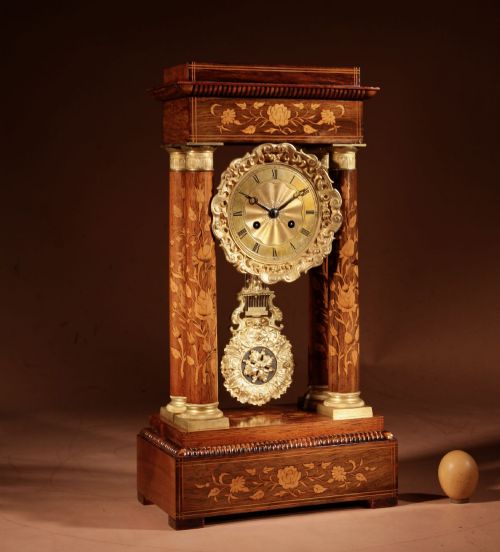
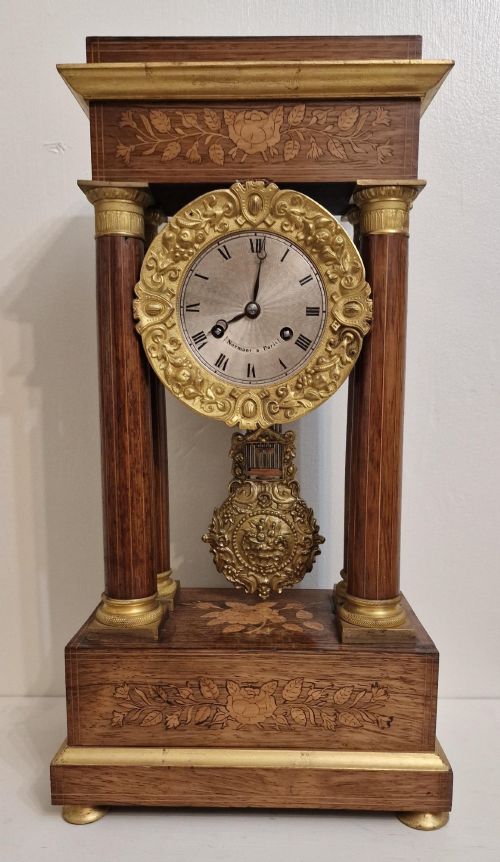
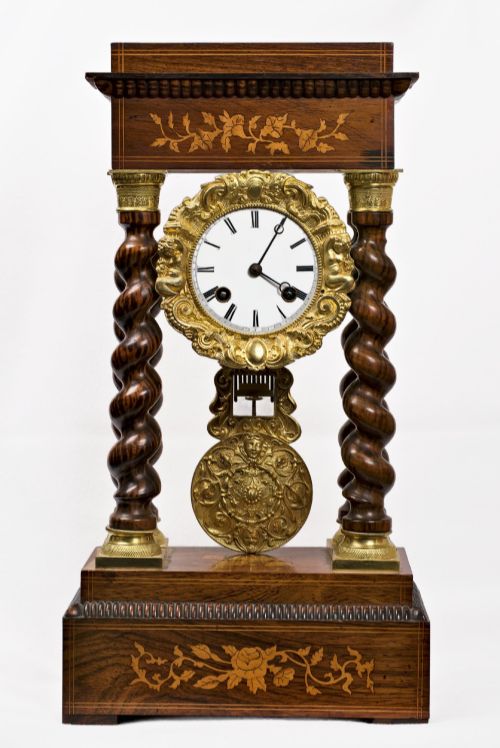
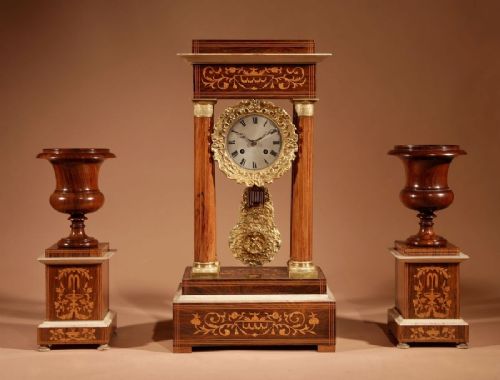
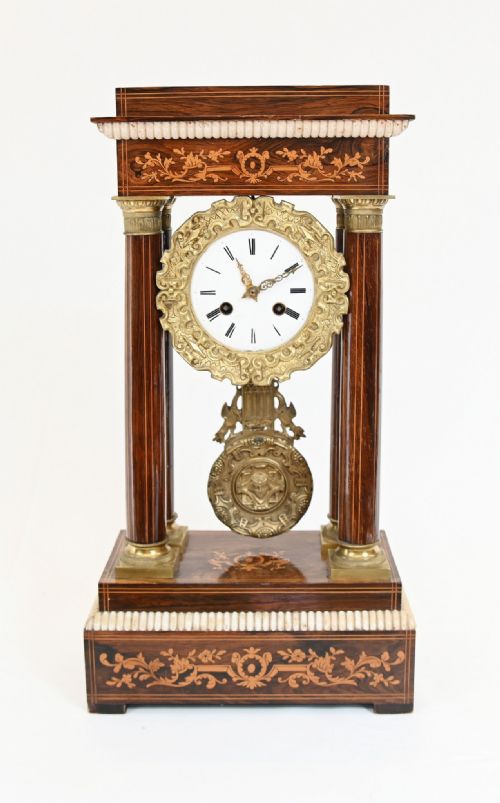
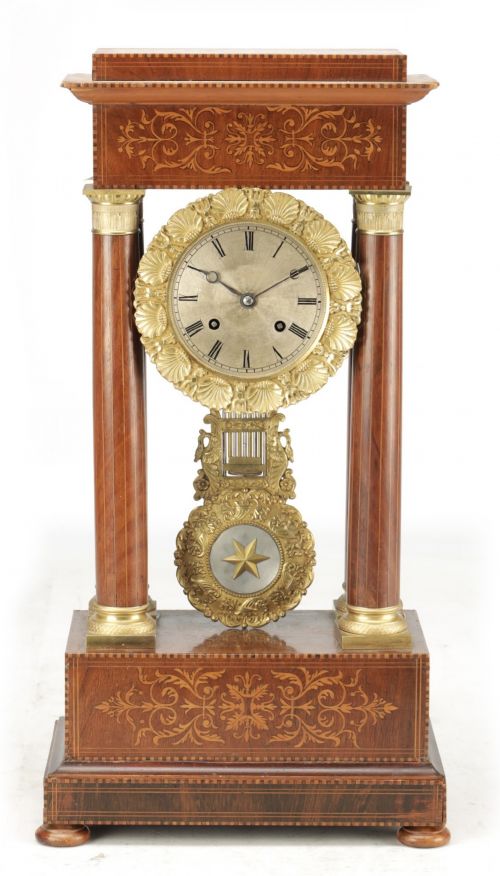
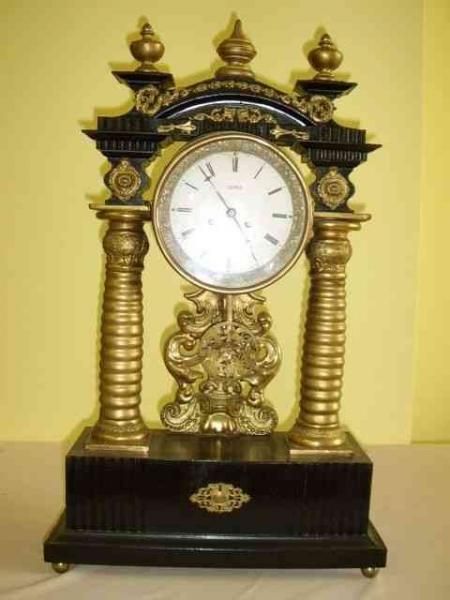
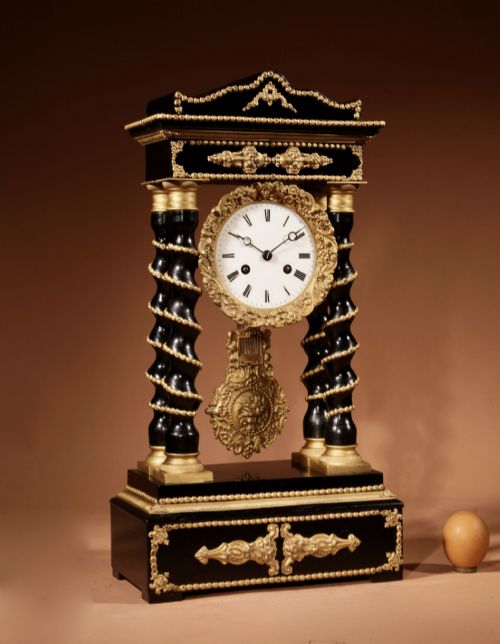


Column Portico Mantel Clock
A column portico mantel clock brings striking architectural symmetry to a room, framing a central dial with classical pillars.
Column Portico Mantel Clock
A column portico mantel clock is an architectural timepiece defined by vertical supports holding a lintel above a central pendulum chamber. The style emerged from neoclassical design and found distinct expression in French workshops during the eighteenth and nineteenth centuries.
The pieces on this page span the 18th century, the Victorian era, and periods such as Charles X, Louis Philippe, and Napoleon III. Collectors encounter forms ranging from large architectural declarations to miniature desk clocks.
Wooden cases utilise rosewood, mahogany, and ebonised wood, frequently decorated with marquetry, inlay, or satinwood. Other examples employ marble, alabaster, or gilt bronze to create a monumental presence on a mantelpiece.
Materials and construction
Cabinetmakers constructed the wooden frames of these clocks using rosewood, mahogany, or ebonised wood, often incorporating contrasting stringing or marquetry in lemon wood and satinwood. Ormolu, gilt bronze, and brass mounts were cast and chased to highlight the classical capitals and bases of the columns.
Many examples integrate glass domes to protect the delicate movement and dial assembly from dust and damage. Dials are frequently executed in enamel or silvered metal, paired with finely worked metallic hands.
Column Portico Mantel Clock Retail Price Guide 2026
Typical asking prices for column portico mantel clock among the pieces listed under this phrase on Sellingantiques today, from the lower quarter to the upper quarter. They describe what is for sale here now, not the wider market.
Some nineteenth-century makers concealed the mechanism entirely within a mystery clock design, leaving the pendulum swinging without any visible connection to the movement.
Indicators of quality
The refinement of the ormolu chasing and the crispness of the gilt bronze mounts separate standard production from superior work. Superior makers ensured that inlay work on rosewood or mahogany cases remained perfectly flush and symmetrical.
Georg Adam Scheid·Breguet
The Column Portico Mantel Clock Glossary
- Portico clock
- A timepiece featuring an architectural case supported by pillars or columns on either side of the pendulum. This form draws directly on classical building design.
- Ormolu
- Gilded bronze produced by applying a mercury and gold amalgam to a bronze base and heating it. This technique creates a durable, rich golden surface finish.
- Garniture
- A set consisting of a clock flanked by matching decorative objects such as urns or vases designed to sit together on a mantelpiece. These matched suites complete a decorative scheme.
- Fusee
- A conical pulley used in clock movements to maintain an even drive force as the mainspring unwinds. This mechanism improves timekeeping accuracy across the power reserve.
- Ebonised wood
- Timber treated with a dark finish to imitate expensive ebony. Makers used this process to create sharp contrast against gilt bronze or ormolu mounts.
Column Portico Mantel Clock: Frequently Asked Questions
What is a portico clock?
A portico clock is a distinct mantel clock design characterised by a raised superstructure supported on columns, framing a central pendulum visible between them.
Originating in the neoclassical period, these clocks rely on architectural symmetry and classical proportions for their visual impact.
How do I identify a Charles X portico clock?
Charles X examples typically date from the 1820s and early 1830s, displaying clean architectural lines with light wood veneers or bright ormolu mounts. They often feature refined floral marquetry or contrasting fruitwood inlays.
The dials on these pieces are frequently framed by classical bezels, and the overall aesthetic reflects the French transition away from heavy empire styles towards lighter domestic interiors.
What are glass domes used for?
Glass domes protect delicate ormolu mounts, exposed pendulums, and paper or enamel dials from dust and accidental impacts. They were frequently supplied with higher-end mantel clocks to preserve the finish.
Many surviving pieces retain their original blown glass covers and wooden bases, which adds significantly to their completeness.
Where should I place a portico clock?
These clocks suit prominent locations such as a mantelpiece, a console table, or a deep shelf where their vertical architecture can be appreciated from the front and sides. Stability is essential, as the pendulum requires a level surface to keep time accurately.
Direct sunlight and damp environments should be avoided to protect sensitive wooden veneers and gilt metal finishes.