

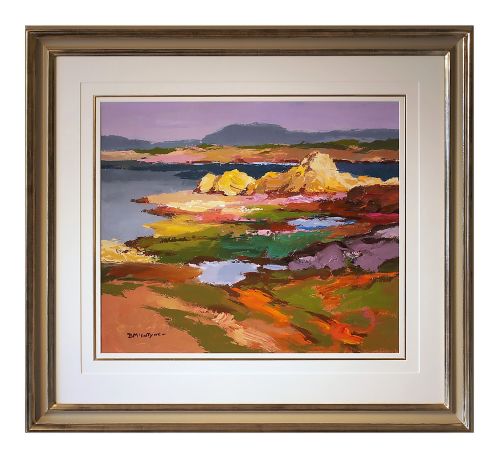
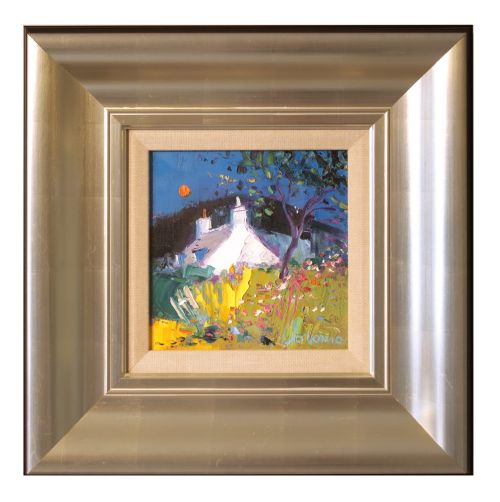
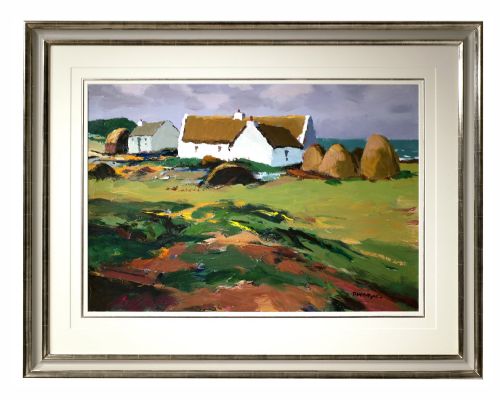


Colourist Oil Painting
A colourist oil painting brings intense pigment and vibrant brushwork to a wall, capturing light through audacious palettes.
Colourist Oil Painting
A colourist oil painting relies on bold, non-naturalistic hues to evoke the emotional resonance of a scene rather than its literal appearance. When searching for a colourist oil painting, buyers encounter works spanning from the late nineteenth century through to the late twentieth century.
The selections on this page encompass Scottish Expressionism, Post-Impressionism, and Modern British styles, capturing subjects ranging from sun-drenched Mediterranean street scenes to abstracted still lifes and rural landscapes.
Most pieces date from the mid-twentieth century, including works executed on canvas and board. These paintings prioritize luminous colour relationships and vigorous application over academic precision.
Materials and technique
Artists apply oil paint directly to canvas or wooden board, occasionally incorporating metallic leaf to catch the light. The pigment is often laid down in thick, visible strokes that give texture and physical presence to the surface.
Support materials range from traditional stretched canvas to sturdy boards, each holding heavy layers of oil paint differently. Some works are framed behind glass, preserving the pigment and the delicate textures of the brushwork.
Colourist Oil Painting Retail Price Guide 2026
Typical asking prices for colourist oil painting among the pieces listed under this phrase on Sellingantiques today, from the lower quarter to the upper quarter. They describe what is for sale here now, not the wider market.
Listings feature oil paint, canvas, and board across periods from 1890 through the mid-twentieth century.
What separates the best pieces
Quality rests upon the boldness of the chromatic harmony and the confidence of the brushwork. The finest examples demonstrate a total control over discordant hues, making intense pigments vibrate together without losing structural coherence.
The strength of the composition underpins the colour, ensuring that abstraction or expressive distortion serves the internal rhythm of the image. Greater works reveal a complete synthesis between the physical medium and the light it describes.
Donald McIntyre·John Lowrie Morrison·Henri Ottman
The Colourist Oil Painting Glossary
- Colourist
- An artist who uses colour as the primary element to convey emotion, light, and atmosphere rather than relying on strict optical realism. This approach defines the strongest works in the collection.
- Post-Impressionism
- A late nineteenth-century movement that rejected naturalistic depiction in favour of symbolic colours and heavier brushwork. It laid the groundwork for twentieth-century expressionist styles.
- Scottish Expressionism
- A twentieth-century movement known for raw emotional intensity and heavy impasto. It heavily influences many of the northern works found in these listings.
- Impasto
- The technique of laying paint on canvas in very thick layers that stand out from the surface. This allows the physical mark of the brush to remain visible to the viewer.
- Board
- A rigid wooden support used by artists in place of stretched canvas. It provides a firm foundation for energetic application of oil paint.
Colourist Oil Painting: Frequently Asked Questions
What defines a colourist oil painting?
A colourist oil painting prioritises expressive, saturated hues over literal colour representation to capture the essence of light and place.
These works draw on movements like Post-Impressionism and Modern British art to create vibrant visual experiences.
How should I hang these paintings?
Choose a wall with balanced ambient light that allows the heavy pigments and brushwork to read clearly without harsh glare.
Keep them away from direct sunlight to protect the integrity of the oil paints over time.
What surfaces are used for these works?
Artists typically apply oil paint to traditional stretched canvas or sturdy wooden boards, sometimes framing the finished piece behind glass.
Each support interacts differently with thick applications of pigment and impasto.
How do I spot Scottish Expressionism?
Scottish Expressionism is marked by thick impasto, raw emotional energy, and a bold handling of northern light and landscape.
It forms a distinct subset within twentieth-century modernist painting.