




Colourful Original Artwork
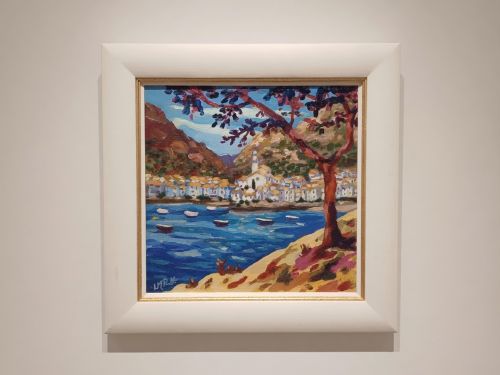
These pieces of colourful original artwork bring direct, painted pigment to your walls, offering a distinct visual depth that prints simply cannot match.
Colourful Original Artwork
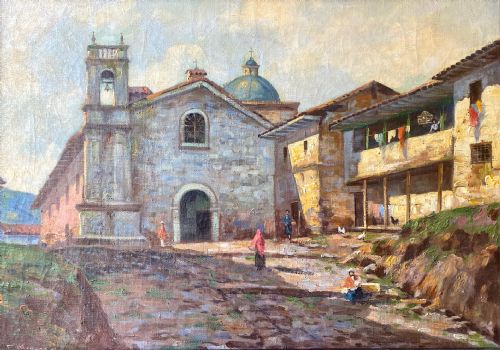
When you search for colourful original artwork, you encounter unique paintings executed by hand on various supports rather than mass-produced reproductions. These works span from the late nineteenth century through to the later decades of the twentieth century, capturing diverse movements across Britain, France, and Latin America.
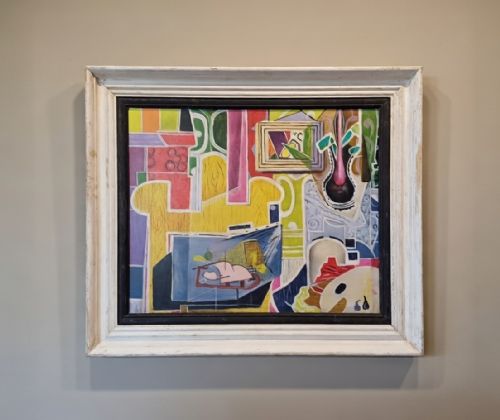
You are most likely to meet mid-century canvases and watercolours on this page, reflecting strong modernist, impressionist, and surrealist impulses. Painters utilised oil paint, gouache, and watercolour to create dynamic street scenes, abstracts, and figurative studies.
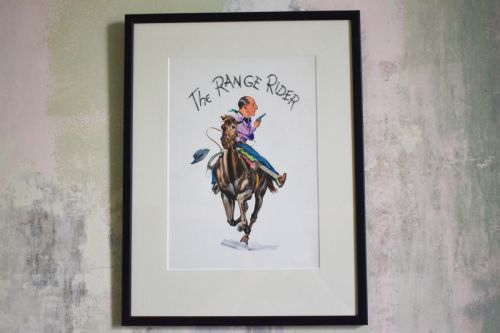
The selections range from intimate cartoon watercolours and botanical still lifes to large-scale cubist compositions and vibrant op art geometries. Each item represents a singular artistic vision preserved on canvas, board, or paper.
How they were made
Artists applied oil paint predominantly to stretched canvas or wooden board, building rich textures and deep pigment layers that hold their intensity over decades. Watercolours and gouache were worked onto paper, sometimes incorporating collage elements for added dimension.
Supports were prepared traditionally, with oils requiring primed canvases or rigid boards to support heavy impasto and fluid glazes alike. Framing often accompanied the finished work, protecting delicate paper edges and securing stretched canvas compositions.
The listings span from the late nineteenth century into the late twentieth century, with a strong representation of mid-century oil paintings and watercolours.
What varies in quality
The strength of a composition and the confidence of the brushwork dictate the standing of a piece within this range. Works demonstrating assured handling of pigment and balanced spatial arrangement distinguish themselves immediately from hesitant student exercises.
The preservation of the original support and the integrity of the paint layer determine the enduring merit of the artwork. Clean surfaces free from heavy restoration and stable pigments retain the visual energy intended by the painter.
Henri Vincent-Anglade·Florence Hess·Federico Andreotti·Markey Robinson·Amy Reeve-Fowkes
The Colourful Original Artwork Glossary
- Impasto
- Paint applied thickly to a canvas or board, standing out in relief from the plane. This technique gives a tangible, sculptural quality to the surface of the work.
- Gouache
- An opaque water-based paint that dries to a matte finish with high colour saturation. It allows artists to achieve flat, vibrant areas of tone.
- Op Art
- A style of visual art that uses optical illusions through geometric patterns and contrasting colours. These compositions create a sense of movement or hidden vibration on a flat surface.
- Post-Impressionism
- An art movement extending roughly from the late nineteenth century that rejected naturalistic depiction in favour of expressive colours and symbolic forms. Painters focused on structural brushwork rather than optical realism.
Colourful Original Artwork: Frequently Asked Questions
What periods do these paintings cover?
The selections span from late nineteenth-century portraiture through to works created in the nineteen-sixties and beyond.
Mid-century modernism and post-impressionist pieces form a significant portion of the available selection.
Are these works painted on canvas?
Many examples are executed in oil paint upon stretched canvas or wooden boards.
Other works utilise paper supports for delicate watercolours, gouaches, and mixed media collages.
How should I hang original art?
Position paintings away from direct sunlight and excessive humidity to protect the integrity of the pigments and supports.
Ensure secure fixings matched to the weight of the frame and the specific wall construction of your room.
How do I identify a post-impressionist piece?
Look for expressive brushstrokes, vibrant non-naturalistic colour choices, and a focus on structural form over strict realism.
Such works often display a deliberate departure from traditional perspective to emphasise emotional resonance.