





Coloured Sporting Engraving
A coloured sporting engraving brings the robust energy of the field and the tavern directly to the wall.
Coloured Sporting Engraving
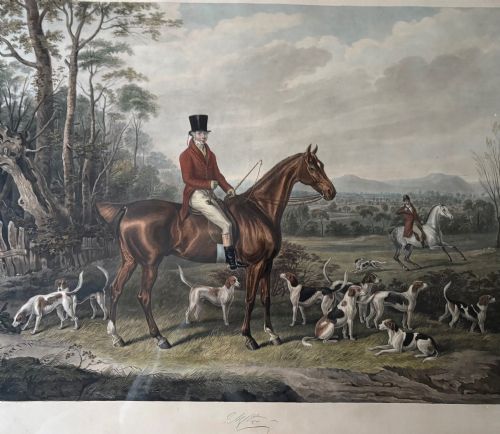
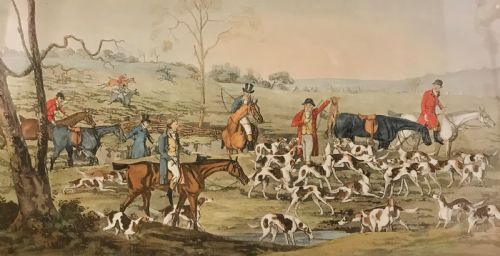
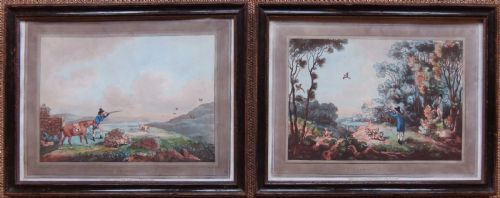
A coloured sporting engraving captures the dynamic pursuits and pastimes of the eighteenth and nineteenth centuries, from fox hunting and shooting to traditional pastimes such as rackets, skittles, and football. These works record a vigorous visual history of leisure and sport, framed for display as wall art.
Most examples found here date from the Georgian and Regency periods through the nineteenth century, encompassing stipple engravings, aquatints, and lithographs. They frequently appear as framed art prints, often gathered in sets that trace a sequence of action or depict multiple sporting scenes.
Buyers encounter these prints either as individual framed pieces or in matched sets of four, preserved behind glass within wooden or gilt wood frames. The imagery often derives from renowned artists of the era such as Henry Alken, Samuel Howitt, and Francis Calcroft Turner.
How they were made
Makers produced these works by first carving the design onto a plate for printing on paper with ink. Artisans then applied watercolour by hand to the printed lines, bringing depth and vibrancy to the scenes.
Framing typically involved wood, sometimes finished with gold leaf or gilt wood, paired with protective glass to shield the delicate paper and ink from environmental wear.
Coloured Sporting Engraving Retail Price Guide 2026
Typical asking prices for coloured sporting engraving among the pieces listed under this phrase on Sellingantiques today, from the lower quarter to the upper quarter. They describe what is for sale here now, not the wider market.
Some sporting prints capture unusual pastimes like jumping in sacks alongside traditional fox hunting.
What varies in quality
The precision of the original plate engraving and the subtlety of the subsequent hand colouring determine the visual fidelity of the print. Stronger impressions reveal sharper lines and more deliberate tonal control.
The preservation of the paper and the integrity of the framing materials also define the grade of a piece. Original frames with period gilding sit at a distinct advantage compared to later replacements.
Charles Hunt·Francis Calcroft Turner·William Bunbury·Sam Howitt
The Coloured Sporting Engraving Glossary
- Engraving
- A printmaking technique where an artist cuts lines into a metal plate to hold ink for transfer onto paper. This process allows for remarkable detail in early sporting prints.
- Aquatint
- A printmaking method that produces tonal effects resembling watercolour washes by using acid to bite the copper plate. It forms the foundation of many coloured sporting plates.
- Stipple engraving
- A method of creating images on a metal plate through a dense pattern of dots rather than continuous lines. This technique renders soft facial expressions and natural textures effectively.
- Hand coloured
- The manual application of watercolour pigments to a monochrome print after the impression is struck. This adds distinct character to each individual sheet.
- Lithograph
- A planographic printing method based on the repulsion of oil and water on a flat stone surface. It gained popularity during the nineteenth century for reproducing illustrative art.
Coloured Sporting Engraving: Frequently Asked Questions
Where were sporting prints displayed?
These works hung primarily in country houses, libraries, and gentlemen's clubs where patrons celebrated equestrianism, hunting, and athletic pursuits. They served as both conversation pieces and testaments to the owner's sporting interests.
Today, they suit studies, hallways, and living rooms, bringing historic character and narrative depth to traditional interior schemes.
How do I care for framed prints?
Keep paper works out of direct sunlight to prevent the hand applied watercolours from fading over time. Stable room temperatures protect the paper and the wooden frames from warping.
Dust the frames gently and avoid hanging them in damp spaces such as unheated kitchens or bathrooms.
Are these prints original?
The selections date back to the eighteenth and nineteenth centuries, produced during the eras they depict. Artists such as Henry Alken and William Bunbury generated the original compositions.
Archive records and stylistic evidence distinguish these period impressions from modern reproductions.
Why do they come in sets?
Publishers originally issued sporting subjects in thematic series, such as four distinct stages of a hunt or various traditional pastimes. Keeping these sets together preserves their original narrative structure.
Collectors prize complete groupings because they offer a comprehensive view of a specific sport or artist's output.