


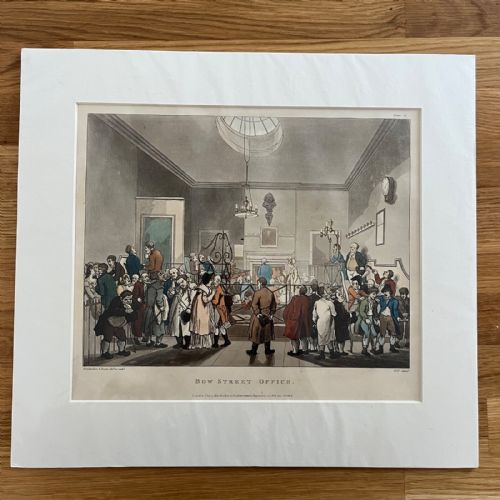
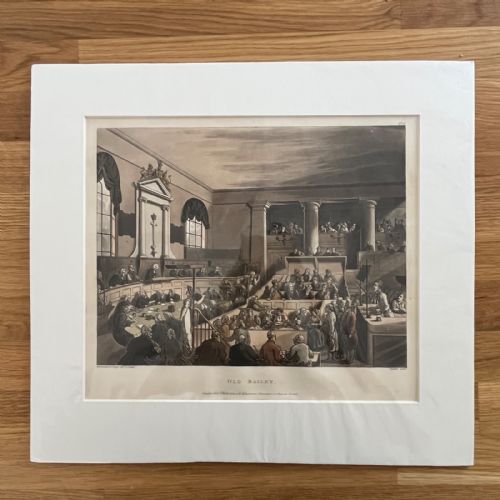
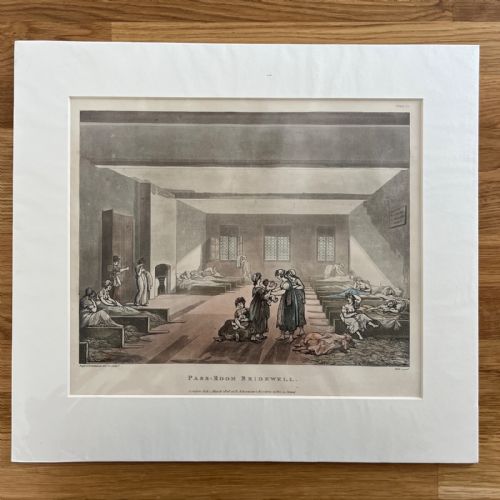
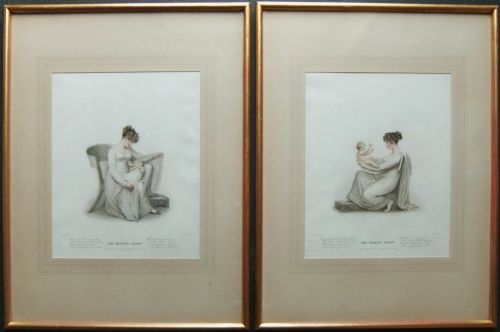
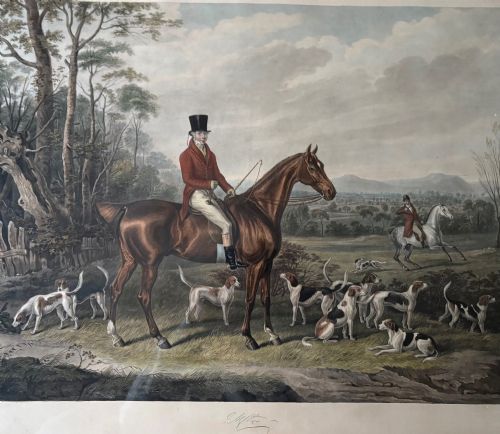



Colour Aquatint Print
A colour aquatint print brings tonal depth to walls, offering the soft washes of a watercolour paired with the clean line of an engraving.
Colour Aquatint Print
When searching for a colour aquatint print, a buyer encounters works dating from the Georgian and nineteenth-century periods, alongside occasional mid-century modernist plates. These graphic works typically take the form of framed wall art, hunting scenes, and portrait pairs.
The pieces on this page span several distinct stylistic movements, including Regency, Victorian, and Modern British examples. Forms range from individual framed prints to pairs and sets of four, executed on paper and housed in wood and gilt wood frames.
Origin points reflect British and French schools of production, capturing subjects from domestic scenes to sporting pastimes. The standard offering leans heavily towards nineteenth-century engravings and hand-coloured impressions.
How they were made
These works rely upon copper or steel plates etched with resin to produce tonal areas that resemble watercolour washes. Artisans then applied ink by hand to the surface, supplementing the printed matrix with careful brushwork.
Paper serves as the primary support, receiving the inked impression under the pressure of a rolling press. Many examples incorporate additional media, such as watercolour and ink highlights applied after the initial printing process.
Colour Aquatint Print Retail Price Guide 2026
Typical asking prices for colour aquatint print among the pieces listed under this phrase on Sellingantiques today, from the lower quarter to the upper quarter. They describe what is for sale here now, not the wider market.
The inventory includes framing materials in wood and gilt wood alongside original prints and wall art.
What varies in quality
The finesse of the initial etching and the precision of the hand-colouring establish the visual hierarchy among these plates. Early impressions retain crisp definition in the granular aquatint tones, whereas later printings show softened edges.
Presentation also defines the standing of a piece, particularly the preservation of the original paper sheet and the appropriateness of the surrounding frame, whether simple wood or gilded moulding.
Adam Buck·Joseph Constantime Stadler·Charles Hunt·Francis Calcroft Turner·Sam. Howitt·Deidre Borlase
The Colour Aquatint Print Glossary
- Aquatint
- A printmaking technique that uses acid-resistant resin on a metal plate to create tonal areas resembling watercolour washes. It achieves subtle gradients of light and shadow.
- Hand-coloured
- The practice of applying watercolour or ink by hand to a printed outline. This technique adds vibrant hues to monochrome engravings.
- Regency
- An English design period spanning the early nineteenth century. It is characterised by classical elegance and distinct sporting and domestic motifs.
- Etching
- A method of printmaking where lines are bitten into a metal plate with acid. The resulting grooves hold the ink for transfer onto paper.
Colour Aquatint Print: Frequently Asked Questions
What is a colour aquatint print?
A colour aquatint print is a graphic work created from an etched metal plate that produces granular, tonal areas resembling watercolour. Publishers often enhanced these impressions by applying additional pigment by hand.
Such works gained popularity during the Georgian and Victorian eras, frequently depicting sporting events, portraits, and genre scenes.
How do I care for framed prints?
Protect these works by hanging them away from direct sunlight, which causes fading to both paper supports and hand-applied watercolours. Maintaining stable indoor humidity prevents warping in the paper and the surrounding wooden frames.
Glazing helps shield the delicate ink and pigment layers from atmospheric pollutants and dust accumulation over time.
Are these prints original?
The inventory includes original period printings executed during the eighteenth and nineteenth centuries, as well as mid-century plates. Each piece utilises traditional printmaking methods appropriate to its stated era.
Signatures, plate marks, and paper characteristics help establish the period and origin of individual artworks.
How are sets identified?
Sets typically comprise matching pairs or groupings of four related subjects, such as hunting scenes or companion portraits. Uniform framing and consistent paper dimensions often indicate that the pieces were published and kept together as a series.
Matching titles or consecutive numbering within the plate margins further confirm their status as an original set.