



Colonial Timber Box
These colonial timber box examples are travel storage pieces in solid hardwoods with brass or iron mounts, built for officers and merchants on the move.
Colonial Timber Box
A colonial timber box encompasses utilitarian storage chests, blanket boxes, and smaller caskets designed during the eighteenth and nineteenth centuries. These items served British, Indian, Chinese, and Caribbean trade routes, moving possessions across oceans and land.
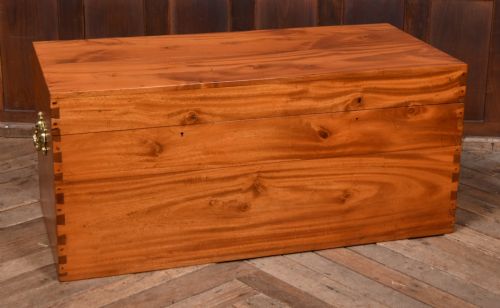
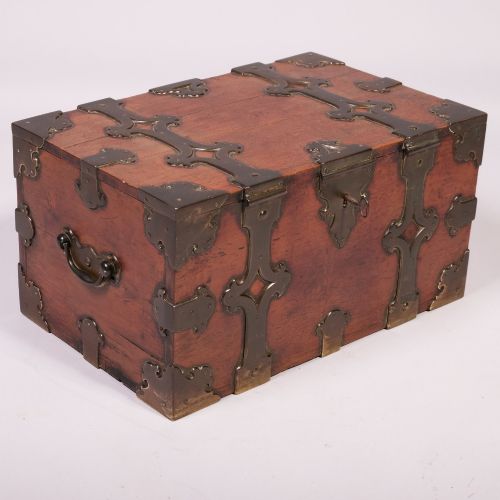
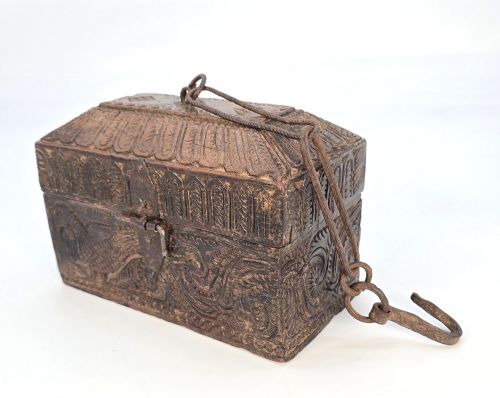
Camphor wood, teak, padouk, and hardwood dominate the selection, often fitted with brass banding or wrought iron straps to withstand rough handling. Styles range from plain campaign trunks to carved Anglo-Indian and Anglo-Chinese forms.
Buyers meet nineteenth-century camphor chests most frequently alongside teak and hardwood trunks. Smaller items like spice boxes and writing boxes also appear, reflecting domestic habits of merchants and officers abroad.
Materials and construction methods
Cabinetmakers utilised dense tropical timbers such as camphor wood, teak, padouk, satinwood, and general hardwood because these woods resisted humidity and insect damage during transport. Camphor wood added a distinct aroma that protected stored garments from moths.
Corner braces, binding strips, and flush handles in brass or wrought iron reinforced the structural joints of trunks and chests against the strains of travel. Dovetail and pegged joinery secured the box carcases without relying on modern adhesives.
Opening an eighteenth-century camphor chest often releases a sharp wave of herbal scent that has outlived the original owner by centuries.
Evaluating the range
Quality rests in the selection of timber, the weight of the metal mounts, and the crispness of any carved detailing. Solid satinwood or finely figured padouk sits at an upper tier, whilst plain utilitarian pine or mixed hardwoods occupy simpler functional levels.
Original brass fittings, flush-fitting drop handles, and intact iron straps distinguish superior boxes from those with later replacements. The presence of carved regimental arms or intricate Indian relief work elevates the character of individual pieces.
The Colonial Timber Box Glossary
- Campaign
- Furniture designed to dismantle or fold easily for military officers on active service. These items feature recessed brass handles and protective corner brackets.
- Camphor Wood
- A fragrant Asian timber utilised for storage chests to repel insects. The distinct scent remains detectable decades after manufacture.
- Padouk
- A heavy, durable tropical hardwood with a reddish-brown tone. Cabinetmakers selected this material for strong furniture destined for colonial service.
- Anglo-Indian
- A style combining British furniture forms with traditional Indian carving techniques and native timbers. These pieces were made in India for European residents.
- Ripple Moulded
- A decorative surface treatment featuring undulating wave patterns. This technique appeared on seventeenth and eighteenth-century European case furniture.
Colonial Timber Box: Frequently Asked Questions
What is a colonial timber box?
A colonial timber box is a transportable storage chest or smaller casket made overseas during the eighteenth and nineteenth centuries. They were built from durable tropical woods to protect possessions during long sea voyages.
These containers served merchants, soldiers, and administrators living away from Britain. Their sturdy construction allowed them to function as tables, desks, and storage units simultaneously.
Why use camphor wood?
Camphor wood naturally repels moths and silverfish, keeping stored textiles and uniforms safe in tropical climates. The wood also resists moisture and humidity.
Cabinetmakers valued its stability and light weight relative to its strength. The natural fragrance remains a key identifier for these chests today.
How to care for hardwood trunks?
Keep hardwood trunks away from direct heat sources and sudden temperature shifts to prevent timber splitting. A light application of natural wax preserves the finish without sealing the wood.
Metal mounts benefit from gentle cleaning to remove dust without disturbing the patina on the brass or iron surfaces. Regular airing helps maintain the interior condition of camphor chests.
Where were these boxes made?
These pieces originated in various colonial outposts and trading ports across India, China, the Caribbean, and British territories. Local craftsmen utilised native woods like teak, padouk, and camphor.
Items were commissioned by British officers and merchants or produced for export trade. The regional carving styles often reveal the specific workshop origins.